

Galaxy S23 Vs Xiaomi Redmi Note 14 4G

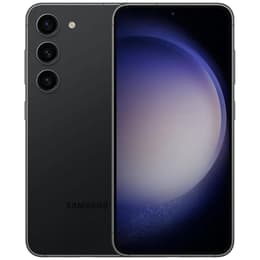
Galaxy S23
Galaxy S23
Starting at

Refurbished price:249.00

Versus €959.00 new

See options
Xiaomi Redmi Note 14 4G
Starting at

Refurbished price:162.00

Versus €229.99 new

See options

Ratings

The Samsung Galaxy S23 (2023) and the Xiaomi Redmi Note 14 4G (2025) are both Android smartphones, yet they cater to different user expectations and priorities. While the Galaxy S23 offers a compact design with high-end performance and advanced camera capabilities, the Redmi Note 14 4G focuses on a larger display, extended battery life, and a strong commitment to software longevity. Both devices run on the Android operating system, but they differ significantly in their underlying hardware and overall user experience.

Scores

Durability

When considering the long-term usability of these devices, their release timelines and software support policies are key factors. The Galaxy S23, released in February 2023, launched with Android 13 and is slated to receive four major OS upgrades, extending its support up to Android 17, along with five years of security updates until around 2028 or 2029. The Redmi Note 14 4G, released in early 2025 with Android 14, offers an impressive commitment of four major Android updates, taking it to Android 18, and six years of security updates, projected until March 2031.

  • Software Longevity: The Redmi Note 14 4G is positioned to receive a longer period of software and security updates, potentially offering a more extended practical lifespan in terms of software support compared to the Galaxy S23.
  • Physical Durability: The Galaxy S23 features an IP68 rating for dust and water resistance, indicating a higher level of protection against immersion, while the Redmi Note 14 4G comes with an IP54 rating, offering protection against dust and splashes. The Galaxy S23 also utilizes Gorilla Glass Victus 2 for screen protection, whereas the Redmi Note 14 4G uses Gorilla Glass 5.
  • Repairability: Both devices, as modern smartphones, generally require specialized tools and expertise for repairs. Information on specific repairability scores for the Redmi Note 14 4G is less widely available, but the Galaxy S23 is part of a series that generally offers moderate repairability.

Year of Release

2023

2025

OS

Android

Android

Foldable

No

No

Performance

The performance capabilities of the Galaxy S23 and Redmi Note 14 4G differ significantly, largely due to their respective processors and system optimizations. The Galaxy S23 is equipped with a high-performance processor designed for demanding applications and intensive multitasking, while the Redmi Note 14 4G features a processor optimized for efficient everyday use and casual gaming.

  • Processing Power: The Galaxy S23 delivers robust performance, handling graphically intensive games and complex applications with ease, ensuring a smooth and responsive user experience. The Redmi Note 14 4G provides sufficient power for daily tasks, social media, web browsing, and light gaming, offering a generally fluid experience for typical smartphone usage.
  • Multitasking and Storage: The Galaxy S23 typically comes with 8GB of RAM and offers faster UFS 4.0 storage in its higher capacity variants, contributing to quicker app loading and seamless multitasking. The Redmi Note 14 4G offers 6GB or 8GB of RAM and UFS 2.2 storage, which is suitable for most users but may show a difference in speed during heavy multitasking or large file transfers.
  • Battery Performance: The Galaxy S23 features a 3900 mAh battery, which, combined with its efficient processor, provides reliable all-day power for many users. The Redmi Note 14 4G boasts a larger 5500 mAh battery, designed to offer extended usage times, often lasting more than a full day on a single charge, making it well-suited for users prioritizing battery endurance.

Memory (GB)

8 GB

6 GB

Screen quality

Both smartphones offer vibrant displays, but they differ in size, technology nuances, and overall viewing experience. The Galaxy S23 provides a compact, high-density display, while the Redmi Note 14 4G offers a larger screen for more expansive viewing.

  • Display Technology and Size: The Galaxy S23 features a 6.1-inch Dynamic AMOLED 2X display, known for its deep blacks, vibrant colors, and excellent contrast. The Redmi Note 14 4G comes with a larger 6.67-inch AMOLED display, providing more screen real estate for media consumption and productivity.
  • Resolution and Clarity: Both devices offer Full HD+ resolutions, with the Galaxy S23 at 2340 x 1080 pixels (425 ppi) and the Redmi Note 14 4G at 1080 x 2400 pixels (~395 ppi). This results in sharp text and clear images on both screens, though the smaller S23 has a slightly higher pixel density.
  • Brightness and Refresh Rate: Both phones feature a 120Hz refresh rate for smooth scrolling and animations. The Galaxy S23 offers a peak brightness of 1750 nits, ensuring good visibility in bright outdoor conditions. The Redmi Note 14 4G also provides high peak brightness, rated at 1800 nits, contributing to clear outdoor viewing.

Resolution

1080 x 2340

1080x2400

Audiovisual

The camera systems on the Galaxy S23 and Redmi Note 14 4G are designed with different strengths, reflecting their respective market segments. The Galaxy S23 offers a versatile triple-lens setup with optical image stabilization, while the Redmi Note 14 4G relies heavily on its high-megapixel main sensor.

  • Rear Camera Configuration: The Galaxy S23 features a triple camera system with a 50MP main sensor, a 12MP ultrawide lens, and a 10MP telephoto lens with 3x optical zoom, all benefiting from optical image stabilization (OIS) on the main and telephoto lenses. The Redmi Note 14 4G includes a 108MP main camera, a 2MP macro lens, and a 2MP depth sensor. Notably, it lacks an ultrawide camera, which was present in its predecessor.
  • Photography Performance: The Galaxy S23 excels in various lighting conditions, producing detailed images with vibrant colors, and its telephoto lens provides clear zoomed-in shots. The Redmi Note 14 4G's 108MP main sensor captures solid results in good lighting, offering detailed images, though colors can sometimes appear slightly exaggerated. Its low-light performance is generally acceptable but can struggle without OIS.
  • Video and Front Camera: The Galaxy S23 offers high-quality video recording and a 12MP front camera capable of capturing detailed selfies. The Redmi Note 14 4G records video at a maximum of 1080p and features a 20MP front camera, which performs well in good lighting but may show limitations in low-light conditions.

Miscellaneous

Beyond core specifications, several practical elements differentiate the user experience of these two smartphones, including connectivity, physical design, and additional features.

  • Connectivity and Ports: The Galaxy S23 supports 5G connectivity, Wi-Fi 6, and Bluetooth 5.3, utilizing a USB-C port for charging and data transfer. The Redmi Note 14 4G, as its name suggests, is limited to 4G networks but includes Wi-Fi 5, Bluetooth 5.3, a USB-C port, and retains a 3.5mm headphone jack, which is absent on the S23. It also features an IR blaster for controlling home electronics.
  • Biometrics and Sensors: Both devices offer secure unlocking methods. The Galaxy S23 uses an ultrasonic in-display fingerprint sensor and facial recognition. The Redmi Note 14 4G also features an in-display fingerprint reader and face unlock.
  • Design and Handling: The Galaxy S23 is a more compact and lighter device, weighing 168g with dimensions of 146.3 x 70.9 x 7.6 mm, making it easier for one-handed use. The Redmi Note 14 4G is larger and slightly heavier at 196.5g and 163.25 x 76.55 x 8.16 mm, offering a more expansive screen but a less compact feel. The Galaxy S23 features a more premium build with Gorilla Glass Victus 2 and an IP68 rating, while the Redmi Note 14 4G has a plastic back and an IP54 rating.

Weight

167 g

196 g

Screen size (in)

6.1

6.67

Network

5G

4G

SIM card

Physical SIM + eSIM

Physical SIM + eSIM

Carrier compatibility

Unlocked

Unlocked

User feedback for the Samsung Galaxy S23 often praises its compact size, powerful performance, and capable camera system, particularly its ability to capture detailed photos in various conditions. Common criticisms sometimes point to its battery life, which, while improved over its predecessor, may not satisfy the heaviest users, and the absence of an ultrawide camera on the base model is occasionally noted.

For the Xiaomi Redmi Note 14 4G, users frequently highlight its exceptional battery life, large and vibrant AMOLED display, and the inclusion of features like a 3.5mm headphone jack and expandable storage. Some common concerns include the removal of the ultrawide camera, the limited utility of the macro and depth sensors, and video recording being capped at 1080p.

Users prioritizing a compact, high-performance device with advanced camera capabilities and a premium build may find the Galaxy S23 well-suited to their needs. Its robust processing power and consistent software updates make it a strong choice for those who demand top-tier performance and a longer software support window. Conversely, users who prioritize extended battery life, a larger display for media consumption, and practical features like a headphone jack, while still receiving a long period of software support, may lean toward the Redmi Note 14 4G. This device is also a compelling option for those seeking an eco-friendly, quality-assured refurbished alternative that offers excellent value for everyday use.


See all articles

Our recent comparisons