
Galaxy S22 5G Vs Xiaomi Redmi Note 14 Pro

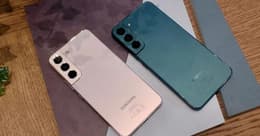
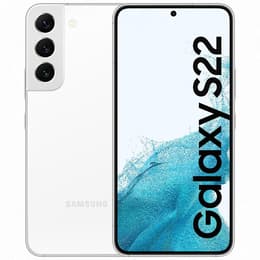
Galaxy S22 5G
Galaxy S22 5G
Starting at

Refurbished price:174.00

Versus €851.00 new

See options
Xiaomi Redmi Note 14 Pro
Starting at

Refurbished price:260.77

Versus €349.99 new

See options

Ratings

The Samsung Galaxy S22 5G, released in February 2022, and the Xiaomi Redmi Note 14 Pro 5G, launched in late 2024, represent different approaches to the modern smartphone experience. While the Galaxy S22 5G offers a compact flagship design with a focus on premium features, the Redmi Note 14 Pro 5G aims to deliver a robust set of capabilities, particularly in display and battery, within a larger form factor. Both devices operate on the Android platform, with their respective custom user interfaces.

Scores

Durability

The longevity of a smartphone is influenced by its release timeline, software support, and physical durability. These two devices offer different timelines for software updates and varying levels of physical resilience.

  • Release and Software Support: The Samsung Galaxy S22 5G, launched in early 2022, typically receives four major Android OS upgrades and five years of security updates, with support expected to conclude around 2027. The Xiaomi Redmi Note 14 Pro 5G, a newer device from late 2024, is anticipated to receive three Android OS upgrades and four years of security updates. This means the Redmi Note 14 Pro 5G will likely receive software support for a longer period into the future due to its more recent release.
  • Physical Durability: Both devices feature robust construction. The Galaxy S22 5G incorporates Corning Gorilla Glass Victus+ on both its front and back, complemented by an aluminum frame, and carries an IP68 rating for dust and water resistance, allowing submersion up to 1.5 meters for 30 minutes. The Redmi Note 14 Pro 5G also boasts an IP68 rating for dust and water resistance and features Corning Gorilla Glass Victus 2 on its front, along with a high-strength aluminum composite frame.
  • Repairability: The Galaxy S22 5G has been noted for a repairability score of 7.5 out of 10, indicating a moderate ease of repair for certain components. Information regarding the specific repairability score for the Redmi Note 14 Pro 5G is less widely available, though its construction with Gorilla Glass Victus 2 and an aluminum frame suggests a design focused on structural integrity.

Year of Release

2022

2025

OS

Android

Android

Foldable

No

No

Performance

Performance in daily use is a critical aspect for any smartphone, encompassing how smoothly applications run, the device's responsiveness, and its ability to handle demanding tasks. Both the Galaxy S22 5G and the Redmi Note 14 Pro 5G are equipped to manage typical smartphone activities, though with different underlying hardware.

  • Processing Power: The Samsung Galaxy S22 5G is powered by a processor designed for flagship performance, enabling smooth operation across various applications, efficient multitasking, and capable handling of graphically intensive games. The Xiaomi Redmi Note 14 Pro 5G features a current-generation processor built on a 4nm architecture, which contributes to stable and consistent performance for everyday tasks, quick app launches, and fluid multitasking.
  • Multitasking and Storage: Both devices offer ample RAM configurations to support efficient multitasking, allowing users to switch between applications without significant delays. The Galaxy S22 5G comes with 8GB of RAM and storage options of 128GB or 256GB. The Redmi Note 14 Pro 5G is available with 8GB or 12GB of RAM and storage options including 128GB, 256GB, and 512GB, providing flexibility for users with different storage needs.
  • Battery Performance: The Galaxy S22 5G is equipped with a 3700 mAh battery. User experiences suggest that while it can last a full day with moderate use, heavy users may find themselves seeking a charger before the day ends. The Redmi Note 14 Pro 5G features a larger 5500 mAh battery, which users report easily lasts a full day even with heavy usage, making it a reliable option for extended periods away from a power source. The Redmi Note 14 Pro 5G also supports 45W turbo charging, while the Galaxy S22 5G supports 25W wired charging.

Memory (GB)

8 GB

8 GB

Screen quality

The display is a primary interface for smartphone interaction, and both devices offer vibrant viewing experiences with distinct characteristics.

  • Display Technology and Clarity: The Samsung Galaxy S22 5G features a 6.1-inch Dynamic AMOLED 2X display, known for its deep blacks, vibrant colors, and excellent contrast. It offers a resolution of 1080 x 2340 pixels, resulting in a pixel density of approximately 425 ppi. The Xiaomi Redmi Note 14 Pro 5G sports a larger 6.67-inch AMOLED display with a 1.5K resolution (1220 x 2712 pixels), providing sharp visuals and rich color reproduction.
  • Brightness and Smoothness: The Galaxy S22 5G's display can reach a peak brightness of 1300 nits, ensuring good visibility in various lighting conditions. It also features a 120Hz refresh rate for smooth scrolling and responsive interactions. The Redmi Note 14 Pro 5G offers a higher peak brightness of up to 3000 nits, which can be beneficial for outdoor visibility, and also supports a 120Hz refresh rate for fluid on-screen motion.
  • Protection: For durability, the Galaxy S22 5G's display is protected by Corning Gorilla Glass Victus+. The Redmi Note 14 Pro 5G enhances its display protection with Corning Gorilla Glass Victus 2.

Resolution

1080 x 2340

1080x2400

Audiovisual

Camera capabilities are a significant factor for many users, and both smartphones offer versatile camera systems designed to capture a range of photographic and video content.

  • Rear Camera Systems: The Samsung Galaxy S22 5G is equipped with a triple-camera setup on the rear, including a 50 MP wide-angle main sensor with optical image stabilization (OIS), a 10 MP telephoto lens with 3x optical zoom and OIS, and a 12 MP ultrawide lens. The Xiaomi Redmi Note 14 Pro 5G features a 200 MP main camera with OIS, an 8 MP ultrawide lens, and a 2 MP macro camera. The high megapixel count on the Redmi's main sensor allows for detailed images, particularly in good lighting.
  • Photography Performance: The Galaxy S22 5G is known for its consistent image quality across its lenses, offering strong performance in various lighting conditions and capable low-light photography. The Redmi Note 14 Pro 5G's 200 MP main camera delivers sharp and detailed photos, even when zoomed digitally, and performs well in low-light scenarios with its auto night mode. However, its secondary ultrawide and macro lenses may not offer the same level of detail or versatility as the main sensor.
  • Video Recording and Front Camera: The Galaxy S22 5G supports video recording up to 8K at 24fps and 4K at 30/60fps, with a 10 MP front-facing camera capable of 4K video. The Redmi Note 14 Pro 5G can record video up to 4K at 30fps with its main camera and features a 20 MP front-facing camera. Some user reviews for the Redmi Note 14 Pro (4G variant) have noted limitations in video recording, such as a lack of 4K support, but the 5G variant is generally expected to support 4K.

Front camera

10 megapixels

32 MP

Miscellaneous

Beyond core performance and display, several other features contribute to the overall user experience, including connectivity, physical design, and additional functionalities.

  • Connectivity and Ports: Both smartphones support 5G connectivity, ensuring access to faster mobile networks. The Galaxy S22 5G includes Wi-Fi 6 and Bluetooth 5.2, with a USB-C port for charging and data transfer, but it lacks a 3.5mm headphone jack. The Redmi Note 14 Pro 5G also features Wi-Fi 6 and Bluetooth 5.3, a USB-C port, and notably retains a 3.5mm headphone jack, which can be a deciding factor for users who prefer wired audio.
  • Biometrics and Sensors: For security, both devices offer an in-display fingerprint sensor. The Galaxy S22 5G also includes 2D face recognition. The Redmi Note 14 Pro 5G provides AI Face Unlock and an IR Blaster, which allows the phone to function as a universal remote control.
  • Design and Handling: The Galaxy S22 5G is a more compact device, weighing 167g and measuring 146 x 70.6 x 7.6 mm, making it comfortable for one-handed use. It features a premium build with glass front and back and an aluminum frame. The Redmi Note 14 Pro 5G is larger and slightly heavier at around 190g, with dimensions of 162.33 x 74.42 x 8.24 mm. It offers a modern design with options for a vegan leather or glass back.

Weight

195 g

180 g

Screen size (in)

6.1

6.67

Network

5G

4G

SIM card

Physical SIM + eSIM

Dual Physical SIM

Carrier compatibility

Unlocked

Unlocked

The Samsung Galaxy S22 5G and the Xiaomi Redmi Note 14 Pro 5G cater to slightly different user preferences, each excelling in certain areas. User feedback for the Galaxy S22 5G often praises its compact size, premium build, and consistent camera performance, making it a strong choice for those who prefer a smaller, high-quality device. However, its battery life is frequently cited as a point of concern for heavy users.

The Redmi Note 14 Pro 5G, on the other hand, receives commendation for its impressive battery life, large and bright display, and a main camera that captures highly detailed images. Some users note that while the main camera is strong, the secondary lenses may not be as versatile, and some variants might have limitations in video recording capabilities. Its larger size and inclusion of a headphone jack are also often highlighted as practical advantages.

Users prioritizing a compact form factor, a highly refined user experience, and a consistently strong camera system across all lenses may find the Samsung Galaxy S22 5G more aligned with their needs. Conversely, individuals who value extended battery life, a larger and brighter display for media consumption, and a high-resolution main camera, along with the convenience of a headphone jack, might lean towards the Xiaomi Redmi Note 14 Pro 5G. Both devices offer robust performance for everyday tasks, and choosing between them often comes down to these specific preferences in design, display size, and battery endurance.

For those considering either of these models, exploring quality-assured refurbished options can provide an eco-friendly alternative, offering excellent value while extending the lifespan of these capable devices.


See all articles

Our recent comparisons