

Compare models
iPhone Air Vs Xiaomi Redmi Note 13 Pro+
- 1-year minimum warranty
- Free delivery on all orders
- Free 30-day returns
Differences at a glance
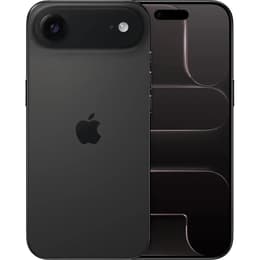
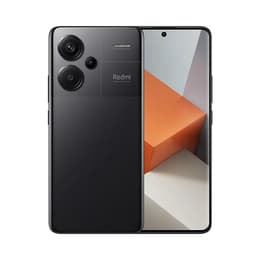
The Apple iPhone Air (2025) and the Xiaomi Redmi Note 13 Pro+ (2023) are distinct smartphones reflecting different eras, design philosophies, and operating systems, with Apple utilizing iOS and Xiaomi running Android. While both devices serve daily communication and multimedia needs, they diverge significantly in physical profile, internal architecture, and feature distribution, catering to contrasting user expectations.
Available Models
Colour
Storage (GB)
Scores
Durability
When evaluating the physical endurance and software longevity of these two smartphones, distinct timelines and support structures emerge to shape their expected practical lifespans.
- Release timeline and OS support: The iPhone Air launched in late 2025 with Apple's standard multi-year software update commitment, whereas the Xiaomi Redmi Note 13 Pro+ debuted in late 2023 running Android, meaning its software support window spans an earlier generation of updates.
- Repairability and durability design: The iPhone Air utilizes a titanium frame and advanced glass protection intended for structural rigidity at an ultra-slim profile, while the Xiaomi Redmi Note 13 Pro+ offers an IP68 dust and water resistance rating alongside durable curved glass or eco-leather finishes.
- Expected lifespan: Users seeking extended software update longevity will find the newer Apple model well-suited for long-term use, while the Xiaomi device provides robust everyday durability backed by established maintenance networks.
Year of Release
2025
2023
Compatible with latest Update
Yes
Yes
OS
iOS
Android
Foldable
No
No
Performance
Daily computing tasks, memory management, and energy consumption vary notably between the two devices due to their contrasting hardware foundations and thermal designs.
- System responsiveness and multitasking: Both devices handle everyday apps, web browsing, and switching between active programs smoothly, though the iPhone Air benefits from a higher memory baseline that sustains heavy multitasking workflows with minimal reloading.
- Storage configurations: The iPhone Air starts at a higher base storage tier with options reaching larger capacities, while the Xiaomi Redmi Note 13 Pro+ offers flexible mid-to-high storage tiers paired with ample random-access memory for background processes.
- Battery behavior: The iPhone Air balances its compact physical volume with efficient power management for a full day of mixed use, whereas the Xiaomi Redmi Note 13 Pro+ features a larger physical battery capacity paired with rapid wired replenishment capabilities.
Screen quality
Visual immersion, panel technology, and outdoor legibility differ between the two models, providing distinct viewing experiences for media and daily navigation.
- Display technology and clarity: Both smartphones incorporate high-resolution OLED panels that deliver deep contrast levels, sharp text rendering, and vivid color reproduction suitable for streaming and reading.
- Refresh rate and smoothness: Both devices support high refresh rate capabilities up to 120Hz, ensuring fluid scrolling through web pages, animations, and supported interactive content.
- Brightness and form factor: The iPhone Air presents a 6.5-inch panel within an exceptionally thin chassis, while the Xiaomi Redmi Note 13 Pro+ offers a slightly larger 6.67-inch curved display designed for immersive media consumption and high peak brightness outdoors.
Resolution
2736x1260
1220 x 2712
Screen type
Super Retina XDR
AMOLED
Audiovisual
Optics, video recording functions, and audio output capabilities vary to accommodate different photography habits and media consumption preferences.
- Camera system versatility: The iPhone Air relies on a refined single-lens rear setup supported by advanced computational processing for everyday detail and low-light clarity, whereas the Xiaomi Redmi Note 13 Pro+ employs a multi-lens rear array featuring a high-resolution primary sensor for varied framing options.
- Video and audio output: The Apple device delivers stable video recording performance and clear voice capture, while the Xiaomi model provides balanced stereo speaker output suited for casual media playback without external headphones.
Main camera
48 megapixels
200 megapixels
Front camera
18 megapixels
16 megapixels
Miscellaneous
Practical daily usability elements, connectivity standards, and physical handling characteristics define the tactile experience of carrying each device.
- Physical dimensions and handling: The iPhone Air prioritizes an extremely thin and lightweight profile at 165 grams for effortless pocketability, while the Xiaomi Redmi Note 13 Pro+ carries a slightly heavier and thicker footprint that accommodates its larger battery structure.
- Connectivity and ports: Both models support modern 5G cellular networks, Wi-Fi standards, and Bluetooth connectivity, utilizing USB-C physical ports for charging and data transfer alongside advanced security sensors for biometric authentication.
Weight
165 g
204 g
Screen size (in)
6.5
6.67
Network
5G
5G
SIM card
eSIM
Dual Physical SIM
Carrier compatibility
Unlocked
Unlocked
What the community thinks
When deciding between these two devices, user priorities serve as the primary guide. Users prioritizing an ultra-slim, lightweight physical build, long-term software support, and the iOS ecosystem may lean toward the iPhone Air. Conversely, users seeking a curved media display, rapid charging speeds, and an Android environment will find the Xiaomi Redmi Note 13 Pro+ well-suited to their workflow. For buyers exploring sustainable purchasing routes, opting for a quality-assured refurbished option provides a practical and eco-friendly alternative to purchasing newly manufactured hardware.