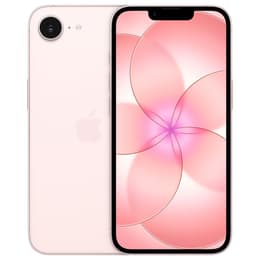



Compare models

iPhone 17e Vs Xiaomi Redmi Note 13 4G

  • 1-year minimum warranty
  • Free delivery on all orders
  • Free 30-day returns
iPhone 17e
Starting at

Refurbished price:€599.00

Versus €879.00 new

See options
Xiaomi Redmi Note 13 4G
Starting at

Refurbished price:€180.00

Versus €299.00 new

See options

Differences at a glance

The Apple iPhone 17e (2026) and the Xiaomi Redmi Note 13 4G (2024) are distinct smartphones catering to different software ecosystems, release years, and user preferences. While the iPhone 17e operates on iOS with a focus on current-generation capabilities, the Xiaomi Redmi Note 13 4G runs on Android and offers an accessible alternative for everyday communication. These two devices diverge significantly in their underlying software platforms, release schedules, and overall hardware philosophies.

Available Models

Colour

Storage

Scores

Durability

When examining longevity and durability, the iPhone 17e and Xiaomi Redmi Note 13 4G reflect different generations and support timelines that influence how long each device remains practical for daily use.

  • Software support duration: The iPhone 17e benefits from an extended multi-year update schedule typical of recent Apple releases, whereas the Xiaomi Redmi Note 13 4G operates within a standard Android update cycle that generally spans a shorter window from its 2024 launch.
  • Build and protection: The iPhone 17e incorporates robust water resistance ratings and hardened glass protection designed to withstand accidental drops, while the Xiaomi Redmi Note 13 4G features basic splash resistance suited for light everyday exposure.
  • Expected lifespan: Users seeking long-term software relevance will find that the iPhone 17e maintains currency for a longer duration, whereas the Xiaomi Redmi Note 13 4G serves well as a shorter-term or temporary communications device.

Year of Release

2026

2024

OS

iOS

Android

Foldable

No

No

Performance

System responsiveness and daily multitasking capabilities vary notably between these devices, affecting how smoothly apps open and how well background tasks are handled.

  • Everyday responsiveness: The iPhone 17e handles demanding applications, complex multitasking, and modern games with ease thanks to its advanced internal processor, while the Xiaomi Redmi Note 13 4G manages standard messaging, web browsing, and light apps reliably with its entry-level processor.
  • Memory and multitasking: Equipped with ample RAM, the iPhone 17e keeps multiple heavy apps active in the background without refreshing, whereas the Xiaomi Redmi Note 13 4G handles routine multitasking adequately for basic daily workflows.
  • Battery behavior: The iPhone 17e optimizes power efficiently to last through a full day of mixed use, while the Xiaomi Redmi Note 13 4G relies on a large physical battery capacity to sustain standard operations across a full day.

Screen quality

Display characteristics shape the visual experience for media consumption, reading, and outdoor visibility across both models.

  • Display technology: The iPhone 17e features a crisp OLED panel with deep contrast levels, while the Xiaomi Redmi Note 13 4G utilizes an AMOLED screen that offers high refresh rate support for smooth scrolling through menus and web pages.
  • Outdoor legibility: Both screens provide sufficient brightness levels to remain readable under direct sunlight, though text and image clarity benefit from the distinct pixel density configurations of each panel.
  • Viewing experience: The iPhone 17e utilizes a traditional notched display design measuring 6.1 inches, whereas the Xiaomi Redmi Note 13 4G offers a slightly larger 6.67-inch viewing area with a centered punch-hole camera cutout.

Resolution

2532 x 1170

1080 x 2400

Audiovisual

Photography, video recording, and audio output capabilities differ substantially, catering to varying multimedia preferences.

  • Camera systems: The iPhone 17e employs a single high-resolution rear sensor that captures detailed everyday photos and supports high-end video recording formats, whereas the Xiaomi Redmi Note 13 4G utilizes a multi-lens rear array featuring a high-megapixel main sensor alongside secondary ultra-wide and macro options.
  • Low-light and video: Image processing on the iPhone 17e produces clean low-light shots and stable video output, while the Xiaomi Redmi Note 13 4G performs adequately for casual daytime snapshots and social media sharing.
  • Audio output: Both models include stereo speaker setups that deliver clear sound for hands-free calls, casual video viewing, and listening to audio tracks without external accessories.

Front camera

12 megapixels

16 megapixels

Miscellaneous

Practical daily features, connectivity standards, and physical handling characteristics define the ergonomic and functional aspects of each smartphone.

  • Connectivity and ports: The iPhone 17e supports modern 5G networks and proprietary charging connectors alongside wireless charging capabilities, while the Xiaomi Redmi Note 13 4G focuses on 4G LTE connectivity, standard USB-C pairing, and includes a traditional headphone jack.
  • Security features: Biometric authentication is handled via facial recognition on the iPhone 17e, whereas the Xiaomi Redmi Note 13 4G utilizes a side-mounted fingerprint sensor integrated into the power button.
  • Physical handling: The iPhone 17e offers a compact, lightweight form factor that fits easily into pockets, while the Xiaomi Redmi Note 13 4G has a slightly heavier build accommodating its larger screen size.

Weight

169 g

175 g

Screen size (in)

6.1

6.67

Network

5G

4G

SIM card

eSIM

Dual Physical SIM

Carrier compatibility

Unlocked

Unlocked

Connector

USB-C (USB 2)

USB-C

What the community thinks

Community discussions and user feedback indicate that people appreciate the iPhone 17e for its smooth system performance, long software support window, and premium build quality, though some users note that its single-lens camera lacks the versatility of multi-lens alternatives. Conversely, users frequently praise the Xiaomi Redmi Note 13 4G for its fluid high-refresh-rate display and reliable daily battery life, while pointing out that its processor is best suited for lighter tasks rather than heavy gaming or intensive multitasking. Those who prioritize long-term software updates, robust processing power, and the iOS ecosystem will find the iPhone 17e well-suited to their needs. Meanwhile, users who prefer a larger viewing space, Android software flexibility, and a traditional headphone jack may lean toward the Xiaomi Redmi Note 13 4G. Exploring quality-assured refurbished options on Back Market provides an eco-friendly alternative for acquiring either device while reducing electronic waste. Ultimately, the choice depends on whether your daily routine centers around performance-heavy iOS integration or accessible everyday Android functionality.








