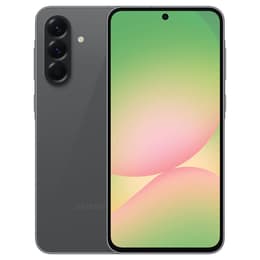



Galaxy A56 Vs Xiaomi Redmi Note 14 4G

Galaxy A56
Galaxy A56
Starting at

Refurbished price:294.00

Versus €502.00 new

See options
Xiaomi Redmi Note 14 4G
Starting at

Refurbished price:162.00

Versus €229.99 new

See options

Ratings

The Samsung Galaxy A56 and the Xiaomi Redmi Note 14 4G are both mid-range smartphones released in 2025, targeting users who seek a balance of features and reliability. While both devices offer robust Android experiences, they differentiate themselves through their camera systems, build materials, and specific software commitments. The Galaxy A56 runs on Samsung's One UI atop Android, while the Redmi Note 14 4G operates with Xiaomi's HyperOS, each offering distinct user interfaces and ecosystems.

Scores

Durability

Both the Samsung Galaxy A56 and the Xiaomi Redmi Note 14 4G are designed for extended usability, reflecting a growing trend in the smartphone market for longer software support.

  • Software Longevity: The Samsung Galaxy A56 is set to receive an impressive six years of Android operating system upgrades and six years of security updates, ensuring it remains current and secure for a significant period. Similarly, the Xiaomi Redmi Note 14 4G is also committed to four major Android OS upgrades and six years of security patches, providing substantial long-term support.
  • Release Timeline: The Galaxy A56 was announced in March 2025, following Samsung's annual refresh cycle for its popular A-series. The Redmi Note 14 series, including the 4G variant, launched in international markets in January 2025.
  • Practical Lifespan: Users can expect both devices to perform reliably for several years, benefiting from continuous software enhancements and security protections. The extended update policies mean these phones are suitable for users who prefer to keep their devices for longer durations, reducing the need for frequent upgrades.

Year of Release

2025

2025

OS

Android

Android

Foldable

No

No

Performance

The performance of these two smartphones caters to everyday tasks and moderate usage, with each device featuring a capable processor designed for efficiency and responsiveness.

  • Processing Power: The Samsung Galaxy A56 is equipped with Samsung's Exynos 1580 processor, built on a 4nm process. This chipset is engineered to provide smooth operation for demanding applications and multitasking, offering a noticeable performance improvement over previous generations. The Xiaomi Redmi Note 14 4G, while not explicitly detailing its processor for the 4G variant, typically features a capable chipset from MediaTek or Snapdragon that handles daily applications and general usage effectively.
  • Memory and Storage: The Galaxy A56 is available with 8GB or 12GB of RAM and storage options of 128GB or 256GB, providing ample space for apps and media. While specific configurations for the Redmi Note 14 4G were not detailed, the Redmi Note series generally offers various RAM and storage combinations to suit different user needs.
  • Battery Behavior: Both devices are expected to offer robust battery performance. The Galaxy A56 features a 5,000mAh battery with support for 45W fast charging, allowing for quick power replenishment. The Redmi Note series is known for its strong battery life, with some models in the Note 15 series featuring large capacities, suggesting the Redmi Note 14 4G will also provide reliable power for extended use.

Memory (GB)

8 GB

6 GB

Screen quality

Both the Galaxy A56 and the Redmi Note 14 4G offer vibrant and fluid display experiences, though with some distinctions in technology and brightness capabilities.

  • Display Technology: The Samsung Galaxy A56 features a 6.6-inch or 6.7-inch Super AMOLED display, known for its deep blacks, high contrast, and vibrant color reproduction. The Xiaomi Redmi Note 14 4G also utilizes an AMOLED panel, a common choice in the Redmi Note series for its visual quality and efficiency.
  • Resolution and Refresh Rate: Both smartphones come with Full HD+ resolution, ensuring sharp and clear visuals for content consumption and daily use. They also feature a 120Hz refresh rate, contributing to smoother scrolling, more fluid animations, and a more responsive touch experience.
  • Brightness Levels: The Galaxy A56's display can reach a peak brightness of up to 1900 nits, making it highly visible even in bright outdoor conditions. While specific peak brightness for the Redmi Note 14 4G was not detailed, other models in the Redmi Note 14/15 series boast high brightness levels, suggesting a capable display for various lighting environments.

Resolution

1080 x 2340

1080x2400

Audiovisual

The camera systems on both devices are designed to capture detailed images and videos, with each offering a distinct approach to mobile photography.

  • Rear Camera Setup: The Samsung Galaxy A56 features a triple-camera system on the rear, comprising a 50-megapixel main sensor with optical image stabilization (OIS), a 12-megapixel ultrawide lens, and a 5-megapixel macro lens. The Xiaomi Redmi Note 14 4G is equipped with a 108-megapixel AI camera system, designed for capturing high-resolution images with vibrant colors and sharp detail.
  • Front Camera and Features: For selfies and video calls, the Galaxy A56 includes a 12-megapixel front-facing camera. The Redmi Note 14 series features upgraded front cameras, with the base models offering at least 20-megapixel sensors. Both devices incorporate AI-powered photography features to enhance image quality and offer creative shooting modes.
  • Video Recording and Audio: Both smartphones are expected to offer capable video recording, with the Galaxy A56 supporting 4K video at 30 frames per second. While specific video capabilities for the Redmi Note 14 4G were not detailed, the Redmi Note series generally provides solid video performance. Audio output for media consumption is typically clear on both series, with the Redmi Note 15 series (a close relative) highlighting enhanced volume boosts.

Miscellaneous

Beyond core performance, several practical elements contribute to the overall user experience of these smartphones, from connectivity to physical design.

  • Connectivity and Ports: The Samsung Galaxy A56 supports 5G connectivity, along with Bluetooth 5.4 and Wi-Fi 6E, offering modern wireless standards for fast and reliable connections. The Xiaomi Redmi Note 14 4G, as its name suggests, focuses on 4G LTE connectivity, which is suitable for regions where 5G infrastructure is less prevalent or for users who do not require the fastest mobile data speeds. Both devices will feature standard USB-C ports for charging and data transfer.
  • Build Materials and Durability: The Galaxy A56 is expected to feature a glass back and a metal frame, contributing to a more premium feel and enhanced durability, along with an IP67 rating for dust and water resistance. The Redmi Note 14 4G utilizes a combination of PC (polycarbonate) and PMMA (polymethyl methacrylate) for its back shell and PC for the middle bezel, offering a robust and lightweight construction.
  • Dimensions and Handling: The Galaxy A56 measures 162.2 x 77.5 x 7.4 mm and weighs 198 grams, providing a substantial yet manageable feel. While exact dimensions for the Redmi Note 14 4G were not specified, the Redmi Note series typically offers devices with comfortable ergonomics, balancing screen size with ease of handling.

Weight

197 g

196 g

Screen size (in)

6.5

6.67

Network

5G

4G

SIM card

Dual Physical SIM + eSIM

Physical SIM + eSIM

Carrier compatibility

Unlocked

Unlocked

User sentiment for both the Samsung Galaxy A-series and Xiaomi Redmi Note series generally highlights their strong value propositions in the mid-range segment. For the Galaxy A56, common praise points are likely to include its consistent software support, vibrant AMOLED display, and reliable camera performance with OIS. Users often appreciate the refined One UI experience and the device's overall build quality. Potential criticisms might revolve around the Exynos processor's performance compared to some Snapdragon counterparts in certain benchmarks, though real-world usage is generally smooth.

The Xiaomi Redmi Note 14 4G is expected to be praised for its high-megapixel camera, potentially larger battery capacity, and competitive display technology. The Redmi Note series often garners positive feedback for offering a feature-rich experience. Some users might express concerns about the software experience, as HyperOS can be a departure from stock Android, and the 4G-only connectivity might be a limitation for those seeking the latest network speeds.

Users prioritizing long-term software updates and a polished, consistent user interface with a focus on balanced camera performance may prefer the Samsung Galaxy A56. Its glass and metal construction also offers a more premium in-hand feel. Conversely, users who prioritize a high-resolution main camera, potentially larger battery, and are content with 4G connectivity may lean toward the Xiaomi Redmi Note 14 4G. Both devices represent solid choices within their segment, offering quality-assured refurbished options as an eco-friendly alternative for consumers.


See all articles

Our recent comparisons






