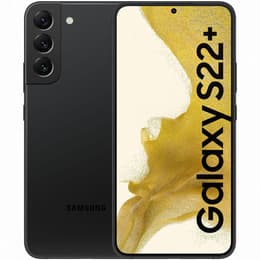
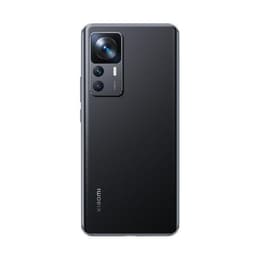


Galaxy S22+ 5G Vs Xiaomi 12T

Galaxy S22+ 5G
Galaxy S22+ 5G
Starting at

Refurbished price:195.00

Versus €1,283.00 new

See options
Xiaomi 12T
Xiaomi 12T
Starting at

Refurbished price:131.00

Versus €649.00 new

See options

Ratings

The Samsung Galaxy S22 Plus 5G, released in February 2022, and the Xiaomi 12T, launched in October 2022, are both Android smartphones offering distinct experiences. While the Galaxy S22 Plus emphasizes a refined design and a versatile camera system, the Xiaomi 12T focuses on rapid charging capabilities and a high-resolution main camera. Both devices run on the Android operating system, with their respective custom user interfaces, providing a familiar yet differentiated software experience.

Scores

Durability

When considering the long-term usability of these devices, their release timelines and software support policies are key factors. The Samsung Galaxy S22 Plus 5G, launched earlier in 2022, benefits from Samsung's commitment to extended software updates, while the Xiaomi 12T, released later the same year, also offers a solid update promise.

  • Software Longevity: The Samsung Galaxy S22 Plus 5G was promised four generations of Android OS upgrades, extending its software support potentially up to Android 16, with security updates through 2027. This provides a longer period of access to the latest Android features and security patches. The Xiaomi 12T was slated to receive three major Android OS updates, reaching Android 15, along with four years of security patches. However, recent information indicates that software support for the Xiaomi 12 series, including the 12T, concluded around March 2026, with Android 15 as its final OS version.
  • Physical Durability: The Galaxy S22 Plus features Gorilla Glass Victus+ on both its front and back, coupled with an Armor aluminum frame, contributing to its robust build and offering IP68 dust and water resistance. The Xiaomi 12T utilizes Gorilla Glass 5 for screen protection and has an IP53 rating, indicating resistance to dust and light splashes.
  • Practical Lifespan: Users prioritizing the absolute latest software and security updates for the longest duration may find the Galaxy S22 Plus to offer a slightly extended practical lifespan in terms of software. Both devices are built to withstand daily use, with the Galaxy S22 Plus offering a higher degree of water and dust protection.

Year of Release

2022

2022

Compatible with latest Update

Yes

Yes

OS

Android

Android

Foldable

No

No

Performance

Both smartphones are equipped with capable internal components designed to handle a range of tasks, from everyday browsing to more demanding applications and gaming. Their performance characteristics are influenced by their respective processors and memory configurations.

  • Processing Power: The Samsung Galaxy S22 Plus 5G is powered by a current-generation processor (Qualcomm Snapdragon 8 Gen 1 or Exynos 2200 depending on region), which delivers strong performance for multitasking, running demanding applications, and graphics-intensive gaming. The Xiaomi 12T features a MediaTek Dimensity 8100-Ultra processor, which provides smooth performance for daily use and can handle graphically intensive games, though it may not always match the peak performance of some higher-end chipsets.
  • System Responsiveness and Multitasking: Both devices come with 8GB of RAM, which is sufficient for smooth multitasking and quick app switching. Users can expect a responsive experience on both, with applications loading quickly and transitions feeling fluid.
  • Storage Options: Both phones offer internal storage options of 128GB and 256GB, utilizing UFS 3.1 technology for fast data access. Neither device supports expandable storage via a microSD card.

Memory (GB)

8 GB

8 GB

Screen quality

The visual experience on a smartphone is largely defined by its display, and both the Galaxy S22 Plus and the Xiaomi 12T offer vibrant screens with high refresh rates, though they differ in some key specifications.

  • Display Technology and Clarity: The Samsung Galaxy S22 Plus 5G features a 6.6-inch Dynamic AMOLED 2X display with a resolution of 1080 x 2340 pixels (FHD+). The Xiaomi 12T comes with a slightly larger 6.67-inch AMOLED display, which Xiaomi refers to as a CrystalRes AMOLED, offering a resolution of 1220 x 2712 pixels. Both displays provide deep blacks and vibrant colors characteristic of AMOLED technology.
  • Brightness and Refresh Rate: The Galaxy S22 Plus boasts a high peak brightness of 1750 nits, ensuring excellent visibility even in bright outdoor conditions, and features an adaptive refresh rate that ranges from 48Hz to 120Hz. The Xiaomi 12T offers a typical brightness of 500 nits and a peak brightness of 900 nits, with an adaptive refresh rate up to 120Hz. Both phones provide smooth scrolling and animations due to their high refresh rates.
  • Viewing Experience: Both displays support HDR10+, enhancing contrast and color for compatible content. The slightly higher resolution of the Xiaomi 12T's display may offer a marginally sharper image, while the Galaxy S22 Plus's higher peak brightness provides a clearer view in direct sunlight.

Resolution

1080 x 2340

1220 x 2712

Screen type

Dynamic AMOLED 2X

AMOLED

Audiovisual

For users who prioritize photography and videography, both devices offer multi-camera setups with distinct strengths and capabilities for capturing moments.

  • Rear Camera Systems: The Samsung Galaxy S22 Plus 5G features a versatile triple-camera system, including a 50-megapixel main sensor with optical image stabilization (OIS), a 12-megapixel ultrawide lens, and a 10-megapixel telephoto lens with 3x optical zoom and OIS. This setup is known for producing detailed and dynamic photos across various conditions. The Xiaomi 12T also has a triple-camera array, led by a 108-megapixel main sensor with OIS, an 8-megapixel ultrawide lens, and a 2-megapixel macro lens. The high-resolution main sensor on the Xiaomi 12T excels in capturing fine details in good lighting.
  • Low-Light and Video Performance: The Galaxy S22 Plus generally performs well in various lighting, though some reviews note it can fall short in very low-light scenarios compared to certain competitors. It supports video recording up to 8K at 24 frames per second. The Xiaomi 12T's main camera performs decently in low light thanks to OIS and night mode features, but its ultrawide and macro lenses are less capable in challenging conditions. Video recording on the Xiaomi 12T goes up to 4K at 30 frames per second.
  • Front Camera and Audio: For selfies and video calls, the Galaxy S22 Plus has a 10-megapixel front camera, while the Xiaomi 12T offers a 20-megapixel front camera. Both phones feature stereo speakers, with the Xiaomi 12T supporting Dolby Atmos for an enhanced audio experience.

Main camera

50 megapixels

108 megapixels

Front camera

10 megapixels

20 megapixels

Miscellaneous

Beyond core performance and display, several practical elements contribute to the overall user experience, including connectivity, physical design, and additional features.

  • Connectivity and Ports: Both devices support 5G connectivity, Wi-Fi 6, and NFC. The Samsung Galaxy S22 Plus 5G also supports Wi-Fi 6E, offering potentially faster wireless speeds with compatible routers. The Xiaomi 12T includes Bluetooth 5.3 and an infrared blaster, which can be used as a universal remote. Both phones utilize a USB-C port for charging and data transfer, and neither includes a 3.5mm headphone jack.
  • Biometric Security and Design: Both smartphones feature in-display fingerprint sensors for secure unlocking; the Galaxy S22 Plus uses an ultrasonic sensor, while the Xiaomi 12T uses an optical one. The Galaxy S22 Plus has dimensions of 157.4 x 75.8 x 7.6 mm and weighs 195g/196g, featuring a premium glass and aluminum build. The Xiaomi 12T measures 163.1 x 75.9 x 8.6 mm and weighs 202g, with a glass front and a plastic frame.
  • Additional Features: The Galaxy S22 Plus offers an IP68 rating for significant dust and water resistance. The Xiaomi 12T has an IP53 rating, providing protection against dust and light splashes.

Weight

195 g

220 g

Screen size (in)

6.6

6.67

Network

5G

5G

SIM card

Physical SIM + eSIM

Dual Physical SIM

Carrier compatibility

Unlocked

Unlocked

Connector

USB-C + Jack 3.5mm

USB-C

User feedback for the Samsung Galaxy S22 Plus 5G often praises its vibrant and bright Dynamic AMOLED 2X display, its premium build quality with IP68 water resistance, and its capable and versatile camera system, particularly the inclusion of a telephoto lens. Some common criticisms include its battery life, which, while generally good for a day, may not be exceptional for heavy users, and the absence of a charger in the box. The Xiaomi 12T is frequently lauded for its impressive 120W fast charging, which can fully charge the device in a short period, its high-resolution main camera, and its smooth 120Hz AMOLED display. Points of concern for users sometimes include the less impressive performance of its secondary cameras (ultrawide and macro), the plastic frame, and the lack of an official high IP rating.

Users prioritizing a premium build, a highly versatile camera system with optical zoom, and a longer software support timeline may find the Samsung Galaxy S22 Plus 5G to be a more suitable choice. Its brighter display also benefits outdoor visibility. Conversely, users who value extremely fast charging, a high-megapixel main camera for detailed shots, and a slightly larger, high-resolution display might lean towards the Xiaomi 12T. Both devices offer a solid Android experience, and choosing between them often comes down to these specific priorities. For those considering a quality-assured refurbished option, both models are available, offering an eco-friendly alternative to purchasing new.


See all articles

Our recent comparisons