

iPhone 16 Pro Vs OnePlus 11

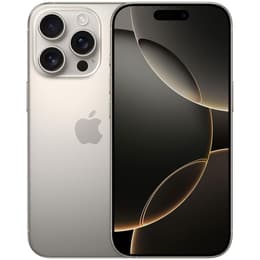
iPhone 16 Pro
iPhone 16 Pro
Starting at

Refurbished price:645.00

Versus €1,239.00 new

See options
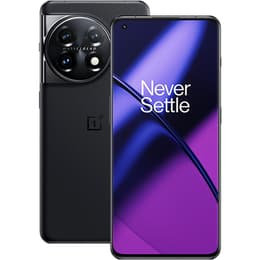
OnePlus 11
OnePlus 11
Starting at

Refurbished price:325.00

Versus €949.00 new

See options

Ratings

The iPhone 16 Pro and the OnePlus 11 are both advanced smartphones, yet they cater to different user preferences and were released at different times. The iPhone 16 Pro, launched in September 2024, operates on Apple's iOS platform, offering a tightly integrated ecosystem and a focus on advanced imaging capabilities. In contrast, the OnePlus 11, released in early 2023, runs on Android with OxygenOS, emphasizing raw performance, rapid charging, and a customizable user experience. These differences in release timeline and operating system significantly influence their feature sets and long-term usability.

Scores

Durability

The expected lifespan of a smartphone is often influenced by its release date and the manufacturer's commitment to software updates and physical durability.

  • Release Timeline: The iPhone 16 Pro was released in September 2024, making it a more recent device compared to the OnePlus 11, which launched in January 2023. This age difference impacts the duration of future software support.
  • Software Support: Apple typically provides iOS updates for 5-6 years from a device's release. The iPhone 16 Pro launched with iOS 18 and has already seen updates to iOS 26.4, indicating a long support window. The OnePlus 11, on the other hand, is promised four major Android updates and five years of security updates, starting from its Android 13 base, meaning it is expected to receive updates through Android 17.
  • Physical Durability: The iPhone 16 Pro features a titanium frame and Ceramic Shield front cover, designed for enhanced resistance to drops and scratches. The OnePlus 11 utilizes Corning Gorilla Glass Victus for screen protection, offering robust defense against everyday wear. Both devices carry an IP rating for dust and water resistance, contributing to their overall resilience.

Year of Release

2024

2023

Foldable

No

No

Performance

Performance is a key differentiator, with both devices offering robust capabilities tailored to their respective operating systems and hardware architectures.

  • Processing Power: The iPhone 16 Pro is equipped with Apple's A18 Pro chip, which enables smooth operation for demanding applications, intensive gaming, and advanced on-device artificial intelligence features. The OnePlus 11 features the Qualcomm Snapdragon 8 Gen 2 Mobile Platform, providing strong performance for multitasking, gaming, and general daily use within the Android ecosystem.
  • Memory and Storage: The iPhone 16 Pro comes with 8GB of RAM and offers storage options ranging from 128GB to 1TB. The OnePlus 11 provides more flexibility with RAM configurations, available in 8GB, 12GB, or 16GB, alongside storage options of 128GB, 256GB, and 512GB.
  • Battery Life and Charging: The iPhone 16 Pro includes a larger battery compared to its predecessors, contributing to extended usage times. The OnePlus 11 is known for its substantial 5000 mAh battery, often providing a full day of heavy use, and supports rapid wired charging for quick power replenishment.

Memory (GB)

8 GB

16 GB

Screen quality

The visual experience on both smartphones is delivered through high-quality displays, each with distinct characteristics.

  • Display Technology and Size: The iPhone 16 Pro features a 6.3-inch Super Retina XDR OLED display, known for its deep blacks and vibrant color reproduction. The OnePlus 11 sports a larger 6.7-inch LTPO3 Fluid AMOLED display, which also delivers rich colors and excellent contrast.
  • Resolution and Clarity: The iPhone 16 Pro offers a resolution of 2622x1206 pixels with a pixel density of 460 ppi, providing sharp and detailed visuals. The OnePlus 11 has a higher QHD+ resolution of 3216x1440 pixels and a pixel density of 525 ppi, resulting in exceptionally crisp images and text.
  • Brightness and Refresh Rate: Both devices feature adaptive refresh rates up to 120Hz, ensuring smooth scrolling and responsive interactions. The iPhone 16 Pro can reach a typical brightness of 1000 nits and a peak brightness of 2000 nits, making it highly visible in bright outdoor conditions. The OnePlus 11 offers a peak brightness of up to 1300 nits.

Resolution

1206 x 2622

1440 x 3216

Audiovisual

Both smartphones offer advanced camera systems designed to capture high-quality photos and videos, though with different approaches and features.

  • Rear Camera Systems: The iPhone 16 Pro features a versatile triple-camera setup, including a 48MP wide, a 48MP ultrawide, and a 12MP telephoto lens with 5x optical zoom. The ultrawide camera also supports enhanced macro photography. The OnePlus 11 also has a triple rear camera system, comprising a 50MP main sensor, a 48MP ultrawide, and a 32MP telephoto lens with 2x optical zoom, co-developed with Hasselblad for color calibration.
  • Photography Performance: The iPhone 16 Pro excels in capturing detailed images, particularly with its upgraded sensors and improved low-light capabilities across its wide and ultrawide lenses. The OnePlus 11 delivers good detail and accurate colors in well-lit conditions, with its ultrawide camera also performing strongly. However, its front camera and low-light performance can be less consistent compared to some competitors.
  • Video Capabilities and Audio: The iPhone 16 Pro supports 4K Dolby Vision video recording, ProRes, spatial video, and offers a 4K 120fps slow-motion option, alongside improved audio recording features like wind reduction. The OnePlus 11 can record videos up to 8K at 24fps and 4K at 30/60fps, with good stabilization. Its front camera video recording is capped at 1080p. Both devices feature stereo speakers, with the OnePlus 11 supporting Dolby Atmos for an immersive audio experience.

Miscellaneous

Beyond core performance and display, several practical elements contribute to the overall user experience of these devices.

  • Connectivity and Ports: The iPhone 16 Pro supports the latest Wi-Fi 7 standard and 5G cellular connectivity, and features a USB-C port for charging and data transfer. The OnePlus 11 also offers 5G connectivity and supports Wi-Fi 6/7, utilizing a USB-C port.
  • Biometric Security and Controls: The iPhone 16 Pro relies on Face ID for secure facial recognition and introduces a new Camera Control button for quick access to camera functions. The OnePlus 11 features an in-display fingerprint sensor for biometric authentication and includes the signature Alert Slider for quick sound profile adjustments.
  • Design and Handling: The iPhone 16 Pro has dimensions of 149.6 x 71.5 x 8.25 mm and weighs 199g, featuring a titanium build. The OnePlus 11 is slightly larger and heavier at 163.1 x 74.1 x 8.5 mm and 205g. Both devices offer a premium feel, with the iPhone 16 Pro utilizing a textured matte glass back and the OnePlus 11 featuring a curved display.

Weight

199 g

205 g

Screen size (in)

6.3

6.7

Network

5G

5G

SIM card

eSIM

Physical SIM

Carrier compatibility

Unlocked

Unlocked

The iPhone 16 Pro and OnePlus 11 offer distinct advantages, making the choice between them dependent on individual priorities. Users often praise the iPhone 16 Pro for its cutting-edge camera technology, powerful processing capabilities, and the long-term software support inherent to the iOS ecosystem. Its display quality and robust build materials are also frequently highlighted as strong points. Some users appreciate the seamless integration within Apple's services and the consistent user experience.

Conversely, the OnePlus 11 receives commendation for its strong overall performance, particularly its exceptional battery life and rapid charging speeds. Its vibrant display and solid build quality are also well-regarded by users. However, some common criticisms include its camera performance, especially the front camera and in challenging low-light conditions, which can be perceived as less consistent than some competitors. Additionally, while OnePlus has improved its software update policy, some users have noted occasional delays in receiving updates.

Users prioritizing a device with the latest camera innovations, extended software longevity, and a highly optimized operating system for demanding tasks may find the iPhone 16 Pro well-suited to their needs. On the other hand, individuals seeking a powerful Android smartphone with outstanding battery endurance, very fast charging, and a customizable interface might lean towards the OnePlus 11. Both devices are available as quality-assured refurbished options, providing an eco-friendly alternative for consumers.


See all articles

Our recent comparisons