

Google Pixel 9 Pro Vs iPhone 13 mini

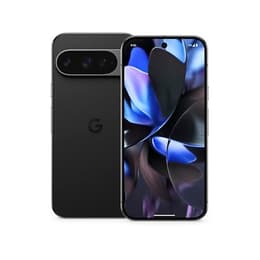
Google Pixel 9 Pro
Google Pixel 9 Pro
Starting at

Refurbished price:484.00

Versus €1,099.00 new

See options
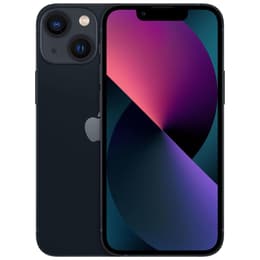
iPhone 13 mini
iPhone 13 mini
Starting at

Refurbished price:228.00

Versus €829.00 new

See options

Ratings

The Google Pixel 9 Pro, released in late 2024, and the iPhone 13 Mini, launched in September 2021, represent distinct approaches to smartphone design and functionality. While the Pixel 9 Pro offers a larger display, advanced camera system, and a focus on artificial intelligence within the Android ecosystem, the iPhone 13 Mini provides a compact form factor and a streamlined experience powered by iOS. These devices cater to different user preferences, primarily differing in their operating systems, physical size, and the technological advancements introduced at their respective release times.

Scores

Durability

The longevity of a smartphone is influenced by its release timeline, software support, and physical durability features. The Google Pixel 9 Pro, being a more recent device, benefits from a longer expected software support period compared to the iPhone 13 Mini.

  • Release Timeline: The Pixel 9 Pro was released in late 2024, while the iPhone 13 Mini was introduced in September 2021. This three-year difference in release dates directly impacts their remaining support cycles.
  • Software Longevity: Google typically provides seven years of OS updates and security patches for its Pixel Pro models, meaning the Pixel 9 Pro is expected to receive support until around 2031. The iPhone 13 Mini, originally shipped with iOS 15, is compatible with iOS 18 (released September 2024) and typically receives 5-6 years of major iOS updates, with security updates potentially extending longer.
  • Physical Durability: Both devices feature robust builds. The iPhone 13 Mini incorporates a Ceramic Shield front cover and an aluminum frame, offering IP68 water and dust resistance. The Pixel 9 Pro also boasts an IP68 rating for dust and water resistance, along with Gorilla Glass Victus 2 on both the front and back, encased in an aluminum frame.

Year of Release

2024

2021

Compatible with latest Update

Yes

Yes

OS

Android

iOS

Foldable

No

No

Performance

Performance in smartphones is determined by the interplay of processing power, memory, and battery efficiency, impacting how smoothly applications run and how long a device lasts on a single charge. The Pixel 9 Pro, with its newer internal components, offers a more advanced performance profile compared to the iPhone 13 Mini.

  • Processing Capabilities: The Pixel 9 Pro is equipped with Google's Tensor G4 chip, designed to handle demanding applications and advanced AI features efficiently. The iPhone 13 Mini features the A15 Bionic chip, which, while still capable for everyday tasks and gaming, represents technology from 2021.
  • Multitasking and Storage: The Pixel 9 Pro comes with 16GB of RAM, facilitating smooth multitasking and supporting its on-device AI capabilities. It offers storage options up to 1TB. The iPhone 13 Mini includes 4GB of RAM and is available with up to 512GB of internal storage.
  • Battery Behavior: The Pixel 9 Pro houses a 4700 mAh battery, supporting 27W wired fast charging and 21W wireless charging with a compatible Pixel Stand. The iPhone 13 Mini has a 2406 mAh battery, providing sufficient power for its compact size, with 20W wired charging and 15W MagSafe wireless charging. Users of the iPhone 13 Mini often report it lasting through a full day of moderate use, though heavy users might require more frequent charging.

Memory (GB)

16 GB

4 GB

Screen quality

The display is a primary interface for smartphone interaction, with technology, resolution, and brightness significantly influencing the visual experience. The Pixel 9 Pro features a larger and more advanced display than the iPhone 13 Mini.

  • Display Technology and Size: The Pixel 9 Pro features a 6.3-inch LTPO OLED display, offering vibrant colors and deep blacks. The iPhone 13 Mini comes with a more compact 5.4-inch Super Retina XDR OLED display, also known for its color accuracy and contrast.
  • Resolution and Clarity: The Pixel 9 Pro's display has a resolution of 2856 x 1280 pixels, resulting in a pixel density of 495 ppi, providing sharp and clear visuals. The iPhone 13 Mini offers a resolution of 2340 x 1080 pixels at 476 ppi, delivering a crisp viewing experience for its size.
  • Brightness and Refresh Rate: The Pixel 9 Pro boasts a variable refresh rate from 1Hz to 120Hz for smooth scrolling and adaptive power efficiency, with a peak brightness of up to 3000 nits. The iPhone 13 Mini has a standard 60Hz refresh rate and a peak HDR brightness of 1200 nits.

Resolution

1280 x 2856

1080 x 2340

Screen type

LTPO OLED

Super Retina XDR OLED

Audiovisual

Camera systems are a crucial aspect of modern smartphones, with capabilities in photography and videography evolving rapidly. The Pixel 9 Pro offers a more comprehensive and technologically advanced camera setup compared to the iPhone 13 Mini.

  • Rear Camera System: The Pixel 9 Pro features a versatile triple-camera array, including a 50MP main sensor with optical image stabilization, a 48MP ultrawide lens with autofocus, and a 48MP telephoto lens offering 5x optical zoom. The iPhone 13 Mini has a dual-camera system with a 12MP main sensor featuring sensor-shift optical image stabilization and a 12MP ultrawide lens.
  • Photography and Video Features: The Pixel 9 Pro supports 8K video recording at 30 frames per second and advanced computational photography features. The iPhone 13 Mini records HDR video with Dolby Vision up to 4K at 60 frames per second and includes Cinematic mode for video with a shallow depth of field.
  • Front Camera: For selfies and video calls, the Pixel 9 Pro is equipped with a 42MP front-facing camera with autofocus. The iPhone 13 Mini features a 12MP TrueDepth front camera. Both devices offer stereo speakers for media consumption and clear microphone quality for calls.

Main camera

50 megapixels

12 megapixels

Front camera

42 megapixels

12 megapixels

Miscellaneous

Beyond core features, connectivity, physical design, and additional sensors contribute to the overall user experience and practical utility of a smartphone. There are notable differences in these areas between the two models.

  • Connectivity and Ports: The Pixel 9 Pro supports 5G (sub-6GHz and mmWave), Wi-Fi 7, and Bluetooth 5.3, utilizing a USB-C 3.2 port for charging and data transfer. The iPhone 13 Mini also supports 5G (sub-6 GHz and mmWave) and Wi-Fi 6, with Bluetooth 5.0, and uses Apple's proprietary Lightning port.
  • Biometric Security: The Pixel 9 Pro incorporates an in-display ultrasonic fingerprint sensor for secure unlocking, alongside Face Unlock capabilities. The iPhone 13 Mini relies on Face ID, Apple's facial recognition system, for biometric authentication.
  • Physical Characteristics: The iPhone 13 Mini is a notably compact and lightweight device, measuring 131.5 x 64.2 x 7.65 mm and weighing 141 grams. The Pixel 9 Pro is a larger device, with dimensions of 152.8 x 72 x 8.5 mm and a weight of 199 grams.

Weight

199 g

140 g

Screen size (in)

6.3

5.4

Network

5G

5G

SIM card

Physical SIM + eSIM

Physical SIM + eSIM

Carrier compatibility

Unlocked

Unlocked

Connector

USB-C

Lightning

User feedback for the iPhone 13 Mini often highlights its appeal for those seeking a highly portable device that can be comfortably used with one hand. Many appreciate its integration within the Apple ecosystem and its capable camera for everyday photography. Criticisms sometimes point to its smaller battery capacity compared to larger phones, which can necessitate more frequent charging for heavy users, and its 60Hz display refresh rate, which is lower than many newer devices.

For the Google Pixel 9 Pro, user sentiment generally praises its advanced camera system, particularly its computational photography and telephoto capabilities. Its long software support and integration of Google's latest AI features are also frequently cited as strong advantages. Some discussions may revolve around the performance of its Tensor chip in comparison to other flagship processors, though it is designed for efficient AI processing.

Users prioritizing a compact form factor, seamless iOS integration, and a device that excels in portability may find the iPhone 13 Mini well-suited to their needs. Conversely, individuals who value a larger, high-refresh-rate display, a more versatile and advanced camera system, cutting-edge AI features, and extended software support will likely lean towards the Google Pixel 9 Pro. Both devices offer distinct strengths, catering to different user priorities in the smartphone market. For those considering a more sustainable choice, both models are available as quality-assured refurbished options.


See all articles

Our recent comparisons