

iPhone 16 Pro Vs OnePlus 10 Pro

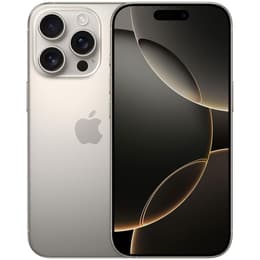
iPhone 16 Pro
iPhone 16 Pro
Starting at

Refurbished price:669.00

Versus €1,239.00 new

See options
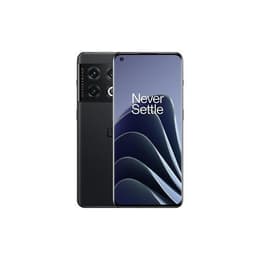
OnePlus 10 Pro
OnePlus 10 Pro
Starting at

Refurbished price:228.00

Versus €999.00 new

See options

Ratings

The iPhone 16 Pro, released in September 2024, and the OnePlus 10 Pro, launched in January 2022, represent different generations and operating systems within the smartphone market. While the iPhone operates on Apple's iOS ecosystem, the OnePlus device runs on Android. The primary distinctions between these two models lie in their release timelines, core processing power, and camera system philosophies.

Scores

Durability

The practical lifespan of a smartphone is significantly influenced by its release date and the manufacturer's commitment to software updates.

  • Release Timeline: The iPhone 16 Pro was released in September 2024, making it a more recent device compared to the OnePlus 10 Pro, which launched in January 2022. This age difference means the iPhone 16 Pro benefits from newer hardware and a longer remaining support window.
  • Software Longevity: Apple typically provides major iOS updates for five to seven years from a device's release, with security patches often extending even longer. The iPhone 16 Pro, having launched with iOS 18 and currently running iOS 26.4, is expected to receive updates for several more years. In contrast, OnePlus generally offers three to four years of Android OS updates and four to five years of security updates for its flagship devices. The OnePlus 10 Pro, starting with Android 12, has received fewer major OS updates compared to the iPhone 16 Pro due to its earlier release and different update policy.
  • Durability Features: The iPhone 16 Pro features a titanium frame and Ceramic Shield front cover, contributing to its overall resilience and offering IP68 dust and water resistance. The OnePlus 10 Pro utilizes a glass front (Gorilla Glass Victus) and a frosted glass back, with curved edges. While it is sealed against water, it does not carry an official IP rating.

Year of Release

2024

2022

Compatible with latest Update

Yes

Yes

Foldable

No

No

Performance

Performance in smartphones is determined by the internal components working together to handle various tasks, from everyday browsing to demanding applications.

  • Processing Power: The iPhone 16 Pro is equipped with a newer generation processor, designed to deliver enhanced performance, particularly for intensive tasks and advanced AI features. This allows for smoother app launches, more fluid multitasking, and efficient handling of graphics-heavy applications. The OnePlus 10 Pro is powered by a processor from an earlier generation, which was a flagship-tier chip at its release. It capably handles daily tasks and most demanding applications, but may show its age when compared directly to newer chipsets in very intensive scenarios.
  • Multitasking and Storage: Both devices offer various storage configurations, with the iPhone 16 Pro starting from 128GB and going up to 1TB, and the OnePlus 10 Pro offering options up to 512GB. The iPhone 16 Pro includes 8GB of memory, which supports its operating system's efficient multitasking capabilities. The OnePlus 10 Pro is available with 8GB or 12GB of memory, providing ample capacity for running multiple applications simultaneously on the Android platform.
  • Thermal Management: The iPhone 16 Pro includes an improved thermal design, which helps maintain performance during extended periods of heavy use, such as gaming or video editing.

Memory (GB)

8 GB

8 GB

Screen quality

The display is a primary interface for user interaction, and both devices offer high-quality viewing experiences with distinct characteristics.

  • Display Technology and Clarity: Both smartphones feature OLED display technology, known for deep blacks and vibrant colors. The iPhone 16 Pro has a 6.3-inch Super Retina XDR OLED display with a resolution of 2622 x 1206 pixels, resulting in a pixel density of 460 ppi. The OnePlus 10 Pro features a larger 6.7-inch LTPO2 Fluid AMOLED display with a higher resolution of 3216 x 1440 pixels (QHD+), offering a pixel density of 525 ppi.
  • Brightness and Refresh Rate: The iPhone 16 Pro's display offers a typical brightness of 1000 nits and can reach a peak brightness of 2000 nits outdoors, providing excellent visibility in various lighting conditions. The OnePlus 10 Pro has a peak brightness of 1300 nits. Both devices feature adaptive refresh rates up to 120Hz, which allows for smooth scrolling and responsive interactions while optimizing power consumption by adjusting the refresh rate based on content.
  • Screen Design: The iPhone 16 Pro features thinner display borders and an Always-On display with a 1 nit minimum brightness. The OnePlus 10 Pro's display has gentle curves on its long edges.

Resolution

1206 x 2622

1440 x 3216

Screen type

LTPO Super Retina XDR OLED

LTPO2 Fluid AMOLED

Audiovisual

Both devices offer advanced camera systems, but they approach photography with different hardware and software optimizations.

  • Rear Camera Systems: The iPhone 16 Pro features a versatile triple-camera setup, including a 48MP main sensor, a 48MP ultrawide sensor, and a 12MP telephoto lens with 5x optical zoom. It also incorporates a LiDAR scanner for improved depth sensing. The OnePlus 10 Pro, developed in partnership with Hasselblad, includes a 48MP main camera, a 50MP ultrawide camera with a wide 150-degree field of view, and an 8MP telephoto lens offering 3.3x optical zoom.
  • Photography Performance: The iPhone 16 Pro's upgraded sensors and computational photography capabilities contribute to detailed images, especially in low-light conditions, and offer features like 4K video recording up to 120fps and spatial video. The OnePlus 10 Pro's main camera captures excellent detail and accurate colors in daylight, with good low-light performance. Its ultrawide camera offers unique perspectives, including a 150-degree fish-eye mode, and it supports 8K video recording at 24fps.
  • User Experience and Features: The iPhone 16 Pro introduces a new Camera Control button for quick access and operation, enhancing the photography workflow. The OnePlus 10 Pro offers a Hasselblad Pro mode for advanced users, including 12-bit RAW+ capture for greater editing flexibility.

Main camera

48 megapixels

48 megapixels

Front camera

12 megapixels

32 megapixels

Miscellaneous

Beyond the core components, several practical features and design elements contribute to the overall user experience.

  • Connectivity and Ports: The iPhone 16 Pro supports Wi-Fi 7 and Bluetooth 5.3, along with 5G cellular connectivity, and features a USB-C port with USB 3 transfer speeds (up to 10Gb/s). The OnePlus 10 Pro supports Wi-Fi 6 and Bluetooth 5.2, also with 5G connectivity, and includes a USB-C port that supports USB 2.0 speeds with its standard cable.
  • Biometric Security: Both devices offer secure biometric authentication. The iPhone 16 Pro relies on Face ID for facial recognition. The OnePlus 10 Pro features an in-display optical fingerprint sensor for quick unlocking.
  • Design and Handling: The iPhone 16 Pro has dimensions of 149.6 x 71.5 x 8.25 mm and weighs 199g, featuring a titanium frame. The OnePlus 10 Pro measures 163 x 73.9 x 8.6 mm and weighs 200.5g, with a glass and metal construction. The iPhone 16 Pro also supports dual eSIM, while the OnePlus 10 Pro uses dual Nano-SIM.

Weight

199 g

201 g

Screen size (in)

6.3

6.7

Network

5G

5G

SIM card

eSIM

Physical SIM

Carrier compatibility

Unlocked

Unlocked

Connector

USB-C (USB 3)

USB-C

Choosing between the iPhone 16 Pro and the OnePlus 10 Pro involves considering the priorities that align with individual user needs, especially given their different release cycles and operating systems.

Users often praise the iPhone 16 Pro for its advanced camera capabilities, particularly the upgraded ultrawide sensor and 5x optical zoom, along with its powerful processor that ensures smooth performance across all applications. Its extended software support timeline is also a frequently cited advantage, offering peace of mind for long-term use. Some users, however, might find the iOS ecosystem less customizable compared to Android.

The OnePlus 10 Pro is often lauded for its vibrant, high-resolution display and its fast charging capabilities, which allow for quick power-ups. Its large battery capacity is also a common point of appreciation, often providing extended usage times. Criticisms sometimes point to its software update longevity being shorter than some competitors, and its camera performance, while good, may not always match the latest flagships in all scenarios.

Users prioritizing the latest camera technology, long-term software support, and a highly optimized ecosystem may find the iPhone 16 Pro well-suited to their needs. Its newer processor and advanced features cater to those who demand cutting-edge performance and photography. Conversely, users who value a larger, high-resolution display, exceptionally fast charging, and the flexibility of the Android operating system might lean toward the OnePlus 10 Pro. This device offers a robust experience for media consumption and daily tasks, especially for those who appreciate a strong battery life.

For those considering either device, exploring quality-assured refurbished options can provide an eco-friendly alternative, extending the life of these products and offering a sustainable choice for consumers.


See all articles

Our recent comparisons