

iPhone 13 Pro Max Vs iPhone 16

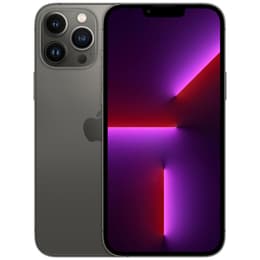
iPhone 13 Pro Max
iPhone 13 Pro Max
Starting at

Refurbished price:372.00

Versus €1,249.00 new

See options
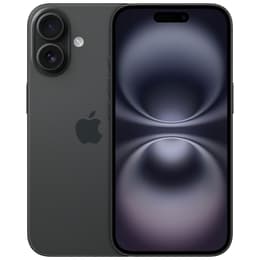
iPhone 16
iPhone 16
Starting at

Refurbished price:548.00

Versus €879.00 new

See options

Ratings

The iPhone 13 Pro Max, released in September 2021, and the iPhone 16, launched in September 2024, represent different generations of Apple's smartphone lineup. While both devices offer a premium user experience, the iPhone 16 introduces advancements in processing power, camera technology, and connectivity, alongside a more compact form factor compared to the larger 13 Pro Max. Both operate on Apple's iOS ecosystem, providing a consistent software experience, though the newer model benefits from a longer support window and access to the latest software innovations.

Scores

Durability

When considering the long-term usability of these devices, their release timelines and software support are key factors.

  • Release and Software Support: The iPhone 13 Pro Max, from 2021, launched with iOS 15 and is expected to receive major iOS updates for several more years, typically 5 to 6 years from its release. The iPhone 16, released in 2024, benefits from a newer operating system (iOS 18) and will consequently receive software support for a longer duration, extending its functional lifespan.
  • Durability and Repairability: Both models feature robust builds with Ceramic Shield front covers, offering enhanced drop protection. The iPhone 13 Pro Max utilizes a stainless steel frame, while the iPhone 16 features an aluminum frame. Both devices carry an IP68 rating for water and dust resistance, indicating similar levels of protection against environmental elements.
  • Practical Lifespan: Users can expect both devices to perform well for several years. However, the iPhone 16's newer internal components and extended software support mean it will likely remain current and capable of handling demanding applications for a longer period. For those seeking the absolute longest software longevity, the more recent iPhone 16 offers an advantage.

Year of Release

2021

2024

Compatible with latest Update

Yes

Yes

Foldable

No

No

Performance

The performance of a smartphone significantly impacts daily usage, from launching applications to managing multiple tasks simultaneously.

  • Processing Capabilities: The iPhone 13 Pro Max is equipped with a powerful processor that handles demanding applications and multitasking smoothly, providing a responsive user experience for gaming, video editing, and everyday tasks. The iPhone 16 features a newer generation processor, which offers enhanced efficiency and faster processing speeds, resulting in quicker app loading times and even smoother performance across various applications, including those leveraging advanced computational features.
  • Storage Options: Both models offer a range of internal storage capacities to suit different user needs. The iPhone 13 Pro Max was available in configurations up to 1TB, catering to users with extensive media libraries or large application requirements. The iPhone 16 is available with storage options up to 512GB, which is ample for most users.
  • Battery Behavior: The iPhone 13 Pro Max is renowned for its exceptional battery life, often providing up to two days of use for many users, even with heavy usage. The iPhone 16, while also offering strong battery performance due to its efficient processor and optimized power management, provides a full day of use and often more, with some reports indicating up to 22 hours of offline video playback.

Memory (GB)

6 GB

8 GB

Screen quality

The display is a primary interface for smartphone interaction, and both devices offer high-quality viewing experiences with distinct characteristics.

  • Display Technology and Size: The iPhone 13 Pro Max features a larger 6.7-inch Super Retina XDR OLED display, providing an expansive canvas for content consumption and productivity. The iPhone 16 comes with a 6.1-inch Super Retina XDR OLED display, offering a more compact form factor. Both displays deliver vibrant colors and deep blacks.
  • Refresh Rate and Brightness: A key differentiator is the refresh rate; the iPhone 13 Pro Max includes ProMotion technology, offering an adaptive refresh rate that can scale from 10Hz to 120Hz, resulting in exceptionally smooth scrolling and fluid animations. The iPhone 16 features a standard 60Hz refresh rate. However, the iPhone 16 boasts higher peak outdoor brightness, reaching up to 2000 nits, which enhances visibility in bright sunlight.
  • Resolution and Features: Both displays offer high resolutions, ensuring sharp and detailed visuals. The iPhone 13 Pro Max has a resolution of 2778x1284 pixels at 458 ppi, while the iPhone 16 has a resolution of 2556x1179 pixels at 460 ppi. The iPhone 16 also incorporates the Dynamic Island, a feature that integrates alerts and background activities into an interactive area at the top of the display.

Resolution

1284 x 2778

1179 x 2556

Screen type

Super Retina XDR OLED

Super Retina XDR OLED

Audiovisual

Both smartphones offer advanced camera systems capable of capturing high-quality photos and videos, though with generational differences.

  • Rear Camera System: The iPhone 13 Pro Max features a versatile triple 12MP camera system, including Wide, Ultra Wide, and Telephoto lenses with 3x optical zoom, along with a LiDAR Scanner for improved low-light focusing and depth sensing. The iPhone 16 utilizes an advanced dual-camera system with a 48MP Fusion Main camera that can also achieve 2x telephoto-quality photos, and a 12MP Ultra Wide lens. The iPhone 16's main camera benefits from a newer sensor and improved computational photography.
  • Photography Features: Both devices excel in various photography scenarios. The iPhone 13 Pro Max introduced Cinematic mode for video with shallow depth of field and ProRes video recording for professional workflows. It also offers macro photography capabilities. The iPhone 16 enhances low-light performance and introduces a new vertical camera alignment, enabling spatial video capture. It also features a dedicated Camera Control button for quick access to camera functions.
  • Video Recording and Front Camera: Both phones record high-quality video, with the iPhone 16 offering spatial video recording. The front-facing cameras on both models provide clear images for selfies and video calls, with the iPhone 16's front camera also supporting improved features.

Main camera

12 megapixels

48 megapixels

Front camera

12 megapixels

12 megapixels

Miscellaneous

Beyond core features, several practical elements contribute to the overall user experience and device utility.

  • Connectivity and Ports: Both devices support 5G connectivity for fast mobile data speeds. The iPhone 13 Pro Max uses the Lightning port for charging and data transfer. The iPhone 16 has transitioned to a USB-C port, offering broader compatibility with accessories and potentially faster data transfer speeds. The iPhone 16 also supports newer Wi-Fi standards, such as Wi-Fi 6E or Wi-Fi 7, for improved wireless performance.
  • Sensors and Biometrics: Both models rely on Face ID for secure facial recognition. The iPhone 16 introduces an Action Button, a customizable physical button that can be assigned to various functions, offering quick access to frequently used features. The iPhone 16 also includes an Ultra Wideband chip for enhanced spatial awareness.
  • Physical Characteristics: The iPhone 13 Pro Max is a larger and heavier device, measuring 160.8 x 78.1 x 7.65 mm and weighing 240 grams, which can be a consideration for one-handed use. The iPhone 16 is more compact and lighter at 147.6 x 71.6 x 7.8 mm and 170 grams, making it easier to handle for some users.

Weight

238 g

170 g

Screen size (in)

6.7

6.1

Network

5G

5G

SIM card

Physical SIM + eSIM

eSIM

Carrier compatibility

Unlocked

Unlocked

Connector

Lightning

USB-C (USB 2)

User feedback for the iPhone 13 Pro Max often highlights its exceptional battery life and robust camera system as significant advantages. Many users praised its ability to last through extended periods of heavy use, making it a reliable companion for travel or demanding workdays. The ProMotion display was also frequently cited for its smooth visual experience. Common criticisms, however, sometimes pointed to its larger size and weight, which some found less comfortable for prolonged one-handed use. The Lightning port was also a point of contention for users desiring a more universal charging standard.

For the iPhone 16, users frequently commend its updated processor for swift performance and the improved camera capabilities, particularly the 48MP main sensor and the new Camera Control button. The switch to USB-C is generally well-received for its convenience and broader compatibility. Its more compact and lighter design, compared to the 13 Pro Max, is often appreciated by those who prefer a smaller device. Some users, however, noted the absence of a 120Hz ProMotion display on the base model as a feature they would have liked to see.

Users prioritizing an expansive, high-refresh-rate display and a dedicated telephoto camera system may find the iPhone 13 Pro Max well-suited to their needs, especially if they value extended battery life above all else and do not mind a larger device. Conversely, users who prioritize the latest processing power, a more compact and lighter design, the versatility of a USB-C port, and access to the newest software features like Apple Intelligence will likely lean toward the iPhone 16. Both devices offer a quality experience, and choosing between them often comes down to these specific preferences. For those considering a quality-assured refurbished option, both models are available, providing a sustainable choice for acquiring advanced technology.


See all articles

Our recent comparisons