

Compare models
iPhone 12 mini Vs iPhone X
- 1-year minimum warranty
- Free delivery on all orders
- Free 30-day returns
Differences at a glance
The iPhone 12 Mini, released in late 2020, and the iPhone X, launched in late 2017, represent different eras of Apple's smartphone design and technology. While both devices feature an all-screen design and dual-camera systems, the iPhone 12 Mini offers a more compact form factor, enhanced processing power, and updated connectivity features compared to its predecessor.
Available Models
Colour
Storage (GB)
Scores
Durability
When considering the longevity of these devices, their respective release timelines and ongoing software support are key factors.
- Release Timeline: The iPhone X, released in November 2017, is significantly older than the iPhone 12 Mini, which launched in November 2020. This age difference directly impacts their expected practical lifespan and software support.
- OS Support: The iPhone X no longer receives major iOS version updates, having concluded its support with iOS 16. In contrast, the iPhone 12 Mini continues to receive current iOS updates, extending its software longevity for several more years. Users prioritizing the latest software features and security patches will find the iPhone 12 Mini offers a longer period of support.
- Repairability: Both devices generally receive similar repairability scores, often around 6 out of 10, indicating that common repairs like screen and battery replacements are feasible. The iPhone 12 Mini features a Ceramic Shield front cover, designed to offer improved drop performance compared to the iPhone X's glass front.
Year of Release
2020
2017
Compatible with latest Update
Yes
No
OS
iOS
iOS
Foldable
No
No
Performance
The performance capabilities of the iPhone 12 Mini and iPhone X reflect the advancements in mobile technology over their respective release cycles.
- Processor Capabilities: The iPhone 12 Mini is equipped with a significantly newer and more efficient processor, enabling smoother operation for demanding applications, faster app loading times, and more fluid multitasking. The iPhone X, while capable for everyday tasks, may exhibit slower performance with newer, resource-intensive applications.
- System Responsiveness: Users will experience a noticeable difference in overall system responsiveness, with the iPhone 12 Mini providing quicker interactions and more seamless transitions between apps. This is particularly evident in tasks like mobile gaming and video editing.
- Storage Options: Both models were available with various internal storage configurations, typically starting from 64GB. For users who store a large number of photos, videos, or applications, opting for higher storage capacities on either device is advisable.
Screen quality
Both smartphones feature OLED display technology, but there are notable differences in their implementation and overall viewing experience.
- Display Technology: The iPhone X was Apple's first iPhone to feature an OLED screen, branded as a Super Retina HD display, offering deep blacks and vibrant colors. The iPhone 12 Mini features a Super Retina XDR OLED display, which is a more advanced iteration of this technology.
- Resolution and Clarity: The iPhone 12 Mini has a 5.4-inch display with a resolution of 2340 x 1080 pixels, resulting in a pixel density of 476 ppi. The iPhone X features a 5.8-inch display with a resolution of 2436 x 1125 pixels, yielding 458 ppi. Despite its smaller physical size, the iPhone 12 Mini offers a slightly higher pixel density, contributing to sharper text and images.
- Brightness and Contrast: The iPhone 12 Mini's display offers higher typical brightness (625 nits) and significantly higher peak brightness for HDR content (1200 nits) compared to the iPhone X's 625 nits max brightness. This translates to better visibility in bright outdoor conditions and a more impactful HDR viewing experience on the 12 Mini.
Resolution
1080 x 2340
1125 x 2436
Screen type
Super Retina XDR OLED
Super Retina OLED
Audiovisual
The camera systems on the iPhone 12 Mini and iPhone X offer distinct capabilities for photography and videography.
- Rear Camera System: Both devices feature a dual 12-megapixel rear camera setup. The iPhone X includes a wide-angle and a telephoto lens, providing optical zoom capabilities. The iPhone 12 Mini, however, features a wide-angle and an ultra-wide-angle lens, allowing for broader landscape shots and improved low-light performance on its main sensor due to a wider aperture.
- Photography Features: The iPhone 12 Mini benefits from newer computational photography features, including Night Mode on all cameras (wide, ultra-wide, and front-facing), Deep Fusion, and Smart HDR 3, which enhance detail and dynamic range, especially in challenging lighting conditions. The iPhone X offers Portrait Mode and optical image stabilization on both rear lenses.
- Video Recording: Both phones are capable of recording 4K video. The iPhone 12 Mini supports 4K video recording with Dolby Vision HDR, offering enhanced color and contrast in recorded footage.
Main camera
12 megapixels
12 megapixels
Front camera
12 megapixels
7 megapixels
Miscellaneous
Beyond core features, several practical elements differentiate the user experience of these two iPhone models.
- Connectivity: A significant difference lies in cellular connectivity; the iPhone 12 Mini supports 5G networks, offering faster download and upload speeds in supported areas, while the iPhone X is limited to 4G LTE. Both support Wi-Fi and Bluetooth, with the 12 Mini featuring Wi-Fi 6 and Bluetooth 5.0, compared to the iPhone X's Wi-Fi 5 (802.11ac) and Bluetooth 5.0.
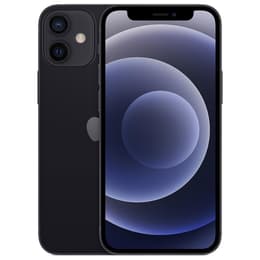
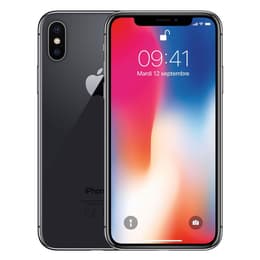
- Physical Design and Handling: The iPhone 12 Mini lives up to its name with a significantly smaller and lighter form factor (131.5 x 64.2 x 7.4 mm, 135g) compared to the iPhone X (143.6 x 70.9 x 7.7 mm, 174g). This makes the 12 Mini more comfortable for one-handed use and easier to carry. The 12 Mini also features flat edges, reminiscent of older iPhone designs, while the iPhone X has rounded sides.
- Biometric Authentication: Both devices utilize Face ID for secure facial recognition, a feature first introduced with the iPhone X.
Weight
135 g
174 g
Width
6,42 cm
7,09 cm
Height
13,15 cm
14,36 cm
Depth
0,74 cm
0,77 cm
Screen size (in)
5.4
5.8
Network
5G
4G
SIM card
Physical SIM + eSIM
Physical SIM
Carrier compatibility
Unlocked
Unlocked
Connector
Lightning
Lightning
What the community thinks
The iPhone 12 Mini and iPhone X cater to different user preferences, largely due to their generational gap and design philosophies. The iPhone X, as a pioneering device, introduced the all-screen OLED display and Face ID, setting a new standard for future iPhones. Users often praise its original design and the introduction of Face ID. However, its age means it no longer receives major software updates, and its processor, while still functional, is less capable for modern demanding applications.
The iPhone 12 Mini, on the other hand, is celebrated for its remarkably compact size, offering a flagship experience in a small form factor. Users appreciate its powerful processor, improved camera system with features like Night Mode, and 5G connectivity. A common point of discussion among users, however, is its battery life, which some find to be merely adequate for a full day of heavy use due to its smaller physical size.
Users prioritizing a highly compact device with modern performance, an advanced camera, and longer software support will find the iPhone 12 Mini well-suited to their needs, especially if they are not heavy power users who require extended battery life. Conversely, those who prefer a slightly larger screen than the Mini and are content with an older, but still capable, device for basic tasks might consider the iPhone X, understanding its limitations in terms of future software updates and raw processing power. Both models, particularly the iPhone 12 Mini, are available as quality-assured refurbished options, providing an eco-friendly alternative for consumers.