

iPhone 12 mini Vs iPhone SE (2022)

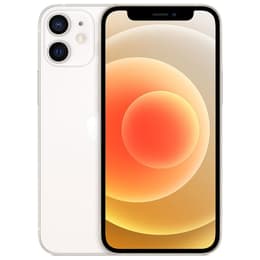
iPhone 12 mini
iPhone 12 mini
Starting at

Refurbished price:166.00

Versus €689.00 new

See options
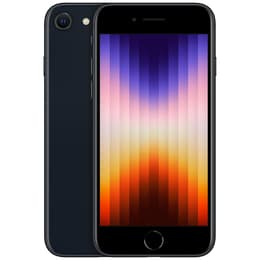
iPhone SE (2022)
iPhone SE (2022)
Starting at

Refurbished price:120.00

Versus €549.00 new

See options

Ratings

The iPhone 12 Mini, released in late 2020, and the iPhone SE (2022), launched in early 2022, offer distinct approaches to compact smartphone design within the Apple ecosystem. While both devices provide a streamlined iOS experience, they differ significantly in their form factor, display technology, and camera capabilities. The iPhone 12 Mini features a modern, all-screen design with an OLED display and a dual-camera system, whereas the iPhone SE (2022) retains the classic iPhone aesthetic, including a home button with Touch ID and an LCD screen, alongside a single rear camera.

Scores

Durability

The longevity of a smartphone is influenced by its release date, software support, and physical resilience. These two models present different timelines and durability features.

  • Release Timeline: The iPhone 12 Mini was introduced in November 2020, making it approximately a year and a half older than the iPhone SE (2022), which launched in March 2022. This difference in release year impacts their expected software support duration.
  • Software Longevity: Apple typically provides major iOS updates for its devices for about five to seven years after their release. Based on this pattern, the iPhone 12 Mini is anticipated to receive software updates until around 2027. The iPhone SE (2022), being newer and equipped with a more recent processor, is expected to continue receiving updates for a longer period, potentially until 2029 or 2030.
  • Physical Durability: The iPhone 12 Mini features a Ceramic Shield front cover, which Apple states offers enhanced drop performance, and boasts an IP68 rating for water and dust resistance. The iPhone SE (2022) also incorporates tough glass on both its front and back and carries an IP67 rating for water and dust resistance. Both ratings indicate protection against splashes and submersion, with the iPhone 12 Mini offering slightly greater depth resistance.

Year of Release

2020

2022

Compatible with latest Update

Yes

Yes

OS

iOS

iOS

Foldable

No

No

Performance

Performance is a key aspect for daily usage, encompassing how smoothly applications run, the speed of multitasking, and overall system responsiveness. Both devices offer capable performance, but with differences in their underlying hardware.

  • Processing Power: The iPhone SE (2022) is equipped with a more recent processor, which provides faster CPU and GPU speeds compared to the iPhone 12 Mini's processor. This translates to a noticeable difference in handling demanding applications, complex games, and intensive tasks.
  • System Responsiveness: While both phones offer a fluid user experience for everyday tasks, the iPhone SE (2022)'s newer processor provides more headroom for future software updates and increasingly complex applications, potentially maintaining its responsiveness for a longer duration. Users engaging in heavy multitasking or graphic-intensive gaming may observe a smoother experience on the iPhone SE (2022).
  • Storage and Memory: Both models are available with storage options of 64GB, 128GB, and 256GB, catering to various user needs for app and media storage. They also both feature 4GB of RAM, which is sufficient for managing multiple applications simultaneously and ensuring efficient background processes.

Memory (GB)

4 GB

4 GB

Screen quality

The display is the primary interface for interacting with a smartphone, and the quality of the screen significantly impacts the viewing experience. The iPhone 12 Mini and iPhone SE (2022) utilize different display technologies and designs.

  • Display Technology and Clarity: The iPhone 12 Mini features a 5.4-inch Super Retina XDR OLED display with a resolution of 2340 x 1080 pixels, resulting in a pixel density of 476 ppi. This OLED technology delivers deep blacks, high contrast, and vibrant colors. In contrast, the iPhone SE (2022) has a 4.7-inch Retina HD LCD display with a resolution of 1334 x 750 pixels and a pixel density of 326 ppi. While the LCD offers good color accuracy and brightness, it does not achieve the same level of contrast or true blacks as an OLED panel.
  • Brightness and Viewing Experience: Both displays offer adequate brightness for indoor use. However, the OLED panel on the iPhone 12 Mini generally provides better visibility in bright outdoor conditions due to its superior contrast ratio. The iPhone 12 Mini's edge-to-edge display design offers a more immersive viewing experience, maximizing screen real estate within its compact form factor. The iPhone SE (2022) retains larger bezels at the top and bottom, which can make the screen feel less expansive.
  • Refresh Rate: Both devices feature a standard 60Hz refresh rate. This means the screen refreshes 60 times per second, providing a smooth experience for most everyday tasks, though it does not offer the enhanced fluidity seen on devices with higher refresh rates.

Resolution

1080 x 2340

750 x 1334

Screen type

Super Retina XDR OLED

Retina IPS LCD

Audiovisual

Camera capabilities are often a deciding factor for many users, and both iPhones offer competent systems, albeit with different strengths and features.

  • Rear Camera System: The iPhone 12 Mini is equipped with a dual 12-megapixel camera system, featuring a wide and an ultra-wide lens. This setup allows for more versatile photography, including wider landscape shots. It also supports Night mode, Deep Fusion, and Smart HDR 3, enhancing image quality in various lighting conditions. The iPhone SE (2022) features a single 12-megapixel wide camera. While it benefits from newer computational photography features like Smart HDR 4, Deep Fusion, and Photographic Styles due to its advanced processor, it notably lacks an ultra-wide lens and Night mode.
  • Photography Performance: For everyday photography, both phones capture detailed and color-accurate images in good lighting. The iPhone 12 Mini's inclusion of Night mode provides a significant advantage for low-light photography, producing brighter and more detailed images in dim environments. The iPhone SE (2022) can struggle in very low light due to the absence of Night mode. Both support Portrait mode, though the iPhone SE (2022)'s implementation is primarily optimized for human subjects due to its single lens.
  • Video Recording and Front Camera: Both devices are capable of recording 4K video at up to 60 frames per second. The iPhone 12 Mini also supports HDR video recording with Dolby Vision up to 4K at 30 fps. For selfies, the iPhone 12 Mini has a 12-megapixel TrueDepth front camera with Night mode, while the iPhone SE (2022) features a 7-megapixel front camera.

Main camera

12 megapixels

12 megapixels

Front camera

12 megapixels

7 megapixels

Miscellaneous

Beyond core performance and display, several practical elements contribute to the overall user experience, including connectivity, physical design, and security features.

  • Connectivity and Ports: Both the iPhone 12 Mini and iPhone SE (2022) support 5G cellular connectivity, offering faster download and upload speeds where available. They also both include Wi-Fi 6 for faster wireless internet and Bluetooth 5.0 for connecting accessories. Both devices utilize Apple's proprietary Lightning port for charging and data transfer.
  • Biometric Security: The iPhone 12 Mini employs Face ID for secure facial recognition, enabling unlocking, authentication, and Apple Pay transactions. The iPhone SE (2022) features Touch ID, integrated into its physical home button, providing fingerprint-based authentication. The choice between Face ID and Touch ID often comes down to user preference and specific use cases.
  • Design and Handling: The iPhone 12 Mini is notably compact and lightweight, measuring 131.5 x 64.2 x 7.4 mm and weighing 135g. Its smaller size and edge-to-edge display make it easy for one-handed use and pocketability. The iPhone SE (2022) is slightly larger and heavier at 138.4 x 67.3 x 7.3 mm and 144g, retaining the traditional iPhone design with a physical home button and prominent bezels. The build materials for both include an aluminum frame and glass on the front and back.

Weight

135 g

144 g

Width

6,42 cm

6 cm

Height

13,15 cm

13 cm

Depth

0,74 cm

0,73 cm

Screen size (in)

5.4

4.7

Network

5G

5G

SIM card

Physical SIM + eSIM

Physical SIM + eSIM

Carrier compatibility

Unlocked

Unlocked

Connector

Lightning

Lightning

The iPhone 12 Mini and iPhone SE (2022) cater to different user preferences within the compact smartphone segment. User feedback for the iPhone 12 Mini often highlights its appealingly small size, vibrant OLED display, and capable dual-camera system with features like Night mode as significant advantages. However, a frequent criticism is its relatively shorter battery life, which for some users may necessitate midday charging.

Conversely, the iPhone SE (2022) is praised for its powerful and future-proof processor, extended software support, and the familiarity of Touch ID and the home button. Common concerns for the iPhone SE (2022) revolve around its dated design with large display bezels, the use of an LCD screen rather than OLED, and the absence of Night mode in its single camera system. Its battery life is generally considered average, though improved over its predecessor.

Users prioritizing a modern, immersive display and a versatile camera with an ultra-wide lens and Night mode, within a very compact form factor, may find the iPhone 12 Mini more aligned with their needs. Those who prefer the classic iPhone design, value a powerful processor for long-term performance, and find Touch ID essential, while being less concerned with advanced display technology or low-light camera capabilities, might lean towards the iPhone SE (2022). Both devices represent excellent choices, especially when considering quality-assured refurbished options, which offer an eco-friendly alternative for consumers.

See all articles

Our recent comparisons