

Galaxy Tab S9 (11.0", 2023) Vs iPad Air 4 (2020, A14 series)

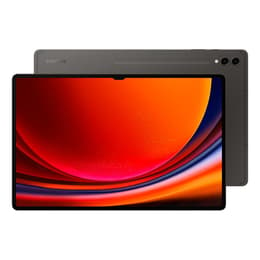
Galaxy Tab S9 (11.0", 2023)
Starting at

Refurbished price:491.00

Versus €1,219.00 new

See options
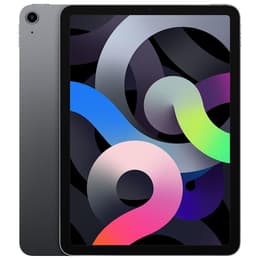
iPad Air 4 (2020, A14 series)
Starting at

Refurbished price:273.00

Versus €679.00 new

See options

Ratings

The Samsung Galaxy Tab S9, released in 2023, and the Apple iPad Air (4th generation), launched in 2020, represent distinct approaches to the tablet experience. While both offer capable performance for a range of tasks, they differ significantly in their operating systems, display technology, and included accessories. The Galaxy Tab S9 runs on Android with Samsung's One UI, while the iPad Air operates on Apple's iPadOS.

Scores

Durability

The longevity of a tablet is influenced by its build quality, software support, and repairability. These two devices offer different timelines and features in these areas.

  • Release Timeline and Software Support: The Galaxy Tab S9, being a 2023 release, benefits from a more extended period of software updates compared to the iPad Air (2020). Samsung typically provides several years of Android and security updates for its flagship tablets. The iPad Air (2020), while older, has received consistent iPadOS updates since its release, with its operating system currently at iPadOS 26.4 as of March 2026. Users of the iPad Air (2020) have reported good longevity, with many still finding it performs well several years after its launch.
  • Durability Features: The Galaxy Tab S9 boasts an IP68 rating for water and dust resistance, a feature that extends to its included S Pen, offering enhanced protection against environmental elements. The iPad Air (2020) does not carry an official IP rating.
  • Repairability: Repairability scores can vary, but for the Galaxy Tab S9 series, some aspects like an easily accessible battery are noted, though screen removal can be delicate. Both devices, when considering a quality-assured refurbished option, can offer extended practical lifespans.

Year of Release

2023

2020

Compatible with latest Update

Yes

Yes

OS

Android

iPadOS

Performance

Performance is a key factor for users, impacting everything from app responsiveness to multitasking capabilities and gaming.

  • Processing Power: The Galaxy Tab S9 is equipped with a current-generation processor, which allows it to handle demanding applications, complex multitasking, and graphics-intensive games with smooth responsiveness. The iPad Air (2020) features the A14 Bionic chip, which, despite being an older generation, still delivers strong performance for everyday tasks, creative applications, and many games without noticeable slowdowns.
  • Multitasking and Responsiveness: Users of the Galaxy Tab S9 often describe its performance as "hella fast" and "silky smooth" even with multiple applications open simultaneously. The iPad Air (2020) also offers a fluid user experience, with its processor capable of managing various applications efficiently.
  • Storage and Memory: The Galaxy Tab S9 offers configurations with 8GB or 12GB of RAM and storage options of 128GB or 256GB, which can be expanded up to 1TB via a microSD card. The iPad Air (2020) comes with 4GB of RAM and storage options of 64GB or 256GB, without expandable storage.

Memory (GB)

8 GB

4 GB

Screen quality

The display is a primary interface for tablets, and both devices offer distinct visual experiences.

  • Display Technology: The Galaxy Tab S9 features an 11-inch Dynamic AMOLED 2X display, known for its vibrant colors, deep blacks, and high contrast. This technology provides an immersive viewing experience, especially for media consumption. In contrast, the iPad Air (2020) utilizes a 10.9-inch Liquid Retina IPS LCD, which offers accurate color reproduction and wide viewing angles.
  • Resolution and Refresh Rate: The Tab S9 has a resolution of 2560 x 1600 pixels and supports a 120Hz refresh rate, resulting in smoother scrolling and more fluid animations. The iPad Air (2020) has a resolution of 2360 x 1640 pixels and a standard 60Hz refresh rate.
  • Brightness and Features: Both displays offer good brightness for indoor use. The iPad Air (2020) includes Apple's True Tone technology, which adjusts the display's color and intensity to match the ambient light, and has an anti-reflective coating for better outdoor visibility. The Tab S9's AMOLED panel is also noted for its brightness and color accuracy.

Resolution

1600 x 2560

2360 x 1640

Screen type

Dynamic AMOLED 2X

Liquid Retina display

Pixel density

280ppp

264ppp

Audiovisual

While not their primary function, tablet cameras are useful for video calls, document scanning, and casual photography.

  • Rear Camera System: The Galaxy Tab S9 is equipped with a 13MP rear camera. The iPad Air (2020) features a 12MP rear camera. Both are capable of capturing decent photos in good lighting conditions and recording 4K video at 30fps.
  • Front Camera for Communication: For video conferencing, the Tab S9 has a 12MP ultrawide front camera. The iPad Air (2020) includes a 7MP front-facing camera, which is noted for its quality during video calls and in low-light conditions.
  • Audio Experience: The Galaxy Tab S9 features quad stereo speakers tuned by AKG with Dolby Atmos support, providing a rich audio experience for media consumption. The iPad Air (2020) also offers stereo speakers, delivering clear audio.

Miscellaneous

Beyond core specifications, several practical features contribute to the overall user experience of these tablets.

  • Connectivity and Ports: The Galaxy Tab S9 supports Wi-Fi 6E and Bluetooth 5.3, with optional 5G connectivity, and features a USB Type-C port. The iPad Air (2020) supports Wi-Fi 6 and Bluetooth 5.0, with optional 4G LTE, and also uses a USB-C port for charging and accessories.
  • Biometric Authentication: The Tab S9 incorporates an under-display fingerprint sensor for secure unlocking. The iPad Air (2020) features Touch ID integrated into its power button, offering a convenient and reliable biometric solution.
  • Stylus and Design: A significant differentiator is the included S Pen with the Galaxy Tab S9, which is IP68 water and dust resistant and offers various productivity features like Air Command and screen-off memos. The iPad Air (2020) supports the Apple Pencil (2nd generation), which is sold separately. In terms of physical design, the Tab S9 weighs 498g (Wi-Fi) and measures 165.8 x 254.3 x 5.9mm. The iPad Air (2020) weighs 458g (Wi-Fi) and measures 247.6 x 178.5 x 6.1 mm.

Weight

129 g

460 g

Screen size (in)

11.0

10.9

Network

Wi-Fi

Wi-Fi + 4G

Carrier compatibility

Unlocked

Unlocked

Choosing between the Galaxy Tab S9 and the iPad Air (2020) depends largely on individual priorities and ecosystem preferences. Users frequently praise the Galaxy Tab S9 for its fast performance, vibrant AMOLED display, and the versatility offered by the included S Pen, making it a strong contender for those seeking a powerful Android tablet for both productivity and entertainment. Some users note that while its battery life is good, the demanding AMOLED screen can lead to more frequent charging for heavy use.

The iPad Air (2020) continues to be a well-regarded device, with users appreciating its consistent performance, solid battery life, and suitability for note-taking, drawing, and media consumption. A common point of consideration for the iPad Air (2020) is its base storage option, with 64GB sometimes being perceived as limited for modern usage.

Users prioritizing a cutting-edge display, an included stylus, and the flexibility of the Android ecosystem with expandable storage may find the Galaxy Tab S9 more aligned with their needs. Conversely, those deeply integrated into the Apple ecosystem, valuing consistent software updates, and a robust app selection, might lean towards the iPad Air (2020). Both tablets offer a capable experience, and considering a refurbished option for either can be an eco-friendly alternative to purchasing new, providing quality-assured devices for a variety of user profiles.


See all articles

Our recent comparisons