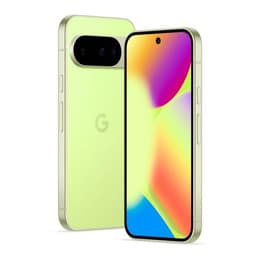



Compare models
Google Pixel 10 Vs Google Pixel 9 Pro
- 1-year minimum warranty
- Free delivery on all orders
- Free 30-day returns
Differences at a glance
The Google Pixel 10 (2025) and Google Pixel 9 Pro (2024) represent consecutive generations of Google's advanced smartphone lineup, pairing distinct hardware approaches with clean Android software. While both devices feature compact form factors and comprehensive artificial intelligence capabilities, they differ significantly in their generation timeline and internal hardware balance.
Running on modern versions of the Android operating system, both models deliver an intuitive user interface backed by years of planned software support. Users evaluating these smartphones will find that each device prioritizes different aspects of everyday mobile performance and hardware capability.
Available Models
Colour
Storage
Scores
Durability
When assessing long-term usability and physical longevity, both the Google Pixel 10 and the Google Pixel 9 Pro offer strong structural foundations, though their release timelines create distinct differences in software update horizons.
- Software Support Window: The Google Pixel 10 benefits from a later release year, extending its window of major operating system upgrades and security patches further into the future compared to its predecessor.
- Repairability and Build: Both models utilize robust aluminum frames and hardened glass construction, scoring similarly in structural durability while supporting standardized repair pathways for replacement components.
- Expected Lifespan: Thanks to efficient power management and generous memory capacities, both devices are well-equipped to maintain responsive daily operation over multiple years of regular use.
Year of Release
2025
2024
Compatible with latest Update
Yes
Yes
OS
Android
Android
Foldable
No
No
Performance
Performance capabilities vary noticeably between the two models due to generational shifts in internal architecture and memory allocation for multitasking.
- Multitasking and Memory: The Google Pixel 9 Pro features a larger pool of random access memory, making it well-suited for keeping numerous demanding applications active simultaneously, while the Google Pixel 10 relies on a newer processor architecture for improved power efficiency.
- Daily Responsiveness: Both smartphones handle routine tasks, web browsing, and graphics-heavy mobile games smoothly, maintaining steady frame rates and responsive app loading behavior.
- Battery Behavior: Each device comfortably sustains a full day of mixed usage under typical conditions, with adaptive battery management features learning user routines over time to conserve power.
Screen quality
Display characteristics on both smartphones deliver sharp visual output and high brightness levels, though their panel technologies and resolutions differ slightly.
- Panel Technology and Clarity: The Google Pixel 9 Pro utilizes a high-resolution LTPO organic light-emitting diode panel with superior pixel density, while the Google Pixel 10 provides a crisp standard resolution panel tailored for clear everyday media consumption.
- Outdoor Visibility: Both displays achieve high peak brightness figures, ensuring that text and images remain legible even under direct sunlight.
- Refresh Rate Smoothness: Each device supports adaptive refresh rates scaling up to a high frequency, ensuring fluid scrolling through web pages and smooth animation transitions during navigation.
Resolution
1080x2424
1280 x 2856
Screen type
OLED
LTPO OLED
Audiovisual
Photography and video recording suites on these models cater to versatile imaging needs through capable multi-lens configurations and advanced computational processing.
- Lens Configurations: The Google Pixel 9 Pro includes a high-resolution telephoto setup alongside wide and ultra-wide options, whereas the Google Pixel 10 balances a streamlined multi-lens array designed for everyday moments.
- Low-Light and Video: Both smartphones excel at capturing balanced exposures in challenging lighting environments and record stable high-definition video footage with reliable audio capture from built-in microphones.
- Media Consumption: Integrated stereo speakers deliver clear audio output suitable for casual video playback and hands-free calls.
Front camera
42 megapixels
42 megapixels
Miscellaneous
Practical daily usability features, physical dimensions, and connectivity standards shape how each device fits into travel and professional routines.
- Connectivity and Ports: Both models support modern fifth-generation cellular networks, rapid wireless protocols, and reversible charging ports for efficient tethering.
- Security Sensors: Each smartphone incorporates responsive biometric authentication tools, including fast facial recognition and secure under-display fingerprint sensors.
- Physical Handling: Sharing a compact 6.3-inch screen size, both devices offer comfortable one-handed handling and pocket-friendly dimensions with balanced weight distribution.
Weight
204 g
280 g
Screen size (in)
6.3
6.8
Network
4G
5G
SIM card
Physical SIM + eSIM
Physical SIM + eSIM
Carrier compatibility
Unlocked
Unlocked
Connector
USB-C
USB-C
What the community thinks
User discussions across community forums frequently highlight the Google Pixel 9 Pro for its abundant memory allocation and high-resolution display clarity, while the Google Pixel 10 receives praise for its newer processor efficiency and extended software support horizon. Common criticisms for both models occasionally center on thermal warmth during extended gaming sessions and average charging speeds relative to some market alternatives.
Users prioritizing maximum multitasking headroom and sharper screen resolution may prefer the Google Pixel 9 Pro, while users seeking longer software longevity and a current-generation processor will find the Google Pixel 10 well-suited to their needs. For consumers exploring sustainable technology choices, a quality-assured refurbished option provides an eco-friendly alternative that maintains high performance standards.
Ultimately, the choice depends on whether long-term software support or expanded internal memory aligns more closely with individual daily usage preferences.










