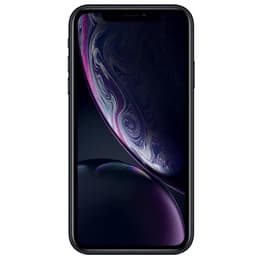


Huawei P30 Pro Vs iPhone XR

Huawei P30 Pro
Huawei P30 Pro
Starting at

Refurbished price:188.00

Versus €849.00 new

See options
iPhone XR
iPhone XR
Starting at

Refurbished price:121.00

Versus €439.00 new

See options

Ratings

The Huawei P30 Pro, released in March 2019, and the iPhone XR, launched in October 2018, represent flagship smartphones from their respective manufacturers. While both devices offer robust performance and a premium user experience, they diverge significantly in their operating systems, camera capabilities, and display technologies. The P30 Pro runs on Android with Huawei's EMUI, offering a versatile multi-lens camera system and an OLED display, whereas the iPhone XR operates on Apple's iOS, featuring a single-lens camera and an advanced LCD screen.

Scores

Durability

Evaluating the long-term usability of these devices involves considering their release timelines, software support, and physical resilience.

  • Software Longevity: The iPhone XR, having launched in late 2018, has received iOS updates up to iOS 17, indicating a strong commitment to software support for several years. The Huawei P30 Pro, released in early 2019, initially ran Android 9.0 Pie and was upgradable to EMUI 12 (based on Android 10/11). In some regions, it has even received HarmonyOS updates as recently as 2025, extending its software lifespan.
  • Physical Durability: Both devices feature glass front and back panels with aluminum frames. The Huawei P30 Pro carries an IP68 rating for dust and water resistance, offering protection against immersion in up to 1.5 meters of water for 30 minutes. The iPhone XR has an IP67 rating, protecting against immersion in up to 1 meter of water for the same duration.
  • Repairability: The iPhone XR generally scores moderately on repairability, with common repairs like display and battery replacements being relatively straightforward. The Huawei P30 Pro, however, received a lower repairability score from experts, primarily due to its heavily glued construction and compact internal layout, making screen repairs particularly challenging.

Year of Release

2019

2018

Compatible with latest Update

No

Yes

OS

Android

iOS

Foldable

No

No

Performance

The performance of a smartphone is crucial for daily tasks, from app usage to demanding applications.

  • System Responsiveness: The Huawei P30 Pro is equipped with a powerful processor that handles demanding applications and multitasking smoothly, ensuring a responsive user experience. The iPhone XR also features a capable chip that delivers fluid performance across iOS applications and games, maintaining a high level of responsiveness.
  • Battery Behavior: The Huawei P30 Pro is widely recognized for its exceptional battery life, with many users reporting that it comfortably lasts for up to two full days on a single charge with moderate to heavy use. It also supports fast wired and wireless charging. The iPhone XR offers a notable improvement in battery longevity compared to its predecessors, providing ample power for a full day of typical usage.
  • Storage and Multitasking: The P30 Pro was available with generous storage options up to 512GB and up to 8GB of RAM, facilitating extensive app usage and efficient multitasking. The iPhone XR offered storage up to 256GB and 3GB of RAM, which is optimized by iOS for smooth operation and app management.

Memory (GB)

8 GB

3 GB

Screen quality

The visual experience is a key aspect of smartphone interaction, influenced by display technology and resolution.

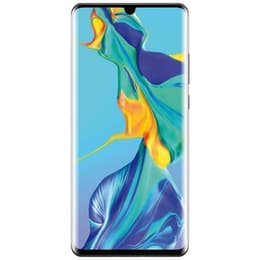
  • Display Technology: The Huawei P30 Pro features a 6.47-inch OLED display, known for its deep blacks, high contrast, and vibrant color reproduction. This technology provides an immersive viewing experience, especially for media consumption. The iPhone XR utilizes a 6.1-inch Liquid Retina IPS LCD panel, which Apple highlights as an advanced LCD, offering excellent color accuracy and wide viewing angles.
  • Resolution and Clarity: The P30 Pro's OLED screen has a resolution of 1080 x 2340 pixels, resulting in sharp and clear imagery with a pixel density of approximately 398 pixels per inch. The iPhone XR's LCD display has a resolution of 828 x 1792 pixels, with a pixel density of 326 ppi, which still provides a clear visual experience for most users, though it is lower than some contemporary flagships.
  • Brightness and Interaction: Both devices offer good brightness levels for outdoor visibility. The P30 Pro's OLED panel provides strong contrast even in bright conditions. The iPhone XR includes features like True Tone, which adjusts the display's white balance to match ambient light, and Haptic Touch, providing tactile feedback for certain interactions, in place of the pressure-sensing 3D Touch found on other iPhone models.

Resolution

1080 x 2340

828 x 1792

Screen type

OLED

Liquid Retina IPS LCD

Audiovisual

Camera capabilities are a significant differentiator, especially for users who prioritize photography and videography.

  • Rear Camera System: The Huawei P30 Pro boasts a versatile quad-camera setup, including a 40 MP main sensor, a 20 MP ultra-wide lens, an 8 MP periscope telephoto lens offering 5x optical zoom, and a Time-of-Flight (TOF) 3D sensor for depth perception. This system excels in low-light conditions and provides impressive zoom capabilities. The iPhone XR features a single 12 MP wide-angle rear camera, which, despite being a single lens, delivers high-quality photos with features like Smart HDR and an improved Portrait Mode.
  • Front Camera Performance: For selfies and video calls, the P30 Pro includes a 32 MP front camera, capable of capturing detailed images. The iPhone XR is equipped with a 7 MP front camera that supports Portrait Mode and offers reliable performance for everyday use.
  • Video and Audio: The P30 Pro can record video at up to 4K UHD resolution at 30 frames per second, with good low-light video performance. It uses an innovative Acoustic Display Technology for its earpiece, but features a single bottom-firing speaker. The iPhone XR records video up to 4K at 60 frames per second and offers stereo sound output, enhancing the media consumption experience.

Main camera

40 megapixels

12 megapixels

Front camera

32 megapixels

7 megapixels

Miscellaneous

Beyond core features, several practical elements contribute to the overall user experience.

  • Connectivity and Ports: Both devices support 4G LTE, Wi-Fi 5 (802.11ac), and Bluetooth 5.0 for wireless connectivity. The Huawei P30 Pro uses a USB-C port for charging and data transfer, while the iPhone XR uses Apple's proprietary Lightning port. Neither device includes a traditional 3.5mm headphone jack.
  • Biometric Security: The P30 Pro incorporates an optical fingerprint sensor embedded within its display for secure unlocking. The iPhone XR relies on Face ID, Apple's facial recognition system, for biometric authentication.
  • Design and Handling: The P30 Pro has dimensions of 158 x 73.4 x 8.4 mm and weighs 192 grams, featuring a curved glass design that contributes to a comfortable in-hand feel. The iPhone XR measures 150.9 x 75.7 x 8.3 mm and weighs 194 grams, offering a slightly more compact form factor with a flat display. Both devices utilize glass and aluminum in their construction.

Weight

192 g

194 g

Screen size (in)

6.47

6.1

Network

4G

4G

SIM card

Dual Physical SIM

Physical SIM + eSIM

Carrier compatibility

Unlocked

Unlocked

Connector

USB-C

Lightning

The Huawei P30 Pro and iPhone XR, while both capable smartphones, cater to different user preferences and priorities. User feedback often praises the P30 Pro for its exceptional camera system, particularly its low-light performance and impressive optical zoom capabilities, which were considered class-leading at its release. Its outstanding battery life is another frequently highlighted positive, allowing many users to go two days without needing a charge. Some criticisms have pointed to Huawei's EMUI software interface, with some users finding it less refined compared to stock Android or iOS.

The iPhone XR is often lauded for its robust performance, powered by its efficient processor, and its generally reliable battery life that comfortably lasts a full day. Its durability, particularly its resistance to drops and bends, has also been a point of praise, along with the relative ease of repairing common components like the screen and battery. However, some users noted its LCD display's lower resolution compared to OLED alternatives and the absence of 3D Touch.

Users prioritizing advanced photography features, especially zoom and low-light performance, and extended battery life may find the Huawei P30 Pro well-suited to their needs. Its versatile camera system and long-lasting power make it a strong choice for travelers or photography enthusiasts. Conversely, users who value a streamlined operating system, consistent software updates, and a strong ecosystem of apps and services might lean towards the iPhone XR. Its balanced performance and user-friendly interface appeal to a broad audience seeking a reliable daily driver. Both devices remain viable options, and choosing a quality-assured refurbished option can provide an eco-friendly alternative for either model.


See all articles

Our recent comparisons