

Compare models

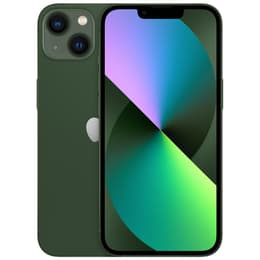
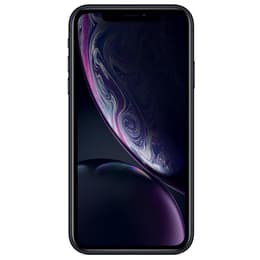
iPhone 13 Vs iPhone XR

  • 1-year minimum warranty
  • Free delivery on all orders
  • Free 30-day returns
iPhone 13
iPhone 13
Starting at

Refurbished price:231.00

Versus €769.00 new

See options
iPhone XR
iPhone XR
Starting at

Refurbished price:121.00

Versus €439.00 new

See options

Differences at a glance

The iPhone 13, released in September 2021, and the iPhone XR, launched in October 2018, represent different generations within Apple's smartphone lineup. While both offer a 6.1-inch display, the iPhone 13 introduces significant advancements in display technology, camera capabilities, and processing power, reflecting its newer release. These core differences cater to varying user priorities, from visual fidelity to overall system responsiveness.

Scores

Durability

When considering the practical lifespan of these devices, their respective release timelines and ongoing software support are key factors.

  • Release Timeline: The iPhone 13 was released in September 2021, making it a considerably newer device compared to the iPhone XR, which launched in October 2018. This age difference directly impacts how many more years of official software updates each device is likely to receive.
  • OS Support Duration: The iPhone 13, having launched with iOS 15, is expected to receive major iOS updates for several more years, likely including iOS 18 and beyond. The iPhone XR, originally on iOS 12, currently supports iOS 17, but is nearing the end of its major operating system update cycle. This means the iPhone 13 will offer a longer period of access to the latest features, security patches, and app compatibility.
  • Repairability: Both models are designed with Apple's ecosystem in mind, and parts are generally available. However, as the iPhone XR is an older model, components for repairs might be more readily available and potentially less complex to source compared to the newer iPhone 13.

Year of Release

2021

2018

Compatible with latest Update

Yes

Yes

OS

iOS

iOS

Foldable

No

No

Performance

The performance capabilities of the iPhone 13 and iPhone XR show a notable generational leap, impacting everything from app loading to demanding tasks.

  • Processor Capabilities: The iPhone 13 features a more advanced processor, which translates to faster app launch times, smoother navigation, and more efficient handling of complex applications and games. The iPhone XR, while still capable for everyday use, relies on an older generation processor that provides sufficient power for general tasks but may show limitations with newer, more resource-intensive applications.
  • Multitasking and Responsiveness: The iPhone 13 typically includes more internal memory, which contributes to more fluid multitasking and quicker switching between applications without noticeable slowdowns. Users of the iPhone XR may experience slightly longer loading times or occasional stutters when managing multiple demanding apps simultaneously due to its comparatively less internal memory.
  • Storage Options: Both devices offer various storage configurations. The iPhone 13 starts with a higher base storage option, providing more space for apps, photos, and videos from the outset.

Memory (GB)

4 GB

3 GB

Screen quality

The visual experience on the iPhone 13 and iPhone XR differs significantly due to advancements in display technology.

  • Display Technology: The iPhone 13 features a Super Retina XDR OLED display, which offers deep blacks, high contrast, and vibrant colors. In contrast, the iPhone XR uses a Liquid Retina HD LCD display, which provides good color accuracy but cannot achieve the same level of contrast or true black levels as an OLED panel.
  • Resolution and Clarity: The iPhone 13 has a higher resolution of 1170 x 2532 pixels at 460 pixels per inch (ppi), resulting in sharper text and more detailed images. The iPhone XR's display has a resolution of 828 x 1792 pixels at 326 ppi, which is clear for most content but less sharp than the iPhone 13.
  • Brightness and Viewing Experience: The iPhone 13 offers significantly higher typical and peak brightness levels, making content more visible in bright outdoor conditions and enhancing HDR content. The iPhone XR's maximum brightness is lower, which might affect outdoor visibility. Both devices feature a 6.1-inch screen size, providing a similar physical viewing area.

Resolution

1170 x 2532

828 x 1792

Screen type

Super Retina XDR OLED

Liquid Retina IPS LCD

Audiovisual

The camera systems on the iPhone 13 and iPhone XR showcase distinct advancements, particularly in computational photography and hardware.

  • Camera System Capabilities: The iPhone 13 features a dual 12MP camera system, including a Wide and an Ultra Wide lens, with sensor-shift optical image stabilization on the main sensor for improved low-light performance and stability. The iPhone XR has a single 12MP Wide camera with optical image stabilization.
  • Photography Features: The iPhone 13 introduces advanced features like Cinematic mode for video, Photographic Styles, Night mode across all cameras, Deep Fusion, and Smart HDR 4, which significantly enhance image quality in various conditions. The iPhone XR offers Portrait mode with Depth Control and Smart HDR for photos, providing solid performance for its generation.
  • Video Recording and Audio: Both phones can record 4K video at up to 60 frames per second. However, the iPhone 13 adds Dolby Vision HDR video recording and Cinematic mode, offering more creative video capabilities. Both devices provide stereo speaker output for media consumption.

Main camera

12 megapixels

12 megapixels

Front camera

12 megapixels

7 megapixels

Miscellaneous

Beyond core performance and display, several practical elements differentiate the iPhone 13 and iPhone XR.

  • Connectivity: The iPhone 13 supports 5G cellular connectivity, offering faster download and upload speeds in areas with 5G networks. The iPhone XR is limited to 4G LTE. Both support modern Wi-Fi standards, with the iPhone 13 supporting Wi-Fi 6 (802.11ax) and the iPhone XR supporting Wi-Fi 5 (802.11ac).
  • Physical Design and Handling: The iPhone 13 is slightly thinner and lighter than the iPhone XR, which can contribute to a more comfortable in-hand feel for some users. Both devices feature Face ID for secure authentication.
  • Durability Features: The iPhone 13 incorporates a Ceramic Shield front cover for enhanced drop performance and boasts an IP68 rating for water and dust resistance, allowing submersion up to 6 meters for 30 minutes. The iPhone XR has an IP67 rating, protecting against submersion up to 1 meter for 30 minutes.

Weight

173 g

194 g

Screen size (in)

6.1

6.1

Network

5G

4G

SIM card

Physical SIM + eSIM

Physical SIM + eSIM

Carrier compatibility

Unlocked

Unlocked

Connector

Lightning

Lightning

What the community thinks

The iPhone 13 and iPhone XR cater to different user needs, largely due to the generational gap in their technology. Users frequently praise the iPhone 13 for its vibrant OLED display, significantly improved camera system with advanced features like Cinematic mode and Night mode, and its robust performance for demanding applications and multitasking. Its 5G connectivity and extended software support are also commonly highlighted as benefits for future-proofing.

Conversely, the iPhone XR is often lauded by users for its reliable performance for everyday tasks and its solid battery life, especially considering its age. Criticisms of the iPhone XR often revolve around its LCD display, which, while good, lacks the contrast and vibrancy of newer OLED panels, and its single rear camera setup, which offers fewer photographic options compared to multi-lens systems. The iPhone 13, while offering a more premium experience, sometimes draws comments regarding its iterative design changes from previous models.

Users prioritizing a cutting-edge visual experience, advanced photography and videography capabilities, and long-term software support will find the iPhone 13 well-suited to their needs. It is ideal for those who engage in mobile gaming, content creation, or require the fastest cellular speeds. On the other hand, users seeking a dependable smartphone for daily communication, social media, and general app usage, who may not require the latest camera innovations or the highest display fidelity, will find the iPhone XR to be a capable device. Opting for a quality-assured refurbished option for either model can be a sustainable choice, extending the life of these devices and contributing to a more circular economy.