

Huawei P30 Pro Vs iPhone 12

Huawei P30 Pro
Huawei P30 Pro
Starting at

Refurbished price:188.00

Versus €849.00 new

See options
iPhone 12
iPhone 12
Starting at

Refurbished price:174.00

Versus €829.00 new

See options

Ratings

The Huawei P30 Pro, released in March 2019, and the iPhone 12, launched in October 2020, are both prominent smartphones from their respective manufacturers. While the P30 Pro gained recognition for its advanced camera system and impressive battery longevity, the iPhone 12 introduced a powerful new processor, an enhanced OLED display, and 5G connectivity. The P30 Pro operates on Android, initially with Android 9 and later updated to EMUI 12 based on Android 10, whereas the iPhone 12 runs on Apple's iOS platform, starting with iOS 14.

Scores

Durability

When considering the longevity of these devices, several factors come into play, including their release dates, software support, and physical resilience.

  • Release Timeline: The Huawei P30 Pro was released in March 2019, making it an older device compared to the iPhone 12, which launched in October 2020. This difference in release year directly impacts the expected duration of software updates and overall practical lifespan.
  • Software Longevity: The iPhone 12, being a newer device, benefits from a longer expected period of iOS updates, typically extending for several years from its release. The Huawei P30 Pro, while initially running Android 9, received updates up to EMUI 12, which is based on Android 10.
  • Repairability and Durability: The Huawei P30 Pro received a repairability score of 4 out of 10 from iFixit, indicating it can be challenging to repair due to heavy gluing and compact internal components. The iPhone 12 scored 6 out of 10 for repairability, with modular components but also noted challenges with proprietary software for certain part replacements. Both devices feature an IP68 rating for dust and water resistance, though the iPhone 12 is rated for a maximum depth of 6 meters for up to 30 minutes, compared to the P30 Pro's 1.5 meters for the same duration. The iPhone 12 also incorporates a Ceramic Shield front cover for enhanced drop performance.

Year of Release

2019

2020

Compatible with latest Update

No

Yes

OS

Android

iOS

Foldable

No

No

Performance

The performance of a smartphone is crucial for daily tasks, from app usage to demanding games and multitasking. Both devices offer capable performance for their respective generations.

  • Processing Power: The Huawei P30 Pro is equipped with a processor that delivers snappy, fast, and smooth performance, capable of handling long gaming sessions and general usage effectively. The iPhone 12 features a current-generation processor that ensures very smooth and responsive operation, making it well-suited for demanding applications and seamless multitasking.
  • Storage and Memory: The P30 Pro was available with storage options up to 512GB and came with 6GB or 8GB of RAM. The iPhone 12 offers storage configurations up to 256GB and includes 4GB of RAM.
  • Battery Behavior: The Huawei P30 Pro is known for its excellent battery life, often providing up to two days of use on a single charge with its 4200 mAh battery. The iPhone 12, with a 2815 mAh battery, offers good battery performance, though some users noted it could be shorter, particularly when utilizing 5G connectivity.

Memory (GB)

8 GB

4 GB

Screen quality

The display is a primary interface for smartphone interaction, and both the Huawei P30 Pro and iPhone 12 offer distinct visual experiences.

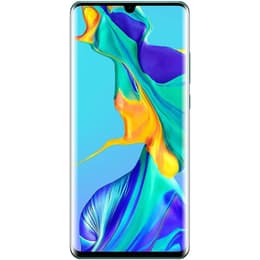
  • Display Technology and Size: The Huawei P30 Pro features a 6.47-inch curved OLED display, providing vibrant colors and deep blacks. The iPhone 12 comes with a 6.1-inch Super Retina XDR OLED display, also known for its rich colors and contrast.
  • Resolution and Clarity: The P30 Pro's display has a resolution of 2340x1080 pixels with a pixel density of 398 ppi. The iPhone 12 offers a higher resolution of 2532x1170 pixels, resulting in a sharper pixel density of 460 ppi.
  • Brightness and Refresh Rate: Both devices feature a standard 60Hz refresh rate. The iPhone 12's display can reach a typical maximum brightness of 625 nits and a peak brightness of 1200 nits for HDR content, contributing to good visibility in various lighting conditions. The P30 Pro also provides bright and clear imagery.

Resolution

1080 x 2340

1170 x 2532

Screen type

OLED

Super Retina XDR OLED

Audiovisual

Both smartphones offer advanced camera systems designed to capture high-quality photos and videos, though they approach imaging with different strengths.

  • Rear Camera Systems: The Huawei P30 Pro boasts a versatile quad-camera setup, including a 40MP wide lens, a 20MP ultrawide lens, and an 8MP periscope telephoto lens capable of 5x optical zoom, alongside a Time-of-Flight (ToF) sensor for depth sensing. The iPhone 12 features a dual 12MP camera system, comprising a wide and an ultrawide lens.
  • Photography Performance: The P30 Pro is highly acclaimed for its exceptional low-light photography, often capturing significant detail in very dark conditions, and its impressive zoom capabilities. For everyday photography, it produces good daylight photos, though some reviews noted occasional overexposure. The iPhone 12 delivers improved low-light performance with its Night mode available across all cameras, good HDR processing, and natural color reproduction.
  • Video and Selfie Cameras: The P30 Pro supports 4K video recording and has a 32MP front-facing camera that captures good detail and handles varying lighting well. The iPhone 12 is capable of 4K HDR video recording with Dolby Vision at 30 frames per second and features a 12MP front camera that offers good detail, portrait mode, and Night mode selfies.

Main camera

40 megapixels

12 megapixels

Front camera

32 megapixels

12 megapixels

Miscellaneous

Beyond core features, practical elements like connectivity, ports, and physical design contribute to the overall user experience.

  • Connectivity and Ports: The Huawei P30 Pro supports 4G LTE, Wi-Fi, and Bluetooth 5.0, and includes a USB-C port for charging and data transfer. It does not feature a traditional 3.5mm headphone jack. The iPhone 12 offers 5G connectivity, Wi-Fi 6, and Bluetooth 5.0, utilizing a Lightning port.
  • Biometric Security: The P30 Pro incorporates an in-display optical fingerprint sensor for secure unlocking. The iPhone 12 relies on Face ID for biometric authentication.
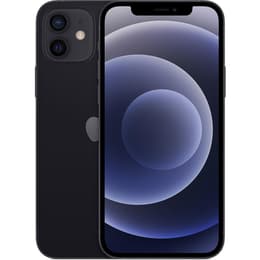
  • Design and Handling: The P30 Pro measures 158 x 73.4 x 8.4 mm and weighs 192g, featuring a glass and aluminum alloy construction. The iPhone 12 is a more compact and lighter device at 146.7 x 71.5 x 7.4 mm and 162g, with an aluminum frame and glass back, protected by Ceramic Shield on the front.

Weight

192 g

164 g

Width

7,34 cm

7.15 cm

Height

15,8 cm

14.67 cm

Depth

0,84 cm

0.74 cm

Screen size (in)

6.47

6.1

Network

4G

5G

SIM card

Dual Physical SIM

Physical SIM + eSIM

Carrier compatibility

Unlocked

Unlocked

Connector

USB-C

Lightning

The Huawei P30 Pro and iPhone 12 cater to different user preferences, each excelling in specific areas. The P30 Pro is frequently praised for its groundbreaking camera capabilities, particularly its impressive zoom and low-light performance, alongside its long-lasting battery life. However, some users noted its screen resolution was not as high as some contemporary rivals, and its software update future became uncertain due to external factors.

The iPhone 12 is lauded for its robust performance, vibrant OLED display, and the introduction of 5G connectivity. Common criticisms include its battery life, which some users found to be shorter, especially with 5G usage, and its standard 60Hz display refresh rate.

Users prioritizing an exceptional and versatile camera system with strong optical zoom and extended battery life may find the Huawei P30 Pro well-suited to their needs. Conversely, those who value cutting-edge processing power, a sharp OLED display, 5G connectivity, and a more compact design will likely lean towards the iPhone 12. Both devices offer reliable performance for everyday use, and for those seeking an eco-friendly alternative, quality-assured refurbished options are available for both models, providing a sustainable choice.


See all articles

Our recent comparisons