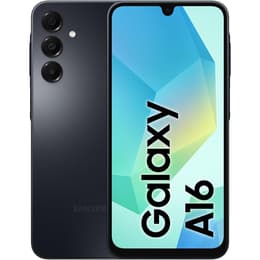
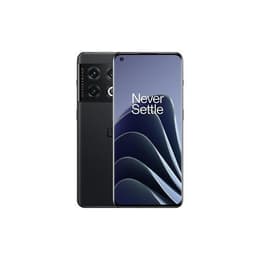


Galaxy A16 Vs OnePlus 10 Pro

Galaxy A16
Galaxy A16
Starting at

Refurbished price:134.00

Versus €250.00 new

See options
OnePlus 10 Pro
OnePlus 10 Pro
Starting at

Refurbished price:236.00

Versus €999.00 new

See options

Ratings

The Samsung Galaxy A16, released in late 2024 and early 2025, and the OnePlus 10 Pro, launched in early 2022, represent distinct segments of the smartphone market. While the Galaxy A16 focuses on extended software support and essential features, the OnePlus 10 Pro offers a more premium experience with advanced performance and camera capabilities. Both devices operate on the Android platform, but their approaches to user experience and hardware specifications differ significantly.

Scores

Durability

The practical lifespan of a smartphone is influenced by its initial release, ongoing software support, and physical resilience.

  • Release Timeline: The Galaxy A16 is a newer device, having been released in October 2024 in Europe and January 2025 in the US. The OnePlus 10 Pro was released earlier, in January 2022 in China and globally in March 2022. [6, 8, 9, 22, 28]
  • Software Longevity: The Galaxy A16 stands out with a commitment to six years of OS and security updates, extending its support until October 2030. [6, 28] In contrast, the OnePlus 10 Pro, which launched with Android 12, is expected to receive its last major update to Android 16 in Q1 2026, offering a total of four years of updates. [13, 30] This means the A16 will receive software support for a longer duration.
  • Durability Features: The Galaxy A16 features an IP54 rating for dust and splash resistance, providing basic protection against environmental elements. [2, 29] The OnePlus 10 Pro, while generally well-built with Gorilla Glass Victus on its display, only carries an official IP68 rating for dust and water resistance in its US T-Mobile variant, with international versions lacking this certification. [5, 17]

Year of Release

2024

2022

OS

Android

Android

Foldable

No

No

Performance

Performance is a key differentiator, impacting how smoothly applications run and how efficiently the device handles daily tasks.

  • Processing Power: The OnePlus 10 Pro is equipped with a high-end processor from its release era, enabling slick performance, smooth multitasking, and responsive handling of demanding applications and games. [5, 13, 15, 16] The Galaxy A16, on the other hand, uses a mid-range processor that capably handles everyday tasks like browsing and social media, but may exhibit stuttering during heavy multitasking or graphically intensive gaming. [1, 2, 19, 32]
  • Storage and Multitasking: The Galaxy A16 offers various RAM configurations, including 4GB, 6GB, and 8GB, alongside 128GB or 256GB of internal storage, expandable via microSD card up to 1.5TB. [2, 6, 10, 28] The OnePlus 10 Pro comes with 8GB or 12GB of RAM and 128GB, 256GB, or 512GB of internal storage, but does not support microSD expansion. [5, 8, 22, 31] Users who frequently switch between many applications or engage in intensive tasks may find the higher RAM options of the OnePlus 10 Pro more beneficial.
  • Battery Behavior: Both devices feature a 5000mAh battery capacity. The Galaxy A16 is noted for its strong battery life, often lasting at least two full days with moderate use and comfortably a full day with heavy use. [1, 2, 19, 32, 37] The OnePlus 10 Pro generally provides a full day of use, with some users reporting it can last up to 43 hours between charges with lighter usage patterns. [3, 4, 13, 15, 16] The OnePlus 10 Pro supports significantly faster wired charging at 80W (globally) or 65W (US), and also includes 50W wireless charging and reverse wireless charging capabilities, features absent on the Galaxy A16. [3, 4, 22, 25, 33, 40]

Memory (GB)

4 GB

8 GB

Screen quality

The display is the primary interface for user interaction, and differences in technology and specifications can greatly affect the viewing experience.

  • Display Technology and Resolution: Both smartphones feature AMOLED displays, known for vibrant colors and deep blacks. The Galaxy A16 has a 6.7-inch Super AMOLED display with a Full HD+ resolution (2340x1080 pixels). [1, 2, 28] The OnePlus 10 Pro boasts a 6.7-inch Fluid AMOLED display with a higher Quad HD+ resolution (3216x1440 pixels), offering a sharper visual experience. [3, 5, 16, 17, 25, 33, 34, 35]
  • Refresh Rate and Brightness: The Galaxy A16 provides a 90Hz refresh rate, contributing to smoother scrolling and animations. [1, 2, 28] The OnePlus 10 Pro features an adaptive refresh rate, utilizing LTPO 2.0 technology to dynamically adjust between 1Hz and 120Hz, optimizing both smoothness and power efficiency. [5, 16, 17, 25, 34] The OnePlus 10 Pro also offers a higher peak brightness of 1300 nits, compared to the Galaxy A16's 800 nits, which can improve visibility in bright outdoor conditions. [1, 5, 25]
  • Viewing Experience: The OnePlus 10 Pro's display is curved and protected by Gorilla Glass Victus, contributing to a more premium feel and enhanced durability. [5, 17] It also features dual color calibration for improved color accuracy at different brightness levels. [17, 34] The Galaxy A16 has a flat display with a waterdrop notch for the front camera. [28]

Resolution

1080x2340

1440 x 3216

Screen type

Super AMOLED

LTPO2 Fluid AMOLED

Audiovisual

Camera systems are crucial for capturing memories, and their capabilities vary significantly between these two devices.

  • Rear Camera System: The Galaxy A16 features a triple rear camera setup with a 50MP main sensor, a 5MP ultrawide lens, and a 2MP macro lens. [1, 2, 19, 36] The OnePlus 10 Pro offers a more advanced triple camera system developed in partnership with Hasselblad, including a 48MP main sensor with optical image stabilization (OIS), a 50MP ultrawide sensor with a 150-degree field of view, and an 8MP telephoto lens with 3.3x optical zoom and OIS. [3, 7, 18, 21, 22, 35]
  • Photography Performance: The Galaxy A16's main camera captures decent images in good lighting, but low-light photos may show muddy colors and blurry details. The ultrawide camera is considered less detailed. [1, 19, 23] The OnePlus 10 Pro's main camera delivers great photos with accurate colors and good detail, even in low-light conditions, though its low-light performance may not match the absolute best in the market. [3, 7, 18, 21, 24] The telephoto lens on the 10 Pro provides useful optical zoom capabilities. [3, 7, 18]
  • Video Recording and Audio: The Galaxy A16 supports 1080p video recording at 30 frames per second, with electronic image stabilization, and can record 4K video, allowing switching between main and ultrawide lenses during recording. [19, 23, 27, 37] The OnePlus 10 Pro offers more versatile video capabilities, including 8K recording at 24fps and 4K at up to 120fps, along with features like 10-bit HEIF and RAW capture for advanced users. [7, 21, 35] For audio, the OnePlus 10 Pro includes dual stereo speakers with Dolby Atmos, providing a richer media consumption experience, while the Galaxy A16 features a mono speaker. [2, 20, 25]

Miscellaneous

Beyond core specifications, several practical features contribute to the overall user experience and device utility.

  • Connectivity Standards: Both devices support 5G connectivity (for the 5G variant of the A16). The Galaxy A16 includes Wi-Fi 802.11 a/b/g/n/ac and Bluetooth 5.3. [36] The OnePlus 10 Pro supports Wi-Fi 6 and Bluetooth 5.2. [20, 25]
  • Ports and Sensors: Both smartphones feature a USB-C port for charging and data transfer, but neither includes a 3.5mm headphone jack. [5, 19, 39] The Galaxy A16 likely has a side-mounted or in-display fingerprint sensor, while the OnePlus 10 Pro features an in-display optical fingerprint sensor. [5, 20, 22] A notable feature on the OnePlus 10 Pro is the Alert Slider, allowing quick toggling between silent, vibrate, and ring modes. [5]
  • Design and Handling: The Galaxy A16 has a plastic back and frame, measuring 164.4 x 77.9 x 7.9mm and weighing 200g. [2, 6, 36] The OnePlus 10 Pro features a more premium construction with a glass front (Gorilla Glass Victus), glass back, and an aluminum frame, with dimensions of 163 x 73.9 x 8.55mm and a weight of 200.5g. [5, 8, 22, 25, 33, 39] The OnePlus 10 Pro's design emphasizes a more refined in-hand feel.

Weight

200 g

201 g

Screen size (in)

6.7

6.7

Network

4G

5G

SIM card

Physical SIM

Physical SIM

Carrier compatibility

Unlocked

Unlocked

Connector

USB-C

USB-C

User feedback for the Samsung Galaxy A16 often praises its exceptional software support, with six years of updates being a significant advantage for longevity. Users also appreciate its vibrant AMOLED display and robust battery life, which can comfortably last through a full day of heavy use. However, common criticisms point to its performance, which can feel sluggish during multitasking or demanding applications, and its camera system, which is considered basic compared to higher-tier devices. The lack of stereo speakers is also a frequent point of concern. [2, 19]

The OnePlus 10 Pro is frequently lauded for its powerful performance, capable of handling intensive tasks and gaming smoothly. Its stunning QHD+ AMOLED display with an adaptive refresh rate is another highlight, offering a premium visual experience. The fast wired and wireless charging capabilities are also highly valued by users. On the other hand, some users note that while its camera system is versatile, it may not consistently match the absolute best in class for all scenarios, particularly in low-light photography compared to some rivals. The absence of an official IP rating for most global variants is also a point of contention. [3, 5, 13, 15, 16, 21]

Users prioritizing long-term software support, extended battery life, and a clear display for everyday tasks may find the Samsung Galaxy A16 well-suited to their needs. It serves as a reliable option for those seeking a device that remains current with updates for many years. Conversely, users who prioritize high-end performance, a superior display, advanced camera features, and rapid charging will likely lean towards the OnePlus 10 Pro. Its capabilities cater to more demanding usage scenarios and a premium multimedia experience. For those considering either device, exploring quality-assured refurbished options can provide an eco-friendly alternative, extending the life cycle of these electronics and offering a sustainable choice.


See all articles

Our recent comparisons