

Compare models

Google Pixel 9a Vs iPhone 16e

  • 1-year minimum warranty
  • Free delivery on all orders
  • Free 30-day returns
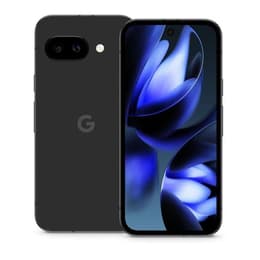
Google Pixel 9a
Starting at

Refurbished price:€361.00

Versus €586.09 new

See options
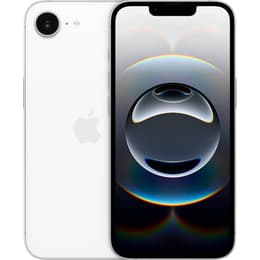
iPhone 16e
Starting at

Refurbished price:€455.00

Versus €719.00 new

See options

Differences at a glance

The Google Pixel 9a (2025) and the Apple iPhone 16e (2025) are mid-range smartphones designed to offer streamlined user experiences within their respective ecosystems. While both models focus on delivering core flagship capabilities without unnecessary complexity, they differ significantly in their operating systems, hardware layouts, and overall software philosophies.

The Google Pixel 9a runs on Android and emphasizes automated assistance, while the iPhone 16e operates on iOS with a focus on integrated hardware-software harmony.

Available Models

Colour

Storage

Scores

Durability

Both smartphones provide robust long-term support timelines, though their respective manufacturers handle software updates and hardware longevity through different approaches.

  • Software Support Duration: The Google Pixel 9a benefits from a multi-year update commitment covering operating system upgrades and security patches, matching Google's extended support window. The iPhone 16e follows Apple's standard lifecycle, receiving timely iOS updates for many years following its release.
  • Repairability and Build Longevity: Both devices feature sealed glass-and-metal constructions carrying high dust and water resistance ratings. Users seeking sustainable technology choices often consider a quality-assured refurbished option to extend device lifecycles and reduce electronic waste.
  • Expected Practical Lifespan: Both models are built with sufficient hardware headroom, including generous memory allocations that allow them to remain responsive and secure for typical daily use over several years.

Year of Release

2025

2025

OS

Android

iOS

Foldable

No

No

Performance

Underneath the surface, these devices handle everyday tasks, app loading, and multitasking with high efficiency, utilizing current-generation processing architecture and sufficient memory allocations.

  • System Responsiveness and Multitasking: Both smartphones handle demanding mobile applications, split-screen multitasking, and casual gaming smoothly, backed by ample random access memory that keeps background apps active without stuttering.
  • Storage and Battery Behavior: Both models are available in multiple storage configurations to accommodate media and applications. Battery performance comfortably covers a full day of standard mixed usage, though heavy streaming or navigation will require an evening charge.
  • Thermal Efficiency: Both devices maintain stable performance during extended tasks, preventing sudden thermal throttling during navigation or media recording sessions.

Screen quality

Display characteristics on both phones prioritize clear outdoor visibility and vibrant color reproduction through modern OLED panel technologies.

  • Display Technology and Clarity: The Google Pixel 9a features a 6.3-inch OLED panel with a variable refresh rate reaching up to 120Hz for smooth scrolling, while the iPhone 16e utilizes a 6.1-inch OLED screen with a standard 60Hz refresh rate.
  • Brightness and Outdoor Legibility: Both screens offer high peak brightness levels, ensuring that text and images remain easily legible under direct sunlight or bright ambient lighting conditions.
  • Viewing Experience: Both displays deliver deep contrast levels and sharp pixel densities well-suited for watching videos, reading documents, or browsing web content.

Resolution

2424 x 1080

2532x1170

Audiovisual

Photography and media capture capabilities on both devices rely on high-resolution main sensors supported by advanced computational processing.

  • Camera System Capabilities: The Pixel 9a equips a dual rear camera array featuring a high-megapixel main sensor and an ultra-wide lens, whereas the iPhone 16e utilizes a primary high-resolution sensor configured for versatile optical-quality zooming.
  • Low-Light and Video Recording: Both phones capture clear details in dim environments using automatic multi-frame processing, and both support high-definition video recording with built-in stabilization for smooth handheld clips.
  • Audio and Media Output: Stereo speaker setups on both devices deliver balanced sound output for hands-free calls, podcasts, and casual media consumption.

Front camera

13 megapixels

TrueDepth 12MP

Miscellaneous

Physical dimensions and connectivity standards define the practical handling and daily utility of each device.

  • Physical Design and Handling: The Google Pixel 9a measures 154.7 x 73.2 x 8.9 mm and weighs 186 grams, while the iPhone 16e measures 146.7 x 71.5 x 7.8 mm and weighs 167 grams, offering a slightly more compact footprint for single-handed use.
  • Connectivity and Ports: Both models support modern 5G cellular networks, Wi-Fi standards, and Bluetooth, utilizing reversible USB-C ports for charging and data synchronization.
  • Security Sensors: Both devices utilize secure biometric authentication methods to protect user data and streamline device unlocking.

Weight

186 g

167 g

Screen size (in)

6.3

6.1

Network

5G

5G

SIM card

Physical SIM + eSIM

eSIM

Carrier compatibility

Unlocked

Unlocked

Connector

USB-C

USB-C

What the community thinks

User discussions and community feedback indicate that buyers appreciate the Google Pixel 9a for its smooth high-refresh-rate screen, comfortable ergonomics, and integration with intelligent assistant tools. Common points of discussion often revolve around the sealed battery design and the specific subset of automated features available on this model. Conversely, users frequently praise the iPhone 16e for its streamlined iOS interface, powerful processing architecture, and dependable build quality, while noting the absence of certain advanced camera lenses found on larger flagship phones.

Users prioritizing deep integration with Apple services and a compact form factor will find the iPhone 16e well-suited to their preferences, while users who prefer Android customization and a fluid high-refresh-rate display may lean toward the Google Pixel 9a. For consumers exploring sustainable purchasing routes, opting for a quality-assured refurbished option from platforms like Back Market provides a practical way to acquire these devices while supporting environmental responsibility. Ultimately, the choice depends on personal software ecosystem preference and daily usage habits.