

Compare models

Google Pixel 9 Vs OnePlus 11

  • 1-year minimum warranty
  • Free delivery on all orders
  • Free 30-day returns
Google Pixel 9
Google Pixel 9
Starting at

Refurbished price:386.00

Versus €1,066.71 new

See options
OnePlus 11
OnePlus 11
Starting at

Refurbished price:285.00

Versus €949.00 new

See options

Differences at a glance

The Google Pixel 9, released in August 2024, and the OnePlus 11, launched in February 2023, represent distinct approaches to the Android smartphone experience. While both devices offer high-end performance and advanced camera systems, they differentiate themselves through software longevity, display characteristics, and overall design philosophy. Both operate on the Android platform, with Google's Pixel line known for its pure Android experience and extended software support, contrasting with OnePlus's OxygenOS.

Scores

Durability

When considering the long-term usability of these devices, their release timelines and software support policies are key factors. The Google Pixel 9, having been released in August 2024, benefits from Google's commitment to extended software updates.

  • Software Longevity: The Pixel 9 is part of Google's commitment to provide seven years of operating system and security updates, offering a significantly longer period of official support. In contrast, the OnePlus 11, released in early 2023, typically receives around four years of OS updates and five years of security updates, meaning its official support window will conclude sooner.
  • Physical Durability: The Pixel 9 features an IP68 rating for dust and water resistance and is protected by Corning Gorilla Glass Victus 2, indicating a robust build. The OnePlus 11 also offers a durable construction with Gorilla Glass Victus on the front and Gorilla Glass 5 on the back, supported by an aluminum frame, and carries an IP64 rating.
  • Expected Practical Lifespan: Users prioritizing the absolute longest software support and latest Android features will find the Pixel 9 more aligned with their needs due to its extended update policy. The OnePlus 11, while still a capable device, will reach its end-of-life for major software updates earlier.

Year of Release

2024

2023

Compatible with latest Update

Yes

Yes

OS

Android

Android

Foldable

No

No

Performance

Both smartphones deliver robust performance suitable for demanding applications and multitasking, though they achieve this with different underlying hardware. The Pixel 9 integrates Google's custom-designed processor, while the OnePlus 11 utilizes a high-end chip from a prominent manufacturer.

  • System Responsiveness: The Pixel 9's processor is designed to offer smooth navigation, quick app loading, and efficient handling of AI-driven tasks, contributing to a fluid user experience. The OnePlus 11, powered by its high-performance processor, also provides a responsive experience, excelling in demanding games and heavy multitasking.
  • Multitasking and Storage: The Pixel 9 typically comes with 12GB of RAM, ensuring efficient multitasking. The OnePlus 11 offers configurations with 8GB, 12GB, or 16GB of RAM, providing ample memory for running multiple applications simultaneously. For storage, the Pixel 9 is available with 128GB or 256GB, utilizing UFS 3.1 technology. The OnePlus 11 provides more varied options, including 128GB (UFS 3.1), 256GB (UFS 4.0), and 512GB, with UFS 4.0 offering faster data transfer speeds.
  • Battery Behavior: The Pixel 9 is equipped with a 4,700mAh battery, designed to last through a full day of mixed use, with optimizations for efficiency. Users can expect around 18-20 hours with mixed usage and 10-12 hours with heavy 5G usage. It supports 27W wired and 15W wireless charging. The OnePlus 11 features a larger 5,000 mAh battery and is known for its fast charging capabilities, allowing for quick power top-ups.

Memory (GB)

12 GB

8 GB

Screen quality

The visual experience on both devices is delivered through high-quality displays, each with specific characteristics that cater to different preferences. Both phones feature OLED technology, known for deep blacks and vibrant colors.

  • Display Technology and Clarity: The Google Pixel 9 features a 6.3-inch OLED display with a resolution of 1080 x 2424 pixels, resulting in a pixel density of 422 pixels per inch, offering clear and sharp visuals. The OnePlus 11 boasts a larger 6.7-inch Super Fluid AMOLED display with a higher QHD+ resolution of 1440 x 3216 pixels and a pixel density of 525 ppi, providing a very detailed viewing experience.
  • Brightness and Refresh Rate: The Pixel 9's display can reach a peak brightness of 2700 nits, ensuring good visibility even in bright outdoor conditions, and offers an adaptive refresh rate that ranges from 60Hz to 120Hz. The OnePlus 11 also features a dynamic refresh rate from 1Hz to 120Hz, utilizing LTPO technology for power efficiency, and supports HDR10+ and Dolby Vision for enhanced media consumption.
  • Screen Size and Viewing Experience: The Pixel 9's slightly smaller screen size might appeal to users who prefer a more compact device for one-handed use. The OnePlus 11's larger, curved display offers a more expansive and immersive viewing area, which can be particularly beneficial for media consumption and gaming.

Resolution

1080 x 2424

1440 x 3216

Screen type

OLED

LTPO3 Fluid AMOLED

Audiovisual

Both the Google Pixel 9 and the OnePlus 11 offer advanced camera systems, each with unique strengths and computational photography capabilities. The Pixel line is renowned for its software-driven image processing, while OnePlus has collaborated with Hasselblad for color science and tuning.

  • Rear Camera Systems: The Pixel 9 features a dual-lens rear setup, including a 50MP main camera with optical and electronic image stabilization, and a 48MP ultrawide camera with a wide field of view. The ultrawide sensor is a new 50MP Sony IMX858, which is larger and designed for improved low-light performance. The OnePlus 11 comes with a versatile triple-camera system, comprising a 50MP main sensor (Sony IMX890 with OIS), a 48MP ultrawide camera, and a 32MP telephoto lens capable of 2x optical zoom.
  • Photography Performance: The Pixel 9 excels in computational photography, delivering consistent image quality across various conditions, with particular strengths in detail and dynamic range. Its new ultrawide sensor and autofocus on the selfie camera enhance its versatility. The OnePlus 11, with its Hasselblad partnership, focuses on natural color reproduction and offers strong performance in daylight and good low-light capabilities with its main sensor.
  • Video Recording and Front Camera: The Pixel 9 is expected to support 8K video recording at 30 frames per second. Its front-facing camera is a 10.5MP sensor with autofocus, improving clarity for selfies and video calls. The OnePlus 11 can record 8K video at 24 frames per second and features a 16MP front camera.

Main camera

50 megapixels

50 megapixels

Front camera

10.5 megapixels

16 megapixels

Miscellaneous

Beyond core performance and camera capabilities, several practical elements contribute to the overall user experience of these smartphones. These include physical design, connectivity options, and unique hardware features.

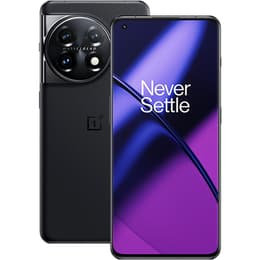
  • Design and Handling: The Google Pixel 9 features a refined, blocky design with a new camera module aesthetic and dimensions of 152.8 x 72.0 x 8.5mm, weighing 198g, offering a balanced feel in hand. The OnePlus 11 presents a sleek design with a glass and metal combination, measuring 163.1 x 74.1 x 8.53mm and weighing 205g, featuring a distinctive circular camera module.
  • Connectivity and Ports: Both devices support 5G networks for fast mobile data. The Pixel 9 includes Qi2 wireless charging technology, which enhances wireless charging speeds and alignment. The OnePlus 11 features Wi-Fi 802.11be (Wi-Fi 7) support, Bluetooth 5.3, and NFC. Both devices utilize a USB-C port for charging and data transfer, with the OnePlus 11 specifically mentioning USB 2.0 Type-C.
  • Sensors and Unique Features: The Pixel 9 incorporates an in-display fingerprint sensor and is known for its advanced software features. The OnePlus 11 also includes an in-display fingerprint sensor and notably brings back the physical alert slider, a popular feature among its users for quickly switching sound profiles.

Weight

198 g

205 g

Screen size (in)

6.3

6.7

Network

5G

5G

SIM card

Physical SIM + eSIM

Physical SIM

Carrier compatibility

Unlocked

Unlocked

Connector

USB-C

USB-C

What the community thinks

The Google Pixel 9 and the OnePlus 11 cater to slightly different user priorities, reflecting their respective release timelines and design philosophies. User sentiment often highlights the Pixel's camera prowess and software experience, while the OnePlus is praised for its display and charging speed.

Users who prioritize long-term software support, a pure Android experience with advanced AI features, and consistent computational photography across various scenarios may find the Google Pixel 9 to be a more suitable choice. Its extended update policy ensures the device remains current and secure for a significant period.

Conversely, individuals who value a larger, high-resolution display, very fast charging capabilities, and a versatile camera system with a focus on natural color science might lean towards the OnePlus 11. Its hardware specifications, particularly the display and battery, offer a compelling experience for media consumption and heavy usage.

Ultimately, the decision between these two devices depends on whether a user prioritizes software longevity and AI integration (Pixel 9) or a more hardware-centric experience with rapid charging and a vibrant display (OnePlus 11). For those seeking a more sustainable choice, considering a quality-assured refurbished option for either model can be an eco-friendly alternative.








