

Google Pixel 6A Vs OnePlus 11

Google Pixel 6A
Google Pixel 6A
Starting at

Refurbished price:143.00

Versus €459.00 new

See options
OnePlus 11
OnePlus 11
Starting at

Refurbished price:325.00

Versus €949.00 new

See options

Ratings

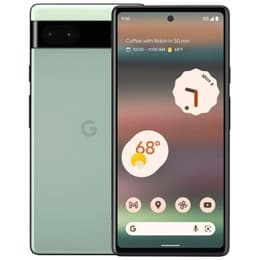
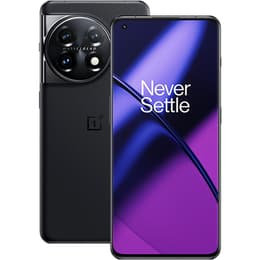
The Google Pixel 6A, released in July 2022, and the OnePlus 11, launched globally in February 2023, represent distinct approaches to the Android smartphone experience. While the Pixel 6A focuses on Google's software prowess and a compact form factor, the OnePlus 11 emphasizes high-end performance and a premium display. Both devices run on the Android operating system, offering users a range of features tailored to different priorities.

Scores

Durability

When considering the longevity of these devices, several factors come into play, including their release timelines, software support, and repairability.

  • Release Timeline: The Google Pixel 6A was released in July 2022, making it an older device compared to the OnePlus 11, which launched globally in February 2023. This difference in release date means the OnePlus 11 will likely receive software updates for a longer period.
  • Software Support: The Pixel 6A is promised OS updates until at least July 2025 and security updates until at least July 2027. The OnePlus 11, on the other hand, is expected to receive four generations of Android upgrades and five years of security updates from its launch date. This suggests a longer period of major OS updates for the OnePlus 11.
  • Repairability: The Pixel 6A has a repairability score of 6.5 out of 10, noted for its relatively easy disassembly and battery removal. The OnePlus 11 has a slightly higher repairability score of 6.75 out of 10, with pull tabs for battery removal and accessible components. However, the OnePlus 11 has shown some fragility in bend tests, with glass cracking under pressure, suggesting a need for protective cases for some users.

Year of Release

2022

2023

OS

Android

Android

Foldable

No

No

Performance

The performance of these two smartphones varies significantly, catering to different user demands for speed, multitasking, and power efficiency.

  • Processing Power: The OnePlus 11 features a current-generation processor, enabling it to handle demanding applications and multitasking smoothly. The Pixel 6A, while equipped with a capable processor, offers solid performance for everyday tasks and Google's computational features, but may not match the raw power of the newer OnePlus device.
  • Multitasking and Storage: The OnePlus 11 offers a wider range of RAM options, starting from 8GB and going up to 16GB, alongside storage options up to 512GB, which benefits heavy multitaskers and users with large media libraries. The Pixel 6A comes with 6GB of RAM and 128GB of non-expandable internal storage, which is sufficient for most users but offers less headroom for intensive use.
  • Battery Behavior: The OnePlus 11 houses a larger 5000 mAh battery, contributing to extended usage times. The Pixel 6A has a 4410 mAh battery, which generally provides a full day of use for many users, though some heavy users might find themselves looking for a charger by evening.

Memory (GB)

6 GB

16 GB

Screen quality

The visual experience on these devices is shaped by their display technologies, resolutions, and refresh rates, impacting clarity and smoothness.

  • Display Technology and Resolution: The OnePlus 11 features a 6.7-inch LTPO3 AMOLED display with a high resolution of 1440 x 3126 pixels, offering exceptional clarity and vibrant colors. The Pixel 6A has a 6.1-inch OLED display with a resolution of 1080 x 2400 pixels, providing a clear and colorful viewing experience in a more compact form.
  • Refresh Rate and Smoothness: The OnePlus 11 boasts an adaptive refresh rate of 1-120Hz, which contributes to a noticeably smoother scrolling experience and more fluid animations. The Pixel 6A features a standard 60Hz refresh rate, which is adequate for most daily tasks but does not offer the same level of visual fluidity as higher refresh rate displays.
  • Brightness and Viewing Experience: Both devices offer good brightness levels for indoor and outdoor viewing. The OnePlus 11's larger, higher-resolution AMOLED screen with HDR10+ and Dolby Vision support provides an immersive viewing experience, particularly for media consumption. The Pixel 6A's OLED display also supports HDR, delivering deep blacks and good contrast.

Resolution

1080 x 2400

1440 x 3216

Audiovisual

Both smartphones offer distinct camera experiences, with different hardware and software philosophies influencing their photographic output.

  • Rear Camera Systems: The OnePlus 11 features a versatile triple camera setup, including a 50 MP main sensor, a 48 MP ultrawide, and a 32 MP telephoto lens, co-developed with Hasselblad for color tuning. This system excels in detail, dynamic range, and low-light performance, with minimal color shift between lenses. The Pixel 6A comes with a dual-camera system, featuring a 12.2 MP main sensor and a 12 MP ultrawide lens. Despite its older hardware, Google's computational photography delivers consistently good results, especially in terms of exposure, white balance, and low-light performance.
  • Video Recording Quality: The OnePlus 11 is capable of recording 8K video at 24fps, offering high-resolution video capture. The Pixel 6A can record 4K video at 30 or 60fps, with good stabilization and respectable audio capture.
  • Front Camera and Audio: The OnePlus 11's front camera is a 16MP sensor, which performs well in good lighting but may struggle in challenging conditions, with video capped at 1080p 30fps. The Pixel 6A has an 8 MP front-facing camera, which captures detailed and colorful selfies. Both devices feature stereo speakers for media consumption.

Miscellaneous

Beyond core performance and display, several practical elements differentiate these two devices, impacting daily usability and overall experience.

  • Connectivity and Ports: Both devices support 5G connectivity and modern Wi-Fi standards. The Pixel 6A supports Wi-Fi 6E and Bluetooth 5.2. The OnePlus 11 supports Wi-Fi 6 and Bluetooth 5.3. Both utilize a USB-C port for charging and data transfer.
  • Biometric Security: Both the Pixel 6A and OnePlus 11 feature in-display fingerprint sensors for secure unlocking.
  • Design and Handling: The Pixel 6A is more compact and lighter, measuring 152.2 x 71.8 x 8.9 mm and weighing 178g, making it easier for one-handed use. It features a Gorilla Glass 3 front, a plastic back, and an aluminum frame, with an IP67 water and dust resistance rating. The OnePlus 11 is larger and heavier at 163.1 x 74.1 x 8.5 mm and 205g, featuring Gorilla Glass Victus on the front and Gorilla Glass 5 on the back, with an aluminum frame. The global version of the OnePlus 11 does not have an official IP rating, though some carriers offer IP64. The OnePlus 11 also brings back the popular alert slider.

Weight

178 g

205 g

Screen size (in)

6.1

6.7

Network

5G

5G

SIM card

Physical SIM + eSIM

Physical SIM

Carrier compatibility

Unlocked

Unlocked

User sentiment for the Google Pixel 6A often highlights its exceptional camera performance, especially given its segment, and the clean, timely software experience provided by Google. Users appreciate its compact size and the consistent quality of photos, even with older camera hardware, thanks to Google's image processing. Criticisms sometimes point to the 60Hz display and the battery life, which, while generally adequate, might not satisfy power users. The in-display fingerprint sensor has also received mixed feedback.

The OnePlus 11 is frequently praised for its powerful performance, vibrant and smooth display, and fast charging capabilities. Its camera system, co-developed with Hasselblad, is also a strong point, delivering detailed and color-accurate images. Some users have expressed concerns regarding its durability in extreme bend tests, and the lack of an official IP rating for the global version.

Users prioritizing a compact device with a strong emphasis on computational photography and a pure Android experience may find the Google Pixel 6A well-suited to their needs. It's a solid choice for those who value software features and consistent camera results over raw power or a high refresh rate display. Conversely, users who prioritize top-tier performance, a large and fluid display, rapid charging, and a versatile camera system will likely lean toward the OnePlus 11. It caters to those seeking a more premium, high-specification Android experience.

Both devices offer compelling features for different user profiles, and considering a quality-assured refurbished option for either can be an eco-friendly alternative to purchasing new.

See all articles

Our recent comparisons