

Google Pixel 9 Vs iPhone 17

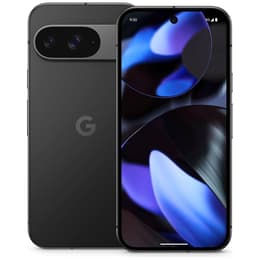
Google Pixel 9
Google Pixel 9
Starting at

Refurbished price:449.00

Versus €1,066.71 new

See options
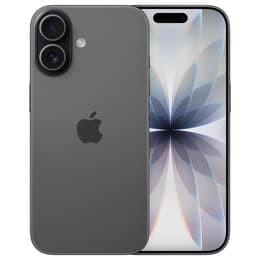
iPhone 17
iPhone 17
Starting at

Refurbished price:702.00

Versus €979.00 new

See options

Ratings

The Google Pixel 9, released in August 2024, and the iPhone 17, launched in September 2025, represent the latest iterations from their respective manufacturers in the competitive smartphone market. While both devices offer advanced mobile experiences, they cater to different user preferences through their distinct operating systems and hardware philosophies. The Pixel 9 operates on Google's Android platform, emphasizing artificial intelligence integration, whereas the iPhone 17 runs on Apple's iOS, focusing on a cohesive ecosystem and refined user interface. Key differentiators lie in their camera systems, display technologies, and long-term software support.

Scores

Durability

When considering the long-term usability of a smartphone, factors like release timeline, software support, and physical resilience are important. The Pixel 9 and iPhone 17 offer different approaches to longevity.

  • Release Timeline and Software Support: The Google Pixel 9, launched in August 2024, benefits from Google's commitment to seven years of software updates, extending its support until Android 22. This provides an extended period of security patches and new features. The iPhone 17, released in September 2025, typically receives iOS updates for approximately five to six years from its launch, offering robust support for a significant duration.
  • Physical Durability: The Pixel 9 incorporates Corning Gorilla Glass Victus 2 for screen protection, contributing to its enhanced durability compared to its predecessor. The iPhone 17 features Ceramic Shield 2 on its display, which Apple states offers three times better scratch resistance than previous generations. Both devices are constructed with aluminum frames, balancing strength with a lighter feel.
  • Repairability: Google has made strides in repairability, with the Pixel 9 receiving a provisional score of 5 out of 10, indicating progress in ease of repair, though the battery remains secured with strong adhesive. While specific repairability scores for the iPhone 17 are not detailed, Apple has historically focused on proprietary repair methods, though recent initiatives aim to make some repairs more accessible.

Year of Release

2024

2025

Compatible with latest Update

Yes

Yes

OS

Android

iOS

Foldable

No

No

Performance

Both the Google Pixel 9 and iPhone 17 are engineered to deliver smooth and responsive performance for a wide range of tasks, though they achieve this through different hardware and software optimizations.

  • Processing Power: The Pixel 9 is powered by Google's fourth-generation Tensor processor, the Tensor G4, which is designed for efficient handling of everyday applications, multitasking, and advanced AI features. The iPhone 17 features the Apple A19 SoC, known for its strong performance in demanding applications, graphics-intensive games, and complex computational photography tasks.
  • Multitasking and Storage: The Pixel 9 comes with 12GB of RAM, facilitating smooth transitions between multiple open applications and efficient background processes. It offers storage options of 128GB or 256GB using UFS 3.1 technology. The iPhone 17 is equipped with 8GB of LPDDR5X RAM and provides 256GB or 512GB of NVMe storage, ensuring quick app loading and data access.
  • Battery Behavior: The Pixel 9 houses a 4700 mAh battery, designed to provide over 24 hours of typical use, with an extreme battery saver mode extending this significantly. Real-world tests suggest around 7 hours and 26 minutes of screen-on time on Wi-Fi and up to 10-12 hours on 5G for moderate use. The iPhone 17 has a 3692 mAh battery, with Apple claiming up to 30 hours of video playback. Independent tests indicate around 12 hours and 47 minutes of mixed usage. Both devices support fast charging, allowing for quick power top-ups.

Memory (GB)

12 GB

8 GB

Screen quality

The visual experience on both the Pixel 9 and iPhone 17 is a highlight, with each device featuring advanced display technologies designed for clarity and vibrant color reproduction.

  • Display Technology and Resolution: Both smartphones utilize OLED display technology, known for its deep blacks and high contrast ratios. The Pixel 9 features a 6.3-inch FHD+ OLED display with a resolution of 2424 x 1080 pixels, resulting in a pixel density of 422 ppi. The iPhone 17 offers a slightly higher resolution on its 6.3-inch Super Retina XDR OLED display, with 2622 x 1206 pixels and a pixel density of 460 ppi, providing a marginally sharper image.
  • Refresh Rate and Brightness: Both devices support adaptive refresh rates up to 120Hz, ensuring smooth scrolling and fluid animations. The iPhone 17's ProMotion technology dynamically adjusts the refresh rate for optimal performance and power efficiency. In terms of brightness, the Pixel 9 can reach a peak brightness of 2700 nits for HDR content and 1800 nits for typical use. The iPhone 17 boasts an impressive peak outdoor brightness of 3000 nits, with typical brightness at 1000 nits and HDR content peaking at 1600 nits, making it highly visible even in direct sunlight.
  • Additional Display Features: The iPhone 17 includes an Always-On display and an anti-reflective coating to reduce glare. It also features the Dynamic Island, which integrates notifications and activities into a fluid interface. The Pixel 9 introduces Adaptive Touch technology, enhancing screen responsiveness even with wet fingers or gloves.

Resolution

1080 x 2424

2622x1206

Screen type

OLED

Super Retina XDR

Audiovisual

Both the Google Pixel 9 and iPhone 17 offer sophisticated camera systems, leveraging advanced hardware and computational photography to capture high-quality images and videos, though with some distinct differences in their configurations.

  • Rear Camera Systems: The Pixel 9 features a dual-camera setup on the rear, comprising a 50MP main camera with optical image stabilization and a 48MP ultrawide lens that also supports macro autofocus. It utilizes Super Res Zoom for digital magnification up to 8x. The iPhone 17 employs a 48MP Dual Fusion camera system, including a 48MP main sensor that can also provide a 12MP optical-quality 2x telephoto zoom, alongside a 48MP ultrawide lens.
  • Photography Features and Performance: The Pixel 9 is known for its strong computational photography, offering features like Night Sight for low-light conditions, Astrophotography, Portrait Mode, and unique AI-driven tools such as 'Add Me' for group photos. The iPhone 17 benefits from Apple's Photonic Engine, Deep Fusion, and Smart HDR 5, delivering vibrant photos with accurate colors and improved detail in various lighting scenarios, including enhanced low-light performance.
  • Video Capabilities and Front Camera: For video, the Pixel 9 supports 10-bit HDR video, Cinematic blur, and various stabilization modes. Its front camera is a 10.5MP sensor with autofocus. The iPhone 17 offers 4K Dolby Vision video recording, Cinematic mode, and Action mode for stabilized footage. Its front-facing 18MP Center Stage camera features autofocus and a unique square sensor for flexible framing, along with a Dual Capture feature for simultaneous front and rear video recording.

Main camera

50 megapixels

48 megapixels

Front camera

10.5 megapixels

18 megapixels

Miscellaneous

Beyond core performance and display, several practical elements contribute to the overall user experience of the Pixel 9 and iPhone 17, from connectivity to physical design.

  • Connectivity and Ports: Both devices support 5G networks for fast mobile data. The iPhone 17 includes Wi-Fi 7, offering advanced wireless speeds and efficiency, while the Pixel 9 supports current Wi-Fi standards. Both smartphones have transitioned to USB-C for charging and data transfer, providing a universal connection standard. The iPhone 17 also features dual eSIM support in some regions, moving away from physical SIM cards.
  • Biometrics and Interaction: The Pixel 9 incorporates an ultrasonic in-display fingerprint sensor and Face Unlock for secure authentication. The iPhone 17 relies on Face ID for facial recognition and includes an Action button, which can be customized for quick access to various functions.
  • Design and Materials: The Pixel 9 has dimensions of 152.8 mm in height, 72 mm in width, and 8.5 mm in depth. The iPhone 17 is slightly more compact at 149.6 mm in height, 71.5 mm in width, and 7.95 mm in depth, weighing 177 grams. Both devices feature aluminum frames, with the iPhone 17 also utilizing a frosted glass back. Apple has increased its use of recycled materials in the iPhone 17's construction.

Weight

198 g

177 g

Screen size (in)

6.3

6.3

Network

5G

5G

SIM card

Physical SIM + eSIM

eSIM

Carrier compatibility

Unlocked

Unlocked

Connector

USB-C

USB-C

The Google Pixel 9 and iPhone 17 each present compelling options for users seeking a modern smartphone experience, with distinct strengths that cater to different priorities. User sentiment often praises the Pixel series for its exceptional camera capabilities, particularly its computational photography features and AI integration, which simplify complex shots and offer unique editing tools. Common criticisms for Pixel devices have sometimes centered on battery life in earlier models, though the Pixel 9 shows significant improvements in this area.

The iPhone series, including the iPhone 17, is frequently lauded for its robust ecosystem, consistent performance, and strong long-term software support. Users often appreciate the seamless integration with other Apple devices and the intuitive nature of iOS. While the iPhone's camera system is highly regarded, some users might desire more manual controls or the unique AI features found in Pixel devices. Battery life, while improved in the iPhone 17, can still be a point of discussion for heavy users.

Users prioritizing advanced artificial intelligence features, a highly capable and versatile camera system with unique computational photography, and extended software update longevity may find the Google Pixel 9 well-suited to their needs. Its focus on smart features and a pure Android experience makes it a strong contender for those who value innovation in software.

Conversely, users who prioritize a highly polished user experience, a strong ecosystem of integrated services and devices, and a camera system known for its consistent quality and video capabilities may lean toward the iPhone 17. Its enhanced display and robust build quality also appeal to those seeking a premium and durable device.

For consumers looking for an eco-friendly alternative, considering quality-assured refurbished options for either the Google Pixel 9 or iPhone 17 can provide access to these advanced technologies while supporting sustainable consumption practices.


See all articles

Our recent comparisons