

Galaxy S10 Vs iPhone SE (2020)

Galaxy S10
Galaxy S10
Starting at

Refurbished price:114.00

Versus €549.00 new

See options
iPhone SE (2020)
iPhone SE (2020)
Starting at

Refurbished price:102.00

Versus €319.00 new

See options

Ratings

The Samsung Galaxy S10, released in March 2019, and the iPhone SE (2020), launched in April 2020, represent distinct approaches to smartphone design and functionality from their respective manufacturers. While the Galaxy S10 offers a more expansive display and a versatile multi-camera system, the iPhone SE (2020) focuses on a compact form factor and robust internal processing power. These devices operate on different ecosystems, with the Galaxy S10 running on Android and the iPhone SE (2020) on iOS, influencing their user experience and software longevity.

Scores

Durability

When considering the practical lifespan of these devices, several factors come into play, including their release timelines, software support, and repairability.

  • Release Timeline: The Samsung Galaxy S10 was introduced in March 2019, making it approximately one year older than the iPhone SE (2020), which arrived in April 2020. This difference in release date can impact the duration of future software support.
  • Software Longevity: The Galaxy S10 was promised three generations of Android updates and four years of security updates from December 2020, starting with Android 9 and receiving updates up to Android 11. The iPhone SE (2020), initially running iOS 13.4, has received updates up to iOS 26 as of 2025, indicating a longer typical software support cycle from Apple. Users prioritizing the latest software features and security patches for an extended period may find the iPhone SE (2020) offers a longer update window.
  • Repairability: The Galaxy S10 received an iFixit repairability score of 3 out of 10, indicating it is challenging to repair due to extensive use of adhesive, a soldered charging port, and a battery that is difficult to remove. The ultrasonic fingerprint sensor is also fused to the screen, making screen repairs more complex. In contrast, the iPhone SE (2020) scored 6 out of 10, considered moderately repairable. Many of its modular components, including the display and battery, are relatively straightforward to replace and are often interchangeable with parts from the iPhone 8, though the glass back remains difficult to repair.

Year of Release

2019

2020

Compatible with latest Update

No

Yes

OS

Android

iOS

Foldable

No

No

Performance

The performance of a smartphone is crucial for daily tasks, from navigating applications to engaging in demanding mobile gaming. Both devices offer capable performance, though they achieve it through different hardware and software optimizations.

  • System Responsiveness: The iPhone SE (2020) is equipped with a powerful current-generation processor that enables smooth operation across various applications and efficient multitasking. This allows for quick app launches and fluid transitions, even with graphically intensive games. The Galaxy S10, while featuring a capable processor for its release year, provides a responsive experience for everyday use and handles most applications effectively.
  • Multitasking and Storage: The Galaxy S10 typically comes with 8GB of RAM, facilitating robust multitasking and allowing users to keep numerous applications open simultaneously without significant slowdowns. It also offers storage options of 128GB or 512GB, with some variants having up to 1TB, providing ample space for media and applications. The iPhone SE (2020) generally features 3GB of RAM, which, combined with iOS's memory management, still delivers a smooth multitasking experience. Storage options for the iPhone SE (2020) include 64GB, 128GB, and 256GB.
  • Battery Behavior: The Galaxy S10 houses a 3400 mAh battery, which typically provides enough power for a full day of moderate to heavy use, supported by efficient power management. The iPhone SE (2020) has a smaller 1821 mAh battery, but its highly optimized processor and operating system allow it to achieve comparable real-world battery life for many users, often lasting through a full day with typical usage. It is rated for approximately 12 hours of video playback or 13 hours of internet browsing.

Memory (GB)

8 GB

3 GB

Screen quality

The display is a primary interface for smartphone interaction, and both devices offer distinct visual experiences tailored to their design philosophies.

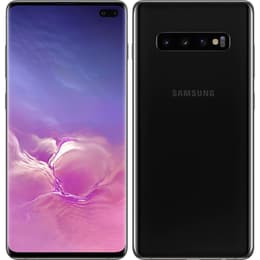
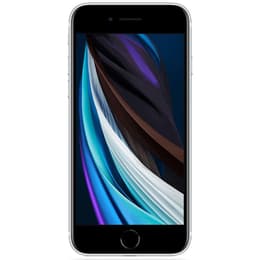
  • Display Technology and Clarity: The Samsung Galaxy S10 features a 6.1-inch Dynamic AMOLED display with a high resolution of 3040x1440 pixels, resulting in a pixel density of 550 pixels per inch (ppi). This technology delivers deep blacks, vibrant colors, and excellent contrast, enhancing the viewing experience for photos, videos, and text. The iPhone SE (2020) utilizes a 4.7-inch Retina HD IPS LCD display with a resolution of 1334x750 pixels, offering a pixel density of 326 ppi. This display provides accurate color reproduction and good viewing angles.
  • Brightness and Refresh Rate: The Galaxy S10's Dynamic AMOLED screen supports HDR10+, offering enhanced brightness and dynamic range for compatible content. Its refresh rate is 60Hz. The iPhone SE (2020) has a maximum brightness of 625 nits, providing good visibility in various lighting conditions, and also features a standard 60Hz refresh rate.
  • Screen Size and Viewing Experience: The Galaxy S10's larger 6.1-inch display with minimal bezels provides a more immersive viewing experience, particularly for media consumption and productivity tasks. The iPhone SE (2020)'s 4.7-inch display, combined with its traditional bezels, offers a more compact and easily manageable one-handed experience, appealing to users who prefer smaller devices.

Resolution

1440 x 3040

750 x 1334

Screen type

Dynamic AMOLED

Retina IPS LCD

Audiovisual

Camera capabilities are a significant consideration for many smartphone users, and these two models offer different photographic strengths.

  • Rear Camera System: The Samsung Galaxy S10 features a versatile triple-camera setup on the rear, comprising a 12-megapixel wide-angle lens, a 12-megapixel telephoto lens with 2x optical zoom, and a 16-megapixel ultrawide lens. This configuration allows for a range of photographic perspectives, from expansive landscapes to detailed zoomed-in shots. The iPhone SE (2020) is equipped with a single 12-megapixel wide-angle rear camera. Despite having only one lens, it leverages advanced computational photography powered by its internal processor to enhance image quality.
  • Photography Performance: The Galaxy S10 generally produces photos with vibrant colors and good detail, performing well in mixed and low-light conditions. Its ultrawide lens is noted for capturing broad scenes, and its telephoto lens provides optical zoom without significant loss of quality. The iPhone SE (2020)'s single camera excels in dynamic range and color accuracy, benefiting from software optimizations that enable features like Portrait mode. It delivers sharp and detailed images in various lighting scenarios.
  • Video Recording and Front Camera: Both devices are capable of recording high-quality video. The Galaxy S10 supports 4K video recording and offers features like Super Steady video. Its front-facing camera is 10-megapixels. The iPhone SE (2020) can record 4K video at up to 60 frames per second, with good stabilization and color reproduction. It features a 7-megapixel front camera.

Main camera

12 megapixels

12 megapixels

Front camera

10 megapixels

7 megapixels

Miscellaneous

Beyond core performance and camera, several practical features contribute to the overall user experience and daily convenience of a smartphone.

  • Connectivity and Ports: Both the Galaxy S10 and iPhone SE (2020) support modern connectivity standards, including 4G LTE, Wi-Fi (802.11 a/b/g/n/ac/ax), and Bluetooth 5.0. A notable difference lies in their physical ports: the Galaxy S10 includes a 3.5mm headphone jack and a USB-C port, offering broader compatibility with existing accessories. The iPhone SE (2020) relies on a Lightning port for charging and data transfer and does not feature a 3.5mm headphone jack, requiring adapters or wireless audio solutions.
  • Biometric Security and Other Sensors: The Galaxy S10 introduced an ultrasonic in-display fingerprint sensor for secure unlocking, alongside face recognition. It also features a range of sensors including a barometer, gyroscope, and heart rate sensor. The iPhone SE (2020) utilizes Touch ID, an integrated fingerprint sensor within its physical home button, for secure authentication. It also includes an accelerometer, proximity sensor, gyroscope, compass, and barometer.
  • Design and Handling: The Galaxy S10 measures 149.9 x 70.4 x 7.8 mm and weighs 157 grams, featuring a glass back and metal frame, contributing to a premium feel. It boasts an IP68 rating for dust and water resistance. The iPhone SE (2020) is more compact at 138.4 x 67.3 x 7.3 mm and weighs 148 grams, also constructed with a glass front and back and an aluminum frame. It carries an IP67 rating for dust and water resistance. Both devices support Qi wireless charging. The Galaxy S10 also offers Wireless PowerShare, allowing it to wirelessly charge other compatible devices.

Weight

158 g

148 g

Screen size (in)

6.1

4.7

Network

4G

4G

SIM card

Physical SIM

Physical SIM + eSIM

Carrier compatibility

Unlocked

Unlocked

User feedback for the Samsung Galaxy S10 often highlights its vibrant AMOLED display, versatile triple-camera system, and the inclusion of a headphone jack as strong advantages. Users appreciate the expansive screen for media consumption and the flexibility offered by the different camera lenses. Some common criticisms have included its battery life, which, while generally sufficient for a day, might not meet the demands of very heavy users compared to some contemporaries, and its repairability score.

The iPhone SE (2020) is frequently praised for its powerful processor, compact design, and the consistent performance of its single camera, especially benefiting from Apple's computational photography. Its smaller size is a significant draw for users preferring one-handed operation and a device that easily fits into pockets. Criticisms often point to its more traditional design with larger bezels and the smaller battery capacity, though its software optimization helps mitigate this.

Users prioritizing a large, immersive display, a multi-lens camera system for diverse photography, and features like a headphone jack and reverse wireless charging may find the Samsung Galaxy S10 well-suited to their needs. Its Android ecosystem offers extensive customization. Conversely, users who value a compact form factor, a highly optimized and long-supported operating system, and robust performance for everyday tasks and gaming will likely lean towards the iPhone SE (2020). Its single camera, while less versatile in hardware, delivers consistent and high-quality results through software. Both devices offer reliable performance for their respective user bases, and considering a quality-assured refurbished option can be an eco-friendly alternative for acquiring either model.


See all articles

Our recent comparisons