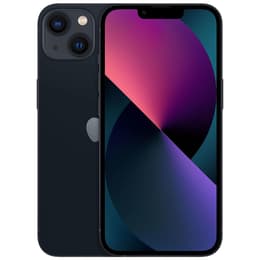
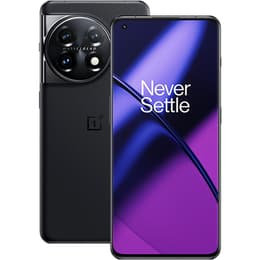


iPhone 13 Vs OnePlus 11

iPhone 13
iPhone 13
Starting at

Refurbished price:230.00

Versus €769.00 new

See options
OnePlus 11
OnePlus 11
Starting at

Refurbished price:285.00

Versus €949.00 new

See options

Ratings

The iPhone 13, released in September 2021, and the OnePlus 11, launched globally in February 2023, represent distinct approaches to the modern smartphone experience. While the iPhone 13 operates on Apple's iOS ecosystem, the OnePlus 11 runs on Android, specifically OxygenOS. Key differentiators include their operating systems, display technologies, and camera philosophies, catering to different user preferences.

Scores

Durability

When considering the long-term usability of a smartphone, factors like software support, physical resilience, and ease of repair play a significant role. These two devices offer different timelines and approaches to longevity.

  • Software Support: The iPhone 13, launched with iOS 15, is expected to receive major iOS updates until approximately 2028, with security updates potentially extending further, possibly until 2032. The OnePlus 11, which debuted with Android 13, is promised four major Android OS upgrades and five years of security updates, meaning it should receive updates through Android 17.
  • Physical Durability: The iPhone 13 features a Ceramic Shield front cover and an IP68 rating for water and dust resistance, indicating a high level of protection against immersion. The OnePlus 11 is protected by Gorilla Glass Victus on its display and typically carries an IP64 rating, offering resistance against splashes and dust, though not full submersion.
  • Repairability: The iPhone 13 initially received an iFixit repairability score of 5 out of 10, which later improved to 6 out of 10 after a software update addressed issues with Face ID functionality post-screen replacement. The OnePlus 11 has a repairability score of 6.75 out of 10, with components generally accessible but requiring specific tools and careful disassembly for screen replacement.

Year of Release

2021

2023

Compatible with latest Update

Yes

Yes

OS

iOS

Android

Foldable

No

No

Performance

Both devices are designed to deliver smooth performance for daily tasks, but their underlying hardware and software optimizations lead to different real-world experiences.

  • Processing Power: The iPhone 13 is equipped with a powerful processor that handles demanding applications and multitasking efficiently, providing a responsive user experience. The OnePlus 11 features a more recent generation processor, which offers robust performance for gaming and intensive applications, often noted for its efficiency and speed in the Android ecosystem.
  • Multitasking and Storage: The iPhone 13 offers storage options up to 512GB, providing ample space for apps and media. The OnePlus 11 comes with up to 16GB of RAM and utilizes UFS 4.0 storage, contributing to faster app loading and seamless multitasking, with storage options up to 256GB globally, and 512GB in some regions.
  • Battery Performance: The iPhone 13 provides a battery designed to last through a full day of typical usage. The OnePlus 11 features a larger battery capacity, which, combined with its efficient processor and dynamic refresh rate display, also aims to provide extended usage times, often lasting more than a full day for moderate users.

Memory (GB)

4 GB

8 GB

Screen quality

The visual experience on both smartphones is a key aspect, with each offering distinct display technologies and features that impact clarity, brightness, and smoothness.

  • Display Technology and Size: The iPhone 13 features a 6.1-inch Super Retina XDR OLED display, known for its deep blacks and vibrant colors. The OnePlus 11 sports a larger 6.7-inch LTPO3 Fluid AMOLED display, which also delivers excellent color reproduction and contrast.
  • Resolution and Clarity: The iPhone 13 has a resolution of 1170x2532 pixels, resulting in a sharp 460 pixels per inch. The OnePlus 11 offers a higher QHD+ resolution of 3216 x 1440 pixels, translating to 525 pixels per inch, providing a very clear and detailed viewing experience.
  • Refresh Rate and Brightness: The iPhone 13 has a standard 60Hz refresh rate, which is consistent for everyday use, and a typical outdoor brightness of 800 nits, with a peak of 1200 nits for HDR content. The OnePlus 11 features a dynamic 1-120Hz refresh rate, allowing for smoother scrolling and animations while conserving battery by adjusting to content. Its peak brightness is around 850 nits, though it was advertised higher.

Resolution

1170 x 2532

1440 x 3216

Screen type

Super Retina XDR OLED

LTPO3 Fluid AMOLED

Audiovisual

Both devices offer capable camera systems, but they approach photography and videography with different strengths and features.

  • Rear Camera System: The iPhone 13 includes a dual 12MP camera system, comprising a wide and an ultrawide lens, with sensor-shift optical image stabilization on the main sensor. The OnePlus 11 features a triple camera setup co-developed with Hasselblad, including a 50MP main sensor, a 48MP ultrawide, and a 32MP telephoto lens with 2x optical zoom.
  • Photography Performance: The iPhone 13 is recognized for its consistent image quality, particularly in everyday and low-light conditions for photos, and introduces features like Cinematic mode for video and Photographic Styles. The OnePlus 11's camera system delivers detailed photos with natural colors, and its night mode performs well in challenging conditions, brightening images effectively.
  • Video Recording: The iPhone 13 offers strong video recording capabilities, including 4K at 60fps with Dolby Vision HDR, and improved low-light video compared to previous generations, though some jitters can occur. The OnePlus 11 can record video up to 8K at 24fps and 4K at 60fps with HDR and optical image stabilization, though some user reviews suggest video quality can be inconsistent compared to its photo capabilities.

Main camera

12 megapixels

50 megapixels

Front camera

12 megapixels

16 megapixels

Miscellaneous

Beyond the core specifications, several practical elements contribute to the overall user experience and differentiate these two smartphones.

  • Connectivity and Ports: Both devices support 5G connectivity for faster mobile data speeds. The iPhone 13 uses Apple's proprietary Lightning port for charging and data transfer. The OnePlus 11 features a USB-C port, a more widely adopted standard, and supports fast charging.
  • Biometric Security: The iPhone 13 relies on Face ID for secure facial recognition. The OnePlus 11 typically includes an in-display fingerprint sensor for biometric authentication.
  • Design and Handling: The iPhone 13 has a compact design with flat edges, measuring 146.7 x 71.5 x 7.65mm and weighing 173g. The OnePlus 11 is a larger device at 163.1 x 74.1 x 8.53mm and weighs 205g, featuring curved edges that can aid in handling despite its size.

Weight

173 g

205 g

Screen size (in)

6.1

6.7

Network

5G

5G

SIM card

Physical SIM + eSIM

Physical SIM

Carrier compatibility

Unlocked

Unlocked

Connector

Lightning

USB-C

The iPhone 13 and OnePlus 11 cater to users with differing priorities, reflecting their distinct operating systems and design philosophies. User feedback often highlights the iPhone 13's consistent performance, reliable camera, and strong software longevity as key strengths. Its compact size and integration within the Apple ecosystem are frequently praised. Some users, however, note the 60Hz display as a point of comparison with other devices on the market.

The OnePlus 11 is generally lauded for its powerful processing capabilities, vibrant high-refresh-rate display, and rapid charging speeds. Its battery life is also a common positive, and the customization options within OxygenOS are appreciated by many Android enthusiasts. Criticisms sometimes revolve around the camera's video performance and the absence of full waterproofing or wireless charging. Some users have also expressed concerns about the timeliness of software updates despite the stated policy.

Users prioritizing a compact device with a highly integrated ecosystem, long-term software support, and consistent camera performance for both photos and video may find the iPhone 13 well-suited to their needs. Conversely, those who value a larger, high-resolution, high-refresh-rate display, faster charging, and the flexibility of the Android operating system, particularly for demanding applications and gaming, might lean towards the OnePlus 11. Both devices offer compelling features, and for those seeking a more sustainable choice, quality-assured refurbished options are available for both models.









