

Google Pixel 9 Pro Vs iPhone 16 Pro

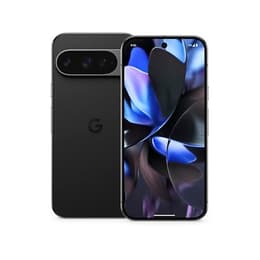
Google Pixel 9 Pro
Google Pixel 9 Pro
Starting at

Refurbished price:484.00

Versus €1,099.00 new

See options
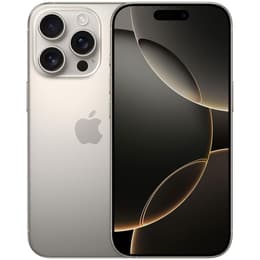
iPhone 16 Pro
iPhone 16 Pro
Starting at

Refurbished price:645.00

Versus €1,239.00 new

See options

Ratings

The Google Pixel 9 Pro (released September 2024) and the iPhone 16 Pro (released September 2024) represent the latest iterations of their respective flagship smartphone lines. While both devices offer premium experiences, they diverge in their approach to software integration, camera processing, and overall user philosophy. The Pixel 9 Pro operates on Android 15, emphasizing Google's AI capabilities, while the iPhone 16 Pro runs on iOS 18, focusing on a refined ecosystem and robust performance.

Scores

Durability

When considering the long-term usability of a smartphone, software support and physical resilience are key factors. Both the Pixel 9 Pro and iPhone 16 Pro are designed for extended use, though their support models differ slightly.

  • Software Longevity: The Google Pixel 9 Pro is notable for its commitment to seven years of OS and security updates, extending its software lifespan significantly, potentially until August 2031. The iPhone 16 Pro, while not explicitly stating a fixed number of years at launch, typically receives iOS updates for at least five to seven years, with many devices supported for even longer.
  • Physical Durability: Both devices feature robust builds with IP68 ratings for dust and water resistance, indicating they can withstand submersion in up to 6 meters of water for 30 minutes. The iPhone 16 Pro incorporates a Ceramic Shield front cover and a titanium frame, contributing to its resilience. The Pixel 9 Pro uses Corning Gorilla Glass Victus 2 for its front and back, paired with an aluminum frame.
  • Repairability: While specific repairability scores can vary, both manufacturers offer repair services and parts. The practical lifespan of either device can be extended through careful handling and timely battery replacements, which are often the first components to show wear over several years of use.

Year of Release

2024

2024

Compatible with latest Update

Yes

Yes

Foldable

No

No

Performance

Performance is a critical aspect for daily smartphone use, influencing everything from app responsiveness to demanding tasks like gaming and video editing. Both the Pixel 9 Pro and iPhone 16 Pro are equipped with powerful internal components designed to handle a wide range of activities efficiently.

  • Processing Power: The iPhone 16 Pro features a current-generation Apple A-series processor, which delivers smooth operation and efficient handling of complex applications and multitasking. The Google Pixel 9 Pro is powered by Google's Tensor G4 chip, optimized for AI-driven tasks and providing a responsive experience for everyday use and Google's unique software features.
  • Multitasking and Storage: The Pixel 9 Pro comes with 16GB of RAM, offering substantial capacity for running numerous applications simultaneously without slowdowns. The iPhone 16 Pro includes 8GB of RAM, which is efficiently managed by iOS to provide a fluid multitasking experience. Both devices offer various storage configurations, ranging from 128GB up to 1TB, catering to different user needs for apps, photos, and videos.
  • Battery Behavior: The Pixel 9 Pro houses a 4700 mAh battery, with users reporting good all-day usage and extended screen-on times under typical conditions. The iPhone 16 Pro has a 3582 mAh battery, and Apple claims up to 27 hours of video playback. Real-world usage tests indicate that both phones can comfortably last a full day for most users, though heavy usage may require more frequent charging.

Memory (GB)

16 GB

8 GB

Screen quality

The display is the primary interface for any smartphone, and both the Pixel 9 Pro and iPhone 16 Pro offer high-quality viewing experiences with distinct characteristics.

  • Display Technology and Clarity: The iPhone 16 Pro features a 6.3-inch Super Retina XDR OLED display, known for its deep blacks, vibrant colors, and excellent contrast. It has a resolution of 2622x1206 pixels, resulting in a pixel density of 460 ppi. The Pixel 9 Pro also sports a 6.3-inch LTPO OLED display with a higher resolution of 2856x1280 pixels and a pixel density of 495 ppi, offering sharp and detailed visuals.
  • Brightness and Refresh Rate: Both devices offer high brightness levels, with the iPhone 16 Pro reaching 1000 nits typical and 2000 nits peak, and the Pixel 9 Pro achieving 2000 nits HBM and 3000 nits peak brightness. Both displays support a 120Hz adaptive refresh rate, providing smooth scrolling and fluid animations, which can dynamically adjust down to 1Hz to conserve battery life when static content is displayed.
  • Viewing Experience: The iPhone 16 Pro's display is protected by Ceramic Shield, while the Pixel 9 Pro uses Corning Gorilla Glass Victus 2. Both offer an immersive viewing experience, with the iPhone 16 Pro featuring thinner display borders for a larger screen-to-body ratio.

Resolution

1280 x 2856

1206 x 2622

Screen type

LTPO OLED

LTPO Super Retina XDR OLED

Audiovisual

Camera capabilities are a major differentiator for modern smartphones, and both the Pixel 9 Pro and iPhone 16 Pro excel in photography and videography, albeit with different processing philosophies.

  • Rear Camera Systems: The Google Pixel 9 Pro features a triple-camera setup with a 50MP main sensor, a 48MP ultrawide lens, and a 48MP telephoto lens offering 5x optical zoom. The iPhone 16 Pro also has a triple-camera system, comprising a 48MP main sensor, a 48MP ultrawide lens, and a 12MP telephoto lens with 5x optical zoom.
  • Photography Performance: The Pixel 9 Pro tends to produce warmer tones and a slightly more subdued appearance in daylight, with strong HDR performance, particularly in managing shadows. Its telephoto lens often delivers sharper and more detailed images. The iPhone 16 Pro, conversely, leans towards cooler tones and more vibrant imagery, with users noting its consistent color accuracy and cleaner images with less noise in low-light conditions. The Pixel 9 Pro offers more manual controls within its camera app, while the iPhone 16 Pro often requires third-party applications for similar granular adjustments.
  • Video and Audio: Both phones offer excellent video recording capabilities, including 4K resolution at various frame rates. The iPhone 16 Pro is noted for its superior video stabilization, especially in vertical mode, and better audio recording quality for vlogging. The Pixel 9 Pro's night sight mode for photos is strong, but the iPhone 16 Pro often produces cleaner low-light video.

Main camera

50 megapixels

48 megapixels

Front camera

42 megapixels

12 megapixels

Miscellaneous

Beyond the core features, several practical elements contribute to the overall user experience of these devices, from connectivity to physical design.

  • Connectivity and Ports: Both the Google Pixel 9 Pro and iPhone 16 Pro support the latest Wi-Fi 7 standard and Bluetooth 5.3, ensuring fast and reliable wireless connections. Both devices have adopted USB-C for charging and data transfer, offering universal compatibility.
  • Biometrics and Sensors: The Pixel 9 Pro utilizes an ultrasonic in-screen fingerprint sensor for secure unlocking. The iPhone 16 Pro relies on Face ID for facial recognition. Both phones include a suite of sensors such as accelerometers, gyroscopes, and compasses, enabling various functionalities and applications.
  • Design and Handling: The iPhone 16 Pro features a titanium design, contributing to its lightweight yet durable build, and measures 149.6 x 71.5 x 8.25 mm, weighing 199 grams. The Pixel 9 Pro has an aluminum frame with glass front and back, measuring 152.8 x 72 x 8.5 mm and also weighing 199 grams. Both phones offer a comfortable in-hand feel, though the iPhone 16 Pro's slightly thinner profile might appeal to some users.

Weight

199 g

199 g

Screen size (in)

6.3

6.3

Network

5G

5G

SIM card

Physical SIM + eSIM

eSIM

Carrier compatibility

Unlocked

Unlocked

Connector

USB-C

USB-C (USB 3)

The Google Pixel 9 Pro and iPhone 16 Pro are both highly capable smartphones, each offering a compelling set of features tailored to different user preferences. User sentiment often highlights the Pixel 9 Pro's strengths in computational photography, particularly its ability to capture detailed images and its advanced AI features that enhance daily interactions. Some users appreciate its warmer, more natural color science in photos and the extensive software support. Criticisms sometimes point to the Tensor chip's raw performance not always matching the absolute peak of its competitor in synthetic benchmarks, though real-world usage remains smooth.

Conversely, the iPhone 16 Pro is frequently praised for its consistent and reliable performance, its robust ecosystem, and its strong video recording capabilities. Users often commend its display quality and the overall polish of iOS. Some common concerns might revolve around the more controlled nature of its camera software compared to the Pixel, requiring third-party apps for advanced manual controls.

Users prioritizing a long-term software commitment and a camera system with advanced computational photography and manual controls may find the Google Pixel 9 Pro well-suited to their needs. Those who value a highly integrated ecosystem, consistent performance, superior video capabilities, and a slightly more vibrant photographic output might lean towards the iPhone 16 Pro. Both devices represent excellent choices, and considering a quality-assured refurbished option for either model can be an eco-friendly alternative to purchasing new.


See all articles

Our recent comparisons