

iPhone 12 Pro Max Vs iPhone 8

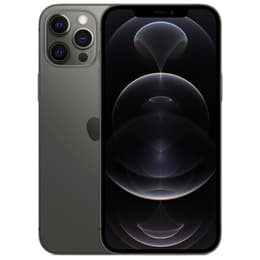
iPhone 12 Pro Max
iPhone 12 Pro Max
Starting at

Refurbished price:246.00

Versus €1,139.00 new

See options
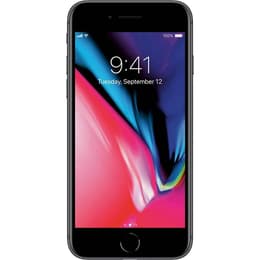
iPhone 8
iPhone 8
Starting at

Refurbished price:98.00

Versus €299.00 new

See options

Ratings

The iPhone 12 Pro Max (released in November 2020) and the iPhone 8 (released in September 2017) represent distinct generations of Apple's smartphone lineup. While both devices operate on Apple's iOS ecosystem, they offer significantly different experiences in terms of display technology, camera capabilities, and overall performance due to the years separating their introductions.

Scores

Durability

The practical lifespan of a smartphone is heavily influenced by its release timeline and the duration of software support it receives.

  • Release Timeline: The iPhone 8 was released in September 2017, making it a considerably older device compared to the iPhone 12 Pro Max, which launched in November 2020. This age difference directly impacts their expected longevity.
  • Software Longevity: The iPhone 8 concluded its major iOS updates with iOS 16 and received security updates until September 2025. In contrast, the iPhone 12 Pro Max, launching with iOS 14.1, is expected to receive major iOS updates for several more years, offering a longer period of access to new features and system enhancements.
  • Durability and Repairability: Both models feature glass and aluminum designs, though the iPhone 12 Pro Max introduced a Ceramic Shield front cover for enhanced drop performance. The iPhone 8 has an IP67 rating for water and dust resistance, while the iPhone 12 Pro Max offers an improved IP68 rating, allowing for submersion at greater depths.

Year of Release

2020

2017

Compatible with latest Update

Yes

No

OS

iOS

iOS

Foldable

No

No

Performance

Performance differences between these two models are substantial, reflecting several years of technological advancements in mobile processing and efficiency.

  • Processing Power: The iPhone 12 Pro Max is equipped with a significantly more advanced processor, enabling it to handle demanding applications, complex multitasking, and graphics-intensive games with greater fluidity and speed. The iPhone 8's processor, while capable for its time, will show limitations with newer, more resource-intensive tasks.
  • Multitasking and Responsiveness: The iPhone 12 Pro Max features more internal memory, which contributes to smoother transitions between applications and a more responsive overall user experience, especially when many apps are open simultaneously. The iPhone 8 has less internal memory, which can lead to apps reloading more frequently.
  • Battery Behavior: The iPhone 12 Pro Max has a larger battery capacity and a more power-efficient processor, resulting in extended usage times for tasks like video playback and web browsing. Users of the iPhone 12 Pro Max can typically expect a full day of use, even with moderate to heavy activity. The iPhone 8's battery, while providing adequate power for its smaller display and less demanding hardware, generally requires more frequent charging, especially for heavy users.
  • Storage Options: The iPhone 12 Pro Max starts with a higher base storage capacity and offers larger maximum storage options, providing more space for apps, photos, and videos. The iPhone 8's storage options are more limited.

Memory (GB)

6 GB

2 GB

Screen quality

The visual experience offered by these two iPhones differs significantly due to advancements in display technology.

  • Display Technology and Clarity: The iPhone 12 Pro Max features a 6.7-inch Super Retina XDR OLED display, which delivers deep blacks, high contrast, and vibrant colors. The iPhone 8 has a 4.7-inch Retina HD LCD display, which provides good color accuracy but cannot match the contrast levels or true black reproduction of an OLED panel.
  • Resolution and Brightness: The iPhone 12 Pro Max offers a higher resolution of 2778 by 1284 pixels at 458 pixels per inch, resulting in sharper images and text. It also achieves higher peak brightness levels, especially when displaying HDR content, improving visibility in bright outdoor conditions. The iPhone 8's display has a resolution of 1334 by 750 pixels at 326 pixels per inch and a lower typical maximum brightness.
  • Refresh Rate and Viewing Experience: Both devices feature a standard 60Hz refresh rate. However, the larger screen size of the iPhone 12 Pro Max provides a more immersive viewing experience for media consumption and productivity tasks. Both displays include True Tone technology for automatic white balance adjustment based on ambient light.

Resolution

1284 x 2778

750 x 1334

Screen type

Super Retina XDR OLED

Retina IPS LCD

Audiovisual

The camera systems of the iPhone 12 Pro Max and iPhone 8 reflect significant advancements in mobile photography over several generations.

  • Rear Camera System: The iPhone 12 Pro Max boasts a triple 12MP camera system, including Ultra Wide, Wide, and Telephoto lenses, offering greater versatility and optical zoom capabilities. Its Wide camera features sensor-shift optical image stabilization for improved low-light performance and video stability. The iPhone 8 has a single 12MP Wide camera with optical image stabilization.
  • Photography Features: The iPhone 12 Pro Max includes advanced computational photography features like Night mode, Deep Fusion, and Smart HDR 3, which significantly enhance image quality across various lighting conditions. It also features a LiDAR Scanner for faster autofocus in low light and improved augmented reality experiences. The iPhone 8 offers features like Auto HDR and a Quad-LED True Tone flash.
  • Video Recording: The iPhone 12 Pro Max supports HDR video recording with Dolby Vision at up to 60 frames per second and 4K video recording at up to 60 frames per second across all its rear cameras. It also offers enhanced slow-motion video. The iPhone 8 can record 4K video at up to 60 frames per second and 1080p slow-motion video at up to 240 frames per second.
  • Front Camera and Audio: The iPhone 12 Pro Max features a 12MP front camera with Night mode and Deep Fusion, capable of 4K video recording. The iPhone 8 has a 7MP front camera capable of 1080p HD video. Both devices offer stereo speakers for media consumption.

Main camera

12 megapixels

12 megapixels

Front camera

12 megapixels

7 megapixels

Miscellaneous

Beyond core performance and display, several practical elements differentiate the user experience between these two iPhone models.

  • Connectivity: The iPhone 12 Pro Max supports 5G cellular connectivity, offering faster download and upload speeds in compatible areas, alongside Wi-Fi 6. The iPhone 8 supports LTE and Wi-Fi 5 (802.11ac). Both include Bluetooth 5.0 and NFC.
  • Ports and Biometrics: Both devices utilize Apple's Lightning port for charging and data transfer. Neither includes a traditional 3.5mm headphone jack. For security and convenience, the iPhone 12 Pro Max uses Face ID for facial recognition, while the iPhone 8 relies on Touch ID, an integrated fingerprint sensor in its home button.
  • Design and Handling: The iPhone 12 Pro Max is a larger and heavier device, measuring 160.8 x 78.1 x 7.4 mm and weighing 228 grams, which provides a more expansive screen but can be less convenient for one-handed use. The iPhone 8 is more compact and lighter at 138.4 x 67.3 x 7.3 mm and 148 grams, making it easier to handle and pocket.

Weight

226 g

148 g

Width

7,81 cm

6,73 cm

Height

16,08 cm

13,84 cm

Depth

0,74 cm

0,73 cm

Screen size (in)

6.7

4.7

Network

5G

4G

SIM card

Physical SIM + eSIM

Physical SIM

Carrier compatibility

Unlocked

Unlocked

Connector

Lightning

Lightning

The iPhone 12 Pro Max and iPhone 8 cater to different user needs and expectations, largely due to the significant generational gap between them. User feedback for the iPhone 12 Pro Max often praises its expansive and vibrant OLED display, robust camera system with advanced features like Night mode and Dolby Vision video, and its extended battery life. Common criticisms, if any, tend to be related to its larger size and weight, which some users find less manageable.

The iPhone 8, on the other hand, was well-received for its compact form factor, reliable performance for everyday tasks, and the inclusion of wireless charging at its release. However, users have noted its aging design, particularly the prominent bezels and smaller LCD screen, as well as its more limited software support in recent years.

Users prioritizing a large, immersive display, advanced photography and videography capabilities, and longer software support will find the iPhone 12 Pro Max well-suited to their needs. Its powerful processor and 5G connectivity also make it a strong choice for those who demand high performance and fast data speeds.

Conversely, users who prefer a more compact device, primarily use their phone for essential tasks, and appreciate the familiarity of a physical home button may lean towards the iPhone 8. It remains a functional device for basic smartphone usage, though its capabilities are more constrained by its age. For those considering either model, exploring quality-assured refurbished options can provide an eco-friendly alternative to extend the life cycle of these devices.