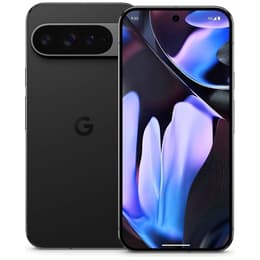
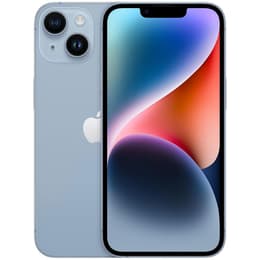

Google Pixel 9 Pro XL Vs iPhone 14

Google Pixel 9 Pro XL
Starting at

Refurbished price:424.00

Versus €1,298.07 new

See options
iPhone 14
iPhone 14
Starting at

Refurbished price:287.25

Versus €759.00 new

See options

Ratings

The Google Pixel 9 Pro XL, released in late 2024, and the Apple iPhone 14, launched in September 2022, represent distinct approaches to the premium smartphone experience. While both devices offer robust performance and advanced camera capabilities, the Pixel 9 Pro XL emphasizes artificial intelligence integration and a versatile camera system, whereas the iPhone 14 focuses on a streamlined user experience within the iOS ecosystem. These differences extend to their operating systems, with the Pixel running Android and the iPhone running iOS, influencing overall functionality and app availability.

Scores

Durability

When considering the long-term usability of these devices, several factors contribute to their expected practical lifespan.

  • Release Timeline: The Google Pixel 9 Pro XL, being a 2024 release, benefits from a more recent hardware foundation and typically receives software updates for a longer duration from its launch date compared to the iPhone 14, which was released in 2022.
  • Software Support: Google has committed to providing up to seven years of major Android upgrades for its Pixel devices, including the Pixel 9 Pro XL, ensuring extended access to new features and security patches [7]. The iPhone 14, running iOS, typically receives major software updates for approximately five to six years from its release.
  • Durability Features: Both devices offer a high level of physical resilience. The Pixel 9 Pro XL features an IP68 rating for dust and water resistance and utilizes Gorilla Glass Victus 2 for screen protection [3, 18]. The iPhone 14 also carries an IP68 rating and incorporates Ceramic Shield on its front display for enhanced drop performance [1, 2, 4, 11].

Year of Release

2024

2022

Compatible with latest Update

Yes

Yes

OS

Android

iOS

Foldable

No

No

Performance

The performance of a smartphone is crucial for daily tasks, from app navigation to demanding applications and multitasking.

  • Processing Power: The Google Pixel 9 Pro XL is equipped with an advanced processor designed for efficient performance and enhanced artificial intelligence tasks [30]. This allows for smooth handling of complex computations and on-device AI features. The iPhone 14 features a powerful chip that delivers responsive performance for everyday use and gaming [10, 11, 15].
  • Multitasking and Responsiveness: With 16GB of RAM, the Pixel 9 Pro XL is well-suited for extensive multitasking and running numerous applications simultaneously without slowdowns [7, 16, 30, 35, 40]. The iPhone 14 comes with 6GB of RAM, providing a fluid experience for typical smartphone usage and app switching [12, 29].
  • Storage Options: Both devices offer a range of internal storage capacities to suit different user needs. The Pixel 9 Pro XL is available with options up to 1TB [7, 16, 30, 35, 40], while the iPhone 14 offers configurations up to 512GB [1, 4, 6, 11].

Memory (GB)

16 GB

6 GB

Screen quality

The display is a primary interface for user interaction, and both devices offer vibrant viewing experiences with distinct characteristics.

  • Display Technology and Size: The Google Pixel 9 Pro XL features a larger 6.8-inch LTPO OLED display, providing expansive screen real estate for media consumption and productivity [16, 40]. The iPhone 14 comes with a 6.1-inch Super Retina XDR OLED display, offering a compact form factor with rich colors [1, 4, 5, 6, 11, 12, 15].
  • Resolution and Clarity: The Pixel 9 Pro XL boasts a higher resolution of 2992x1344 pixels, resulting in a pixel density of approximately 486-487 pixels per inch (ppi), contributing to sharp visuals [13, 16, 28, 40]. The iPhone 14 has a resolution of 2532x1170 pixels at 460 ppi, delivering clear and detailed images [1, 4, 5].
  • Brightness and Refresh Rate: The Pixel 9 Pro XL offers a peak brightness of 2050 nits for HDR content and features an adaptive refresh rate of up to 120Hz, ensuring smooth scrolling and responsiveness [13, 16, 28, 35]. The iPhone 14 provides a typical brightness of 800 nits and a peak of 1200 nits for HDR, with a standard 60Hz refresh rate [1, 4, 5].

Resolution

1344 x 2992

1170 x 2532

Screen type

LTPO OLED

Super Retina XDR OLED

Audiovisual

Both smartphones are equipped with advanced camera systems designed to capture high-quality photos and videos, though they differ in their hardware and computational photography approaches.

  • Rear Camera System: The Google Pixel 9 Pro XL features a versatile triple-camera setup, including a 50MP main sensor, a 48MP ultrawide lens with macro capabilities, and a 48MP telephoto lens offering 5x optical zoom [17, 18, 30]. The iPhone 14 utilizes a dual-camera system with a 12MP main sensor and a 12MP ultrawide lens [1, 4, 9, 12].
  • Photography Features: The Pixel 9 Pro XL leverages Google's computational photography with features like Night Sight, Astrophotography, Portrait Mode, and advanced AI-driven tools such as Video Boost for upscaling video to 8K and Audio Magic Eraser [8, 27]. The iPhone 14 includes features like Photonic Engine, Deep Fusion, Smart HDR 4, Night mode, and Cinematic mode for video, which provides a shallow depth of field effect [1, 4, 9, 12, 31].
  • Video Recording and Front Camera: Both devices are capable of recording 4K video at various frame rates. The Pixel 9 Pro XL also offers a 42MP front-facing camera with autofocus [17, 23, 26, 27, 30], while the iPhone 14 has a 12MP front camera with autofocus and improved low-light performance [1, 4, 12, 31].

Main camera

50 megapixels

12 megapixels

Front camera

42 megapixels

12 megapixels

Miscellaneous

Beyond core specifications, several practical elements contribute to the overall user experience and daily convenience of these devices.

  • Connectivity Standards: The Google Pixel 9 Pro XL supports modern connectivity, including 5G and Wi-Fi 7, offering faster wireless speeds and improved network efficiency [16]. The iPhone 14 supports 5G (sub-6 GHz) and Wi-Fi 6, providing reliable high-speed connections [1, 4]. Both devices include Bluetooth 5.3 for accessory pairing [1, 4].
  • Charging and Ports: The Pixel 9 Pro XL features a USB-C port, which is a widely adopted standard for charging and data transfer. The iPhone 14 continues to use Apple's proprietary Lightning port for charging and accessories [5]. Both devices support wireless charging.
  • Biometric Security and Design: The Pixel 9 Pro XL offers both an ultrasonic under-display fingerprint sensor and an upgraded Face Unlock feature for secure access [3]. The iPhone 14 relies on Face ID for biometric authentication [12]. In terms of physical design, the Pixel 9 Pro XL has an aluminum frame and glass back [3], while the iPhone 14 features a Ceramic Shield front and an aluminum frame with a glass back [1, 4].

Weight

221 g

172 g

Screen size (in)

6.8

6.1

Network

5G

5G

SIM card

Physical SIM + eSIM

Physical SIM + eSIM

Carrier compatibility

Unlocked

Unlocked

Connector

USB-C

Lightning

The Google Pixel 9 Pro XL and the iPhone 14 cater to users with differing priorities, reflecting their respective ecosystems and design philosophies. The Pixel 9 Pro XL, as a newer device, generally offers more advanced specifications, particularly in its display technology, camera versatility with a telephoto lens, and extended software support. Users often praise the Pixel's camera for its computational photography and AI features, delivering consistent and high-quality images [22, 34, 37]. Its battery life is also frequently highlighted as a strong point, often lasting a full day or more for moderate users [19, 22, 24]. Some users, however, note that its raw performance might not always match the absolute top-tier competitors in synthetic benchmarks, though it performs well in daily use [22, 37].

The iPhone 14, while an older model, remains a capable device known for its seamless iOS experience and robust ecosystem. Its camera system is well-regarded for its ease of use and consistent results, with features like Cinematic Mode enhancing video capabilities [31, 42]. User feedback on the iPhone 14's battery life is mixed; some find it sufficient for a full day, while others report faster degradation over time [36, 41, 42]. The 60Hz display is a point of comparison for users accustomed to higher refresh rates on newer devices.

Users prioritizing cutting-edge camera technology, a larger, high-refresh-rate display, and long-term Android software support may find the Google Pixel 9 Pro XL well-suited to their needs. Conversely, users who value the established iOS ecosystem, a compact form factor, and a consistently smooth user experience might lean toward the iPhone 14. For those seeking a more sustainable choice, both models are available as quality-assured refurbished options, providing an eco-friendly alternative to purchasing new.


See all articles

Our recent comparisons






