
Google Pixel 8 Pro Vs iPhone 14

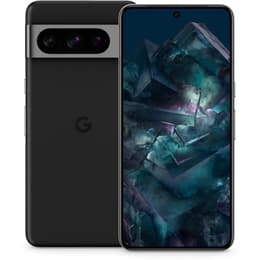
Google Pixel 8 Pro
Google Pixel 8 Pro
Starting at

Refurbished price:293.00

Versus €1,099.00 new

See options
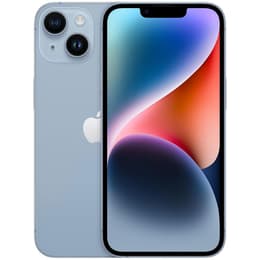
iPhone 14
iPhone 14
Starting at

Refurbished price:289.00

Versus €759.00 new

See options

Ratings

The Google Pixel 8 Pro, released in October 2023, and the iPhone 14, launched in September 2022, represent distinct approaches to the modern smartphone experience. While both devices offer robust performance and advanced camera systems, they cater to different user preferences through their respective operating systems and feature sets. The Pixel 8 Pro runs on Android, emphasizing AI-driven functionalities and extensive software support, whereas the iPhone 14 operates on iOS, known for its streamlined ecosystem and user-friendly interface.

Scores

Durability

When considering the longevity of these devices, both the Pixel 8 Pro and the iPhone 14 offer substantial software support and durable designs, though with differing timelines and repairability aspects.

  • Software Support: The Google Pixel 8 Pro stands out with an impressive commitment to seven years of OS upgrades, security updates, and Feature Drops, extending its support until 2030. This provides a long-term software experience for users. The iPhone 14, while also receiving consistent updates, typically follows Apple's standard of approximately five to six years of iOS support from its release date.
  • Physical Durability: Both phones feature robust construction. The iPhone 14 incorporates a Ceramic Shield front cover and an aluminum frame, along with IP68 water and dust resistance, designed to withstand everyday exposure. The Pixel 8 Pro also boasts an IP68 rating and a durable build with a glass back and aluminum frame. User reports indicate that while both are resilient, they can still be prone to damage from drops, highlighting the importance of protective accessories.
  • Repairability: The iPhone 14 introduced an internal design change that makes it easier to repair than some previous iPhone models, particularly regarding the back glass. Information on the Pixel 8 Pro's specific repairability score is less widely detailed, but Google's commitment to providing parts for seven years aligns with its extended software support, suggesting a focus on long-term usability.

Year of Release

2023

2022

Compatible with latest Update

Yes

Yes

Foldable

No

No

Performance

The performance of a smartphone is crucial for daily tasks, and both the Pixel 8 Pro and iPhone 14 deliver responsive experiences, albeit with different underlying architectures.

  • Processing Power: The Google Pixel 8 Pro is equipped with a current-generation processor designed to handle demanding applications, complex AI tasks, and multitasking smoothly. This allows for efficient on-device machine learning and quick execution of various functions. The iPhone 14 features a powerful processor that ensures fluid navigation, rapid app launches, and capable performance across a wide range of applications and games.
  • Multitasking and Storage: The Pixel 8 Pro typically comes with a generous amount of RAM, which contributes to its ability to manage numerous open applications without significant slowdowns. It offers various storage configurations, including options up to 1TB in some regions, providing ample space for files and media. The iPhone 14 also provides multiple storage options, up to 512GB, and its optimized operating system ensures efficient memory management for a smooth multitasking experience.
  • Battery Behavior: The Pixel 8 Pro houses a larger battery capacity, which, combined with software optimizations, generally provides a full day of use for many users, though some report variability depending on usage intensity and network conditions. The iPhone 14's battery is designed to comfortably last a full day for most users, with its efficient processor and iOS optimizations contributing to its endurance.

Memory (GB)

12 GB

6 GB

Screen quality

The visual experience is a key aspect of smartphone usage, and both devices offer high-quality displays with distinct characteristics.

  • Display Technology and Clarity: The Google Pixel 8 Pro features a 6.7-inch OLED display, offering deep blacks, vibrant colors, and a high resolution for sharp text and detailed images. The iPhone 14 comes with a 6.1-inch Super Retina XDR OLED display, known for its excellent contrast, color accuracy, and clarity, providing an immersive viewing experience.
  • Brightness and Refresh Rate: The Pixel 8 Pro's display can reach a high peak brightness, making it highly visible even in bright outdoor conditions. It also features an adaptive refresh rate that can scale from 1Hz to 120Hz, contributing to smoother scrolling and animations while conserving battery life. The iPhone 14 offers a strong peak brightness for HDR content and outdoor use, but its display has a standard 60Hz refresh rate, which provides a consistent visual experience.
  • Viewing Experience: The larger screen of the Pixel 8 Pro may appeal to users who prioritize expansive content consumption or productivity. The iPhone 14's slightly more compact screen size offers a balance between immersive viewing and comfortable one-handed use. Both displays are designed to render content with high fidelity, suitable for a range of activities from browsing to video streaming.

Resolution

1344 x 2992

1170 x 2532

Screen type

LTPO OLED

Super Retina XDR OLED

Audiovisual

Both the Google Pixel 8 Pro and the iPhone 14 are equipped with advanced camera systems, each excelling in different areas of photography and videography.

  • Rear Camera Systems: The Pixel 8 Pro features a versatile triple-camera setup, including a 50MP main sensor, a 48MP ultrawide lens with autofocus, and a 48MP telephoto lens offering 5x optical zoom and up to 30x digital zoom. This configuration provides flexibility for various photographic scenarios, from wide landscapes to distant subjects. The iPhone 14 utilizes a dual-camera system with a 12MP main camera featuring sensor-shift optical image stabilization and a 12MP ultrawide camera. Its strength lies in consistent image quality and computational photography.
  • Photography Performance: The Pixel 8 Pro is known for its advanced computational photography, offering features like Night Sight for low-light conditions, Magic Editor for post-capture adjustments, and a Pro mode for manual controls and 50MP RAW capture. The iPhone 14 benefits from Apple's Photonic Engine, which enhances low-light performance across all cameras and improves detail and color. Both devices deliver excellent everyday photos, with the Pixel often praised for its natural color science and the iPhone for its reliable point-and-shoot capabilities.
  • Video Recording and Audio: The Pixel 8 Pro offers 4K video recording at up to 60fps and introduces features like Video Boost and Audio Magic Eraser for enhanced video and sound quality. The iPhone 14 supports 4K video recording at various frame rates, including Cinematic mode for shallow depth-of-field effects and Action mode for smooth, stabilized footage. Both phones provide clear microphone quality for calls and recordings, and their speakers offer a good audio experience for media consumption.

Main camera

50 megapixels

12 megapixels

Front camera

10.5 megapixels

12 megapixels

Miscellaneous

Beyond core features, several practical elements differentiate the user experience between the Pixel 8 Pro and the iPhone 14.

  • Connectivity and Ports: The Google Pixel 8 Pro supports the latest Wi-Fi 7 standard and features a USB-C port, offering faster data transfer speeds and universal compatibility with many modern accessories. It also includes 5G and Bluetooth 5.3. The iPhone 14 supports Wi-Fi 6, 5G, and Bluetooth 5.3, but retains the Lightning port for charging and data transfer.
  • Biometric Security: The Pixel 8 Pro incorporates an under-display fingerprint scanner in addition to face unlock for secure access. The iPhone 14 relies solely on Face ID, Apple's facial recognition system, for biometric authentication.
  • Design and Handling: The Pixel 8 Pro has a slightly larger form factor and a weight of 213 grams, with rounded corners that contribute to a comfortable grip. The iPhone 14 is more compact and lighter at 172 grams, featuring flat edges and a design that is generally easy to handle with one hand. Both devices are constructed with premium materials, offering a solid in-hand feel.

Weight

213 g

150 g

Screen size (in)

6.7

6.1

Network

5G

5G

SIM card

Physical SIM + eSIM

eSIM

Carrier compatibility

Unlocked

Unlocked

The Google Pixel 8 Pro and the iPhone 14 each present a compelling smartphone experience, tailored to different user priorities. Users frequently praise the Pixel 8 Pro for its exceptional camera capabilities, particularly its advanced computational photography features, low-light performance, and the flexibility offered by its Pro mode. Its long-term software support is also a significant draw for those seeking extended device longevity. However, some users have noted that the Pixel 8 Pro's battery life can be inconsistent under heavy use or on 5G, and there have been occasional reports of the device getting warm during intensive tasks or charging.

The iPhone 14 is often lauded for its consistently smooth performance, reliable battery life that typically lasts a full day, and its vibrant display. Its integration within the Apple ecosystem and the intuitive nature of iOS are also frequently highlighted as strong points. Conversely, some users have expressed a desire for more significant upgrades compared to previous models, and a few have reported faster-than-expected battery degradation over time. The continued use of the Lightning port instead of USB-C has also been a point of discussion for some.

For users who prioritize cutting-edge camera technology, extensive AI-driven features, and a commitment to long-term software updates, the Google Pixel 8 Pro may be the more suitable choice. Its larger display and higher refresh rate also cater to those who value an expansive and fluid visual experience. Conversely, individuals who prefer a more compact device, a highly polished and integrated software ecosystem, and consistent, reliable performance for everyday tasks might find the iPhone 14 to be a better fit. Both devices are available as quality-assured refurbished options, providing a sustainable choice for consumers looking to make an informed decision.


See all articles

Our recent comparisons