

Google Pixel 7 Vs iPhone 14

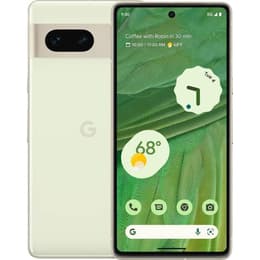
Google Pixel 7
Google Pixel 7
Starting at

Refurbished price:164.99

Versus €729.00 new

See options
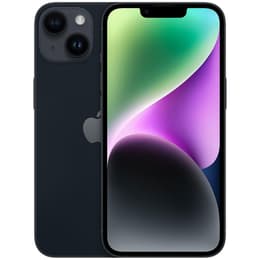
iPhone 14
iPhone 14
Starting at

Refurbished price:289.00

Versus €759.00 new

See options

Ratings

The Google Pixel 7, released in October 2022, and the Apple iPhone 14, launched in September 2022, represent distinct approaches to the modern smartphone experience. While both devices offer robust performance and advanced camera systems, they cater to different user preferences through their respective operating systems and design philosophies. Key differentiators include their display technologies, camera processing, and overall software ecosystems.

Scores

Durability

When considering the longevity of these devices, both the Google Pixel 7 and the iPhone 14 offer substantial software support and durable builds, though with some differences in their expected update timelines and physical resilience features.

  • Software Support: The Google Pixel 7 launched with Android 13 and is guaranteed to receive five years of OS and security updates, extending its support until 2027. [21, 26] The iPhone 14, which debuted with iOS 16, is anticipated to receive major iOS updates until approximately 2028 or 2029, offering a slightly longer period of feature updates. [35, 36, 37]
  • Build Materials: Both phones feature a combination of glass on the front and back, encased in an aluminum frame. The Pixel 7 utilizes Gorilla Glass Victus for screen protection, [3, 6, 18] while the iPhone 14 incorporates Apple's Ceramic Shield, known for its enhanced drop performance. [6]
  • Water and Dust Resistance: Both devices carry an IP68 rating for water and dust resistance. The iPhone 14 is rated to withstand submersion up to 6 meters for 30 minutes, [6] whereas the Pixel 7 is rated for up to 1.5 meters for the same duration. [6]

Year of Release

2022

2022

Compatible with latest Update

Yes

Yes

OS

Android

iOS

Foldable

No

No

Performance

Performance is a critical aspect for daily smartphone use, encompassing everything from app responsiveness to battery endurance. The Pixel 7 and iPhone 14 deliver capable experiences, each with distinct strengths.

  • Processing Power: The iPhone 14 features a powerful processor that ensures smooth operation for demanding applications and multitasking. [1, 13] This allows for efficient handling of complex tasks and provides a fluid user experience. The Pixel 7 is equipped with a current-generation processor that is described as snappy and efficient, particularly in managing the device's machine learning and AI tasks. [1]
  • Multitasking and Storage: The Pixel 7 comes with 8GB of RAM, [1, 3, 7] which contributes to its ability to manage multiple applications simultaneously. It offers storage options of 128GB or 256GB. [1, 3, 7] The iPhone 14 includes 6GB of RAM [1, 3, 8] and is available with 128GB, 256GB, or 512GB of internal storage, providing more options for users with extensive storage needs. [1, 3, 4]
  • Battery Life and Charging: Both devices are designed to provide all-day battery life for moderate to heavy users, typically offering 12-13 hours of usage. [1] The Pixel 7 has a larger battery capacity and supports faster wired charging at 30W, as well as 21W wireless charging and reverse wireless charging. [1, 3] The iPhone 14 supports up to 20W wired charging, 15W via MagSafe, and 7.5W with Qi wireless charging. [1, 3]

Memory (GB)

8 GB

6 GB

Screen quality

The visual experience is central to smartphone interaction, and both the Pixel 7 and iPhone 14 offer high-quality displays with notable differences in their specifications.

  • Display Technology and Size: The Google Pixel 7 features a 6.3-inch OLED display, providing vibrant colors and deep blacks. [1, 2, 3] The iPhone 14 comes with a slightly smaller 6.1-inch Super Retina XDR OLED display, also known for its rich color reproduction. [1, 2, 3]
  • Resolution and Clarity: The iPhone 14's display has a resolution of 2532x1170 pixels, resulting in a pixel density of approximately 460 pixels per inch (ppi). [1, 2, 3] The Pixel 7 offers a 2400x1080 resolution with about 416 ppi. [1, 2, 3]
  • Brightness and Smoothness: The Pixel 7's screen can reach a peak brightness of 1400 nits and features a 90Hz refresh rate, which contributes to smoother scrolling and more fluid animations. [1, 2, 3] The iPhone 14 has a peak brightness of 1200 nits and a standard 60Hz refresh rate. [1, 2, 5] The Pixel 7 also includes an always-on display feature, which is not present on the standard iPhone 14. [12]

Resolution

1080 x 2400

1170 x 2532

Screen type

AMOLED

Super Retina XDR OLED

Audiovisual

Both the Google Pixel 7 and the iPhone 14 are recognized for their advanced camera capabilities, each excelling in different aspects of photography and videography.

  • Rear Camera Systems: The Pixel 7 features a dual-camera setup with a 50MP main sensor and a 12MP ultrawide lens. [3, 11] It is praised for its detailed images, especially with its Super Res Zoom feature, and its computational photography tools like Magic Eraser and Photo Unblur. [11, 12, 24] The iPhone 14 also has a dual-camera system, consisting of a 12MP main sensor and a 12MP ultrawide lens. [3, 4] It is known for its consistent image quality and the Photonic Engine, which enhances low-light performance. [4, 12]
  • Front Camera and Video: The Pixel 7 includes a 10.8MP front camera with a wide field of view. [3, 18] It supports 4K video recording at 30 and 60 frames per second, along with Cinematic Blur and Active Stabilization. [12] The iPhone 14 features a 12MP front camera with autofocus, [3, 22] and is particularly strong in video recording, offering 4K Dolby Vision HDR recording and Cinematic Mode for professional-looking depth effects. [4, 11]
  • Image Processing and User Preference: The Pixel 7 often produces images with more vibrant colors and a natural tone, with some users noting its superior detail in certain conditions. [25, 27] The iPhone 14 is frequently lauded for its color consistency and overall reliability in various shooting scenarios, with some users preferring its warmer tones. [22, 28]

Main camera

50 megapixels

12 megapixels

Front camera

10.8 megapixels

12 megapixels

Miscellaneous

Beyond core features, several practical elements contribute to the overall user experience of the Google Pixel 7 and iPhone 14, from connectivity to physical design.

  • Connectivity and Ports: Both devices support 5G connectivity for fast mobile data. [4, 5] The Pixel 7 uses a USB-C port for charging and data transfer, [1] while the iPhone 14 retains the Lightning port. [1, 4] The Pixel 7 offers dual SIM functionality with both a physical Nano SIM slot and eSIM support, [9] whereas the iPhone 14 in some regions relies solely on eSIM. [9]
  • Biometric Security: The Pixel 7 incorporates an under-display optical fingerprint scanner and Face Unlock using its front camera for secure access. [9, 14] The iPhone 14 utilizes Face ID, a facial recognition system integrated into its display notch. [34]
  • Design and Handling: The iPhone 14 is generally more compact and lighter, measuring 146.7 x 71.5 x 7.8 mm and weighing 172g. [5, 6] The Pixel 7 is slightly larger and heavier at 155.6 x 73.2 x 8.7 mm and 197g. [6, 14] The Pixel 7 features a distinctive horizontal camera bar across its back, while the iPhone 14 maintains a more traditional design with a square camera module. [3, 38]

Weight

197 g

150 g

Screen size (in)

6.3

6.1

Network

5G

5G

SIM card

Physical SIM + eSIM

eSIM

Carrier compatibility

Unlocked

Unlocked

Connector

USB-C + Jack 3.5mm

Lightning

User feedback for both the Google Pixel 7 and the iPhone 14 highlights their respective strengths and areas for consideration. The Pixel 7 is frequently praised for its exceptional camera system, offering detailed photos and advanced computational photography features like Magic Eraser. [12, 27] Users also appreciate its smooth Android software experience and the flexibility it offers for customization. [31] However, some users have noted that its battery performance can be inconsistent, particularly during intensive tasks like gaming. [29, 34]

The iPhone 14 receives commendation for its powerful processing capabilities, which ensure a consistently fluid and responsive user experience across applications. [1, 13] Its video recording quality is often cited as a strong point, and many users value the integrated and optimized Apple ecosystem. [1, 34] On the other hand, the standard 60Hz display refresh rate is a common point of criticism, and some users find its camera's color science to be less natural in certain situations compared to the Pixel. [1, 2, 27]

For users who prioritize advanced camera features, a highly customizable Android experience, and a display with a faster refresh rate, the Google Pixel 7 may be a more suitable choice. Conversely, individuals who value raw processing power, superior video capabilities, a consistently optimized software ecosystem, and a slightly more compact design might find the iPhone 14 aligns better with their needs. Both devices offer a compelling smartphone experience, and considering a quality-assured refurbished option can be an eco-friendly alternative for either model.
See all articles

Our recent comparisons






