

Compare models

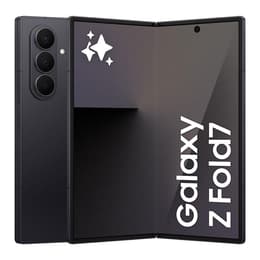
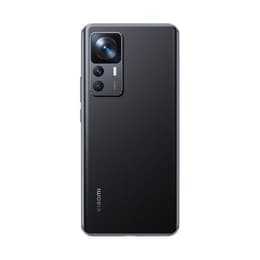
Galaxy Z Fold7 Vs Xiaomi 12T

  • 1-year minimum warranty
  • Free delivery on all orders
  • Free 30-day returns
Galaxy Z Fold7
Starting at

Refurbished price:€907.00

Versus €2,236.37 new

See options
Xiaomi 12T
Starting at

Refurbished price:€188.00

Versus €649.00 new

See options

Differences at a glance

The Galaxy Z Fold7 (2025) and the Xiaomi 12T (2022) represent entirely different approaches to mobile technology, contrasting an advanced book-style foldable smartphone with a traditional, high-performance slate device. While both run on the Android operating system, they cater to distinctly separate use cases and physical form factors. The primary differentiators lie in the Galaxy Z Fold7's dual-screen foldable design versus the Xiaomi 12T's conventional candybar structure, alongside a significant gap in their respective release years.

Available Models

Colour

Storage

Scores

Durability

When evaluating hardware longevity and software support, both devices handle updates differently based on their launch timelines and engineering frameworks.

  • Release timeline and OS support: The Galaxy Z Fold7 arrived in mid-2025 running current Android software and benefits from an extended multi-year update commitment. The Xiaomi 12T launched in late 2022 and follows an older software cycle.
  • Software longevity: Users seeking long-term system updates and security patches will find the newer Galaxy Z Fold7 retains active support further into the future.
  • Physical durability: The Xiaomi 12T features a traditional rigid glass body with predictable wear patterns, whereas the Galaxy Z Fold7 incorporates complex folding hinge mechanics and flexible screen layers that require careful handling over years of daily use.

Year of Release

2025

2022

Compatible with latest Update

Yes

Yes

OS

Android

Android

Foldable

Yes

No

Performance

Both smartphones deliver robust capability for daily tasks, though their internal hardware layouts and multitasking behaviors diverge significantly.

  • Multitasking and app loading: The Galaxy Z Fold7 handles demanding apps, heavy multitasking, and split-screen workflows smoothly thanks to its high-tier processor and generous RAM allocation. The Xiaomi 12T manages everyday browsing, media streaming, and moderate multitasking efficiently with its capable mid-tier configuration.
  • Storage capacity: The Galaxy Z Fold7 provides expansive storage tiers starting at higher baselines, while the Xiaomi 12T offers standard storage options suitable for typical media libraries.
  • Battery behavior: The Xiaomi 12T's traditional single screen configuration helps its battery sustain routine daily tasks reliably, whereas the Galaxy Z Fold7 balances power across both an outer cover screen and a large inner display during active use.

Screen quality

Display design is the most defining characteristic separating these two models, offering entirely different visual environments for media and productivity.

  • Display technology and format: The Xiaomi 12T features a traditional 6.67-inch flat AMOLED display with crisp resolution and vibrant color reproduction. In contrast, the Galaxy Z Fold7 opens up to an expansive 8.0-inch main foldable display accompanied by a 6.5-inch outer cover screen, both utilizing advanced dynamic display panels.
  • Refresh rate and fluidity: Both devices support a 120Hz refresh rate, ensuring smooth scrolling through web pages, menus, and supported applications.
  • Outdoor visibility: Both screens reach high peak brightness levels to maintain legibility under bright ambient lighting conditions.

Resolution

1968x2184

1220 x 2712

Audiovisual

Imaging hardware and media consumption capabilities vary to accommodate different photography styles and physical layouts.

  • Camera systems: The Galaxy Z Fold7 incorporates a versatile triple rear camera setup featuring a high-resolution main sensor, ultra-wide lens, and a dedicated telephoto option for optical zoom. The Xiaomi 12T relies on a high-megapixel primary wide sensor paired with an ultra-wide and a macro lens.
  • Everyday and low-light capture: Both models process daylight photography effectively and include dedicated night modes to retain detail in dim environments.
  • Audio and media output: Both devices feature stereo speakers that deliver clear sound for hands-free calls, video viewing, and casual audio playback.

Miscellaneous

Practical everyday features, physical dimensions, and build elements shape how each device feels during regular handling.

  • Build and dimensions: The Xiaomi 12T is a standard slate phone weighing around 202 grams with a uniform thickness. The Galaxy Z Fold7 utilizes precision engineering to achieve a remarkably thin profile when folded, weighing 215 grams while housing a folding mechanism.
  • Authentication and sensors: Both phones include secure biometric unlocking methods through under-display or side-mounted fingerprint scanners alongside rapid facial recognition.
  • Connectivity: Both models support modern 5G cellular networks, high-speed Wi-Fi standards, and Bluetooth for accessory pairing.

Weight

215 g

220 g

Screen size (in)

8.0

6.67

Network

5G

5G

SIM card

Dual Physical SIM + eSIM

Dual Physical SIM

Carrier compatibility

Unlocked

Unlocked

Connector

USB-C (USB 3)

USB-C

What the community thinks

User feedback highlights distinct preferences for each device depending on workflow needs. Owners of the Xiaomi 12T frequently praise its reliable daily performance and rapid charging capabilities, though some note that its traditional slate format lacks expansive workspace options. Conversely, users of the Galaxy Z Fold7 appreciate the versatility of a transforming screen layout for productivity and media, while occasionally noting the higher care requirements inherent to foldable technology.

Users prioritizing a sprawling tablet-like display for multitasking and modern hardware will find the Galaxy Z Fold7 well-suited to their routine. Meanwhile, users who prefer a straightforward, conventional smartphone design for everyday communication and media consumption may lean toward the Xiaomi 12T. For those exploring sustainable purchasing routes, choosing a quality-assured refurbished option provides an eco-friendly alternative that extends device lifecycles without compromising on performance standards.