

iPhone 11 Vs Xiaomi 12T

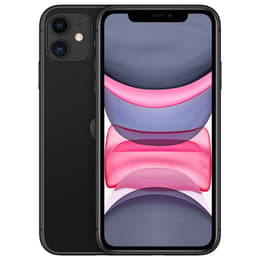
iPhone 11
iPhone 11
Starting at

Refurbished price:141.00

Versus €589.00 new

See options
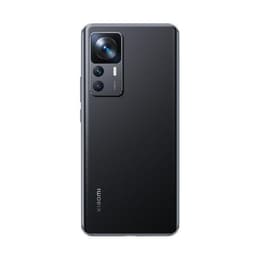
Xiaomi 12T
Xiaomi 12T
Starting at

Refurbished price:131.00

Versus €649.00 new

See options

Ratings

The iPhone 11, released in September 2019, and the Xiaomi 12T, launched in October 2022, represent distinct approaches to smartphone design and functionality from different generations. While the iPhone 11 operates on Apple's iOS ecosystem, the Xiaomi 12T runs on Android, offering users different software experiences. The primary differentiators between these two devices lie in their display technology, camera capabilities, and overall performance, reflecting the technological advancements over their respective release periods.

Scores

Durability

The practical lifespan of a smartphone is significantly influenced by its release timeline, software support, and physical durability. The iPhone 11 and Xiaomi 12T offer different expectations in these areas.

  • Release Timeline and Software Support: The iPhone 11, released in 2019, is expected to receive major iOS updates until approximately Fall 2026, potentially reaching iOS 26, with security updates continuing for a period thereafter. The Xiaomi 12T, launched in 2022, was promised three major Android OS updates, concluding with Android 15, and four years of security patches from its release. This means the iPhone 11, despite being older, may have a comparable or slightly longer period of major OS updates remaining, while the Xiaomi 12T will continue to receive security updates for a few more years.
  • Repairability and Physical Durability: The iPhone 11 has an iFixit repairability score of 6 out of 10, indicating that critical components like the display and battery are relatively accessible for repair. It also features an IP68 rating for dust and water resistance, capable of withstanding submersion up to 2 meters for 30 minutes. The Xiaomi 12T has an IP53 rating, offering protection against dust and light splashes but not full water immersion. The iPhone 11's build includes a glass front and back with an aluminum frame, while the Xiaomi 12T features a glass front with Gorilla Glass 5, a plastic back, and a plastic frame.
  • Expected Practical Lifespan: Users often report that iPhones maintain good performance and usability for 5-6 years or more, especially with continued software and security updates. The Xiaomi 12T, with its promised update schedule, is designed to remain functional and secure for several years, though the longevity of Android devices can vary based on manufacturer support and user habits.

Year of Release

2019

2022

Compatible with latest Update

Yes

Yes

OS

iOS

Android

Foldable

No

No

Performance

The performance of a smartphone impacts daily usage, from app responsiveness to handling demanding tasks. The iPhone 11 and Xiaomi 12T offer different levels of processing power and memory configurations.

  • Processor Capabilities: The iPhone 11 is powered by Apple's A13 Bionic chip, which was a leading processor at its release and continues to handle everyday applications and multitasking smoothly. Users report that it still offers a fluid experience for general use and social media in 2026. The Xiaomi 12T features the MediaTek Dimensity 8100-Ultra, a powerful current-generation processor known for its stability and efficiency, capable of running demanding games and applications effectively.
  • Multitasking and Responsiveness: The iPhone 11 comes with 4GB of RAM, which is sufficient for typical multitasking on iOS, though heavy usage with many apps open might occasionally lead to minor slowdowns. The Xiaomi 12T is equipped with 8GB of RAM, providing more headroom for extensive multitasking and ensuring a consistently responsive experience even with numerous applications running simultaneously.
  • Storage Options and Battery Behavior: Both devices offer various internal storage options, with the iPhone 11 available in 64GB, 128GB, and 256GB configurations, and the Xiaomi 12T in 128GB and 256GB. In terms of battery, the iPhone 11 has a 3110 mAh capacity, which generally provides a full day of use for many users, though older units might benefit from a battery replacement for optimal performance. The Xiaomi 12T boasts a larger 5000 mAh battery, often lasting a few days with moderate usage, and supports 120W fast charging, allowing for a rapid full charge.

Memory (GB)

4 GB

8 GB

Screen quality

The display is a primary interface for smartphone interaction, and both devices offer distinct visual experiences based on their underlying technology and specifications.

  • Display Technology and Resolution: The iPhone 11 features a 6.1-inch Liquid Retina IPS LCD display with a resolution of 1792x828 pixels, resulting in a pixel density of 326 ppi. This LCD panel provides accurate colors and good viewing angles. The Xiaomi 12T, on the other hand, sports a larger 6.67-inch AMOLED display with a higher resolution of 1220 x 2712 pixels and a pixel density of 446 ppi. AMOLED technology typically offers deeper blacks and more vibrant colors compared to LCD.
  • Brightness and Refresh Rate: The iPhone 11 has a typical maximum brightness of 625 nits, which is adequate for most indoor and outdoor conditions. Its display operates at a standard 60Hz refresh rate. The Xiaomi 12T offers a typical brightness of 500 nits, with a peak brightness of 900 nits, making it more visible in bright outdoor environments. A key advantage of the Xiaomi 12T is its 120Hz refresh rate, which provides a smoother scrolling experience and more fluid animations compared to the iPhone 11's 60Hz display.
  • Viewing Experience: While the iPhone 11's LCD is considered one of the best in its class, users accustomed to OLED displays might notice the difference in black levels. The Xiaomi 12T's AMOLED panel, combined with its higher resolution and refresh rate, delivers a more immersive and responsive viewing experience, particularly for media consumption and gaming.

Resolution

828 x 1792

1220 x 2712

Screen type

Liquid Retina IPS LCD

AMOLED

Audiovisual

Camera systems are a significant factor for many users, and both the iPhone 11 and Xiaomi 12T offer capable setups with different strengths.

  • Rear Camera System: The iPhone 11 features a dual 12MP camera system, comprising a wide and an ultrawide lens. It is praised for its daylight photography, reliable colors, and 4K video recording capabilities at up to 60fps. Its Night mode significantly improves low-light performance. The Xiaomi 12T comes with a triple camera setup, including a high-resolution 108MP main sensor with Optical Image Stabilization (OIS), an 8MP ultrawide lens, and a 2MP macro lens. The main camera produces vibrant and detailed images, and it also supports 4K video recording, though at 30fps.
  • Low-Light and Video Quality: The iPhone 11's Night mode is effective in challenging lighting conditions, yielding brighter and clearer shots. Its video recording is noted for its stability and quality, making it suitable for social media and content creation. The Xiaomi 12T's 108MP main sensor, especially with OIS, also performs well in low light, capturing good detail and saturated colors. Its ultrawide camera is considered decent, while the macro lens is less impactful.
  • Front Camera and Audio: The iPhone 11 has a 12MP front camera capable of 4K video recording. The Xiaomi 12T features a 20MP front camera, which provides good exposure and skin tones, though some users note a lack of fine detail. For audio, the Xiaomi 12T includes dual stereo speakers that offer a punchy and immersive media consumption experience. The iPhone 11 also provides a good audio experience with stereo speakers.

Main camera

12 megapixels

108 megapixels

Front camera

12 megapixels

20 megapixels

Miscellaneous

Beyond core features, several practical elements contribute to the overall user experience and differentiate these two smartphones.

  • Connectivity and Ports: The iPhone 11 supports 4G LTE, Wi-Fi 6, and Bluetooth 5.0, utilizing Apple's proprietary Lightning port for charging and data transfer. It does not offer 5G connectivity. The Xiaomi 12T is equipped with 5G capabilities, Wi-Fi 6, and Bluetooth 5.3, and uses the more universal USB-C port. The inclusion of 5G on the Xiaomi 12T provides access to faster mobile data speeds where available.
  • Biometrics and Sensors: The iPhone 11 relies on Face ID for secure authentication, using its TrueDepth camera system. It also features an Ultra Wideband chip for spatial awareness. The Xiaomi 12T incorporates an under-display optical fingerprint sensor for biometric security.
  • Build Materials and Handling: The iPhone 11 has a premium feel with its glass front and back and an aluminum frame. Its dimensions are 150.9 x 75.7 x 8.3 mm and it weighs 194g. The Xiaomi 12T, while featuring a glass front (Gorilla Glass 5), has a plastic back and frame, which can feel less premium to some users. It is slightly larger and heavier at 163.1 x 75.9 x 8.6 mm and 202g. The iPhone 11 also boasts an IP68 rating for enhanced dust and water resistance, whereas the Xiaomi 12T has an IP53 rating, offering protection against splashes.

Weight

194 g

220 g

Screen size (in)

6.1

6.67

Network

4G

5G

SIM card

Physical SIM + eSIM

Dual Physical SIM

Carrier compatibility

Unlocked

Unlocked

Connector

Lightning

USB-C

User sentiment for the iPhone 11 often highlights its enduring performance, reliable camera for everyday use, and consistent software experience, even several years after its release. Many users appreciate its battery life, which was a significant improvement at its launch, and its continued software support from Apple. Common criticisms, particularly in 2026, include the absence of a high refresh rate display and 5G connectivity, as well as the LCD panel not offering the deep blacks of modern OLED screens.

The Xiaomi 12T receives praise for its vibrant AMOLED display with a 120Hz refresh rate, its powerful processor capable of handling demanding tasks, and its exceptionally fast 120W charging. Users also commend its large battery capacity, which provides extended usage. Some frequent criticisms include the less impressive performance of its secondary cameras (ultrawide and macro) compared to the main sensor, the plastic build materials, and the IP53 rating which offers less water resistance than some competitors.

Users prioritizing a long-term software support commitment, a robust build with higher water resistance, and a familiar iOS ecosystem may prefer the iPhone 11. It remains a capable device for general use, photography, and video recording, especially for those who do not require the latest display technologies or 5G. Conversely, users who value a modern, high-refresh-rate AMOLED display, faster charging speeds, 5G connectivity, and a powerful processor for gaming and intensive applications will find the Xiaomi 12T well-suited to their needs. Its larger battery capacity also appeals to those seeking extended usage between charges.

Both devices offer compelling features for different user profiles. For those considering either model, exploring quality-assured refurbished options can provide an eco-friendly alternative, extending the life cycle of these devices and offering a sustainable choice.

See all articles

Our recent comparisons