
iPhone 15 Vs Xiaomi 12T

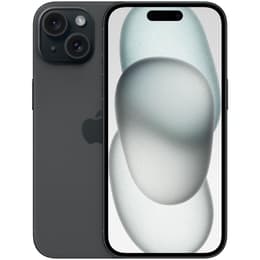
iPhone 15
iPhone 15
Starting at

Refurbished price:399.00

Versus €879.00 new

See options
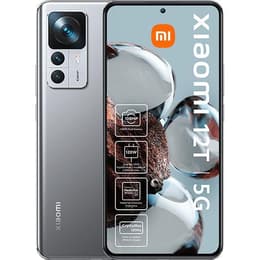
Xiaomi 12T
Xiaomi 12T
Starting at

Refurbished price:140.00

Versus €649.00 new

See options

Ratings

The iPhone 15 (2023) and the Xiaomi 12T (2022) are distinct smartphones from different ecosystems, offering varied experiences to users. While the iPhone 15 operates on Apple's iOS, the Xiaomi 12T runs on Android with Xiaomi's MIUI overlay. These devices cater to different user priorities, with the iPhone 15 focusing on a refined user experience and advanced imaging, and the Xiaomi 12T emphasizing a high-refresh-rate display and rapid charging capabilities.

Scores

Durability

When considering the long-term usability of these devices, their release timelines and software support are key factors.

  • Software Longevity: The iPhone 15, released in September 2023, benefits from Apple's extended software support, typically receiving iOS updates for approximately 5-6 years from its launch. This suggests a longer period of access to the latest features and security patches. The Xiaomi 12T, launched in October 2022, runs on Android and generally receives fewer major OS updates and security patches over a shorter period compared to Apple devices, though it has received updates to HyperOS.
  • Repairability: The iPhone 15 initially received a repairability score of 4/10, which was later improved to 7/10 for some aspects, though part pairing can still complicate independent repairs. The Xiaomi 12T features Corning Gorilla Glass 5 for screen protection, but specific repairability scores are less widely publicized.
  • Practical Lifespan: Users can expect the iPhone 15 to remain functionally current for a longer duration due to its software support. The Xiaomi 12T, while robust, may see its software experience age more quickly.

Year of Release

2023

2022

Compatible with latest Update

Yes

Yes

OS

iOS

Android

Foldable

No

No

Performance

Both devices offer capable performance for daily tasks and demanding applications, though they achieve this through different hardware configurations.

  • Processing Power: The iPhone 15 is equipped with a powerful processor that handles demanding applications, complex multitasking, and graphic-intensive games with smooth responsiveness. The Xiaomi 12T features a processor designed to deliver strong performance for gaming and everyday use, ensuring a fluid experience across various applications.
  • Multitasking and Storage: The iPhone 15 comes with various storage options, supporting efficient app management and data storage. The Xiaomi 12T offers 8GB of RAM and multiple storage configurations, contributing to smooth multitasking and quick app loading.
  • Battery Behavior: The iPhone 15 provides a full day of use for most users, with some tests indicating over 25 hours of continuous usage. The Xiaomi 12T, with its 5000mAh battery, also offers substantial battery life, often lasting a full day or more, and features very rapid wired charging capabilities.

Memory (GB)

6 GB

8 GB

Screen quality

The visual experience on both smartphones is vibrant, though they differ in display technology and refresh rates.

  • Display Technology and Clarity: The iPhone 15 features a 6.1-inch Super Retina XDR OLED display, known for its deep blacks, vibrant colors, and high pixel density of 460 ppi, providing sharp and clear visuals. The Xiaomi 12T boasts a larger 6.67-inch CrystalRes AMOLED display with a resolution of 1220x2712 pixels and 446 ppi, offering excellent clarity and color accuracy.
  • Brightness and Smoothness: The iPhone 15 offers impressive peak outdoor brightness of up to 2000 nits, making it highly visible in bright sunlight, but has a standard 60Hz refresh rate. The Xiaomi 12T provides a smoother scrolling and gaming experience with its 120Hz refresh rate and 480Hz touch sampling rate, with a peak brightness of up to 900 nits.
  • Viewing Experience: The iPhone 15 includes the Dynamic Island for interactive notifications and alerts. The Xiaomi 12T's larger screen size and higher refresh rate may appeal to users who prioritize immersive media consumption and fluid interactions.

Resolution

1179 x 2556

1220 x 2712

Screen type

Super Retina XDR OLED

AMOLED

Audiovisual

Both devices offer capable camera systems, but with different strengths and sensor configurations.

  • Main Camera System: The iPhone 15 features an advanced dual-camera system with a 48MP main sensor that produces detailed 24MP photos by default, and a 12MP ultra-wide camera. It also offers a 2x optical zoom option by utilizing the main sensor. The Xiaomi 12T comes with a triple camera setup, highlighted by a 108MP main sensor with optical image stabilization (OIS), which uses pixel binning to produce high-quality 12MP images. It also includes an 8MP ultra-wide and a 2MP macro lens.
  • Photography Performance: The iPhone 15 excels in overall image quality, low-light performance, and video recording, with features like Cinematic mode and Dolby Vision HDR. The Xiaomi 12T delivers vibrant and detailed photos in good lighting conditions, with its OIS aiding in sharper shots, though its low-light performance and secondary cameras are noted to be less consistent.
  • Front Camera: Both phones feature capable front-facing cameras for selfies and video calls. The iPhone 15 has a 12MP TrueDepth camera, while the Xiaomi 12T has a 20MP front camera.

Main camera

48 megapixels

108 megapixels

Front camera

12 megapixels

20 megapixels

Miscellaneous

Beyond core features, several practical elements differentiate these two smartphones.

  • Connectivity and Ports: Both devices support 5G connectivity, Wi-Fi 6, and Bluetooth 5.3. A notable difference is the iPhone 15's transition to a USB-C port, aligning with broader industry standards, while the Xiaomi 12T also uses USB-C.
  • Biometric Security: The iPhone 15 relies on Face ID for secure authentication. The Xiaomi 12T incorporates an in-display fingerprint sensor for unlocking.
  • Design and Handling: The iPhone 15 features an aluminum design with a Ceramic Shield front and color-infused glass back, weighing 171 grams. The Xiaomi 12T has a glass front and back with a plastic frame, weighing 202 grams, offering a slightly larger and heavier build. The iPhone 15 also carries an IP68 rating for water and dust resistance.

Weight

171 g

220 g

Screen size (in)

6.1

6.67

Network

5G

5G

SIM card

eSIM

Dual Physical SIM

Carrier compatibility

Unlocked

Unlocked

Connector

USB-C (USB 2)

USB-C

Users frequently praise the iPhone 15 for its consistent performance, advanced camera capabilities, and the seamless integration of its operating system. Common criticisms sometimes point to its 60Hz display refresh rate compared to many Android counterparts. Users appreciate the Xiaomi 12T for its smooth 120Hz AMOLED display, rapid charging speeds, and capable main camera, often highlighting its strong performance for gaming and media consumption. Some users have noted that its battery life can be underwhelming for heavy use despite the large capacity, and its software experience (MIUI) may not appeal to everyone.

Users prioritizing a long-lasting software experience, a highly refined camera system with strong video capabilities, and a compact, durable design will find the iPhone 15 well-suited to their needs. Conversely, users who value a larger, high-refresh-rate display for gaming and media, exceptionally fast wired charging, and a more customizable Android experience may lean toward the Xiaomi 12T. Both devices represent solid choices within their respective ecosystems, and considering a quality-assured refurbished option for either model can be an eco-friendly alternative for consumers.

See all articles

Our recent comparisons