

Xiaomi 12T Vs Xiaomi Redmi Note 13

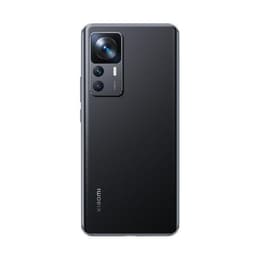
Xiaomi 12T
Xiaomi 12T
Starting at

Refurbished price:131.00

Versus €649.00 new

See options
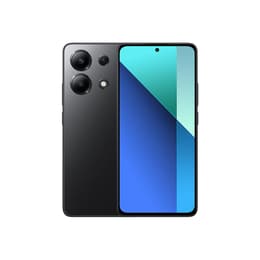
Xiaomi Redmi Note 13
Starting at

Refurbished price:137.00

Versus €340.00 new

See options

Ratings

The Xiaomi 12T, released in October 2022, and the Xiaomi Redmi Note 13, launched in January 2024, are both Android smartphones from Xiaomi, targeting different segments of the market. While the 12T was positioned as a higher-tier mid-range device with a focus on performance and fast charging, the Redmi Note 13 (4G variant) offers a more accessible experience with a strong emphasis on display quality and camera capabilities for its category. Both devices run on the Android operating system, with the 12T initially on Android 12 and the Redmi Note 13 on Android 13, both now capable of running Android 15 with Xiaomi HyperOS 2.

Scores

Durability

When considering the long-term usability of these devices, their release timelines and software support are key factors.

  • Release Timeline and OS Support: The Xiaomi 12T, launched in October 2022, benefits from a slightly longer expected software support window compared to the Redmi Note 13, which debuted in January 2024. Both devices are capable of running Android 15 with Xiaomi HyperOS 2, indicating Xiaomi's commitment to providing updated software experiences for several years post-launch.
  • Physical Durability: The Xiaomi 12T features Corning Gorilla Glass 5 on its front, offering a good level of scratch and drop resistance, complemented by a glass back and plastic frame. The Redmi Note 13 (4G) uses Corning Gorilla Glass 3 for its display, while the 5G variant upgrades to Gorilla Glass 5. Both phones carry an IP rating for dust and splash resistance, with the 12T rated at IP53 and the Redmi Note 13 at IP54, suggesting a similar level of protection against everyday elements.
  • Repairability: The Redmi Note 13 (5G variant) has a repairability index score of 8.2 out of 10, which is considered excellent, indicating a design that facilitates easier repairs and better availability of spare parts. The Xiaomi 12T Pro, which shares many design elements with the 12T, has a score of 7.6 out of 10, also a very good rating. This suggests that both devices are designed with repairability in mind, potentially extending their practical lifespan through maintenance.

Year of Release

2022

2024

Compatible with latest Update

Yes

Yes

OS

Android

Android

Foldable

No

No

Performance

The performance of a smartphone is crucial for daily tasks, app usage, and overall responsiveness.

  • Processing Power: The Xiaomi 12T is equipped with a processor that handles demanding applications and multitasking smoothly, providing a responsive experience for gaming and resource-intensive tasks. The Redmi Note 13 (4G variant) features a processor designed for smooth and stable performance during everyday use, including social media, browsing, and light gaming.
  • Memory and Storage: The Xiaomi 12T typically comes with 8GB of RAM and uses UFS 3.1 storage, contributing to faster app loading and data transfer speeds. The Redmi Note 13 (4G variant) offers 6GB or 8GB of RAM and UFS 2.2 storage, with support for dynamic RAM expansion and expandable storage up to 1TB, providing flexibility for users who need more space for media and applications.
  • Battery Behavior: Both devices house a 5000mAh battery. The Xiaomi 12T is noted for its long battery life, often lasting a full day even for heavy users, and features exceptionally fast 120W wired charging, capable of reaching a full charge in under 20 minutes. The Redmi Note 13 (4G variant) also offers good battery life, with typical usage potentially extending to two days, and supports 33W fast charging.

Memory (GB)

8 GB

8 GB

Screen quality

The visual experience is a primary consideration for many users, and both phones offer compelling displays.

  • Display Technology and Clarity: Both the Xiaomi 12T and Redmi Note 13 feature vibrant AMOLED displays, known for deep blacks and rich colors. The 12T boasts a 6.67-inch CrystalRes AMOLED display with a resolution of 2712x1220 pixels, resulting in a sharp 446 pixels per inch (ppi). The Redmi Note 13 (4G variant) also has a 6.67-inch AMOLED display, offering a resolution of 1080x2400 pixels and 395 ppi, providing clear visuals for everyday viewing.
  • Brightness and Refresh Rate: The Xiaomi 12T offers a typical brightness of 500 nits and a peak brightness of 900 nits, ensuring good visibility in various lighting conditions. The Redmi Note 13 (4G variant) features a peak brightness of 1800 nits (local peak) and 1000 nits (HBM), making it highly visible even under direct sunlight. Both phones support a 120Hz refresh rate for smooth scrolling and animations, with the 12T also featuring a 480Hz touch sampling rate for enhanced responsiveness.
  • Color and Protection: The Xiaomi 12T supports HDR10+ and a 68-billion color display with DCI-P3 wide-gamut color, offering excellent color accuracy. It is protected by Corning Gorilla Glass 5. The Redmi Note 13 (4G variant) supports a 100% DCI-P3 color gamut and is protected by Corning Gorilla Glass 3.

Resolution

1220 x 2712

1080 x 2400

Screen type

AMOLED

AMOLED

Audiovisual

Camera capabilities are a significant differentiator for many smartphone users, impacting both photography and video experiences.

  • Rear Camera System: Both the Xiaomi 12T and the Redmi Note 13 (4G variant) feature a triple-camera setup with a 108MP main sensor. The 12T's main camera has an f/1.7 aperture and Optical Image Stabilization (OIS), accompanied by an 8MP ultra-wide and a 2MP macro lens. The Redmi Note 13 (4G variant) also includes a 108MP main camera with OIS, an 8MP ultra-wide, and a 2MP macro lens.
  • Photography Performance: The 12T's main camera is praised for capturing detailed and vibrant photos with good dynamic range, performing well in low-light conditions with its dedicated night mode. The Redmi Note 13's 108MP main camera also performs well in daylight, offering balanced contrast and saturation. However, the 2MP macro lenses on both devices are often considered less impactful by users.
  • Video Recording and Front Camera: The Xiaomi 12T supports 4K video recording at 30 frames per second (fps) with its main camera, and 1080p at 30/60fps for both main and selfie cameras. The Redmi Note 13 (4G variant) records video at 1080p at 30fps for both front and rear cameras, lacking 4K capability. The 12T has a 20MP front camera, while the Redmi Note 13 (4G variant) features a 16MP front camera.
  • Audio Experience: The Xiaomi 12T offers stereo speakers with Dolby Atmos and Hi-Res Audio, providing a rich audio experience for media consumption. The Redmi Note 13 (4G variant) typically features a single speaker, which may offer a less immersive audio experience compared to stereo setups.

Main camera

108 megapixels

108 megapixels

Front camera

20 megapixels

16 megapixels

Miscellaneous

Beyond core specifications, several practical features contribute to the overall user experience.

  • Connectivity: The Xiaomi 12T supports 5G connectivity, Wi-Fi 6 (802.11ax), and Bluetooth 5.3, offering modern and fast wireless communication. The Redmi Note 13 (4G variant) supports 4G LTE, Wi-Fi, and Bluetooth, with a 5G variant also available that offers enhanced network speeds. Both devices include NFC for contactless payments and GPS for navigation.
  • Ports and Sensors: The Xiaomi 12T features a USB-C port for charging and data transfer, and an in-display optical fingerprint sensor for secure unlocking. It also includes an IR blaster. The Redmi Note 13 (4G variant) also has a USB-C port and notably retains a 3.5mm headphone jack, a feature absent on the 12T. It also has an in-display fingerprint sensor, which can also function as a heart rate sensor.
  • Physical Design: The Xiaomi 12T measures 163.1 x 75.9 x 8.6 mm and weighs 202g, featuring a glass back and a plastic frame. The Redmi Note 13 (4G variant) is slightly more compact and lighter at 162.24 x 75.55 x 7.97 mm and 188.5g, with a flat-frame design and a plastic build.

Weight

220 g

175 g

Screen size (in)

6.67

6.67

Network

5G

5G

SIM card

Dual Physical SIM

Dual Physical SIM

Carrier compatibility

Unlocked

Unlocked

Connector

USB-C

USB-C

The Xiaomi 12T and Redmi Note 13 cater to slightly different user needs, reflecting their respective positions in Xiaomi's smartphone lineup.

Users often praise the Xiaomi 12T for its robust performance, vibrant display, and exceptionally fast charging capabilities, making it suitable for demanding applications and users who prioritize quick power-ups. Its main camera generally receives positive feedback for detailed photos. Some common criticisms include the perceived underwhelming battery life for some heavy users despite the large capacity, the utility of the 2MP macro camera, and the absence of a headphone jack.

The Redmi Note 13 (4G variant) is frequently lauded for its bright and smooth AMOLED display, good battery life for typical usage, and the inclusion of a 3.5mm headphone jack. Its 108MP main camera is also seen as a strong point for its category. However, users sometimes note the limitations of its secondary cameras, the lack of stereo speakers, and the absence of 4K video recording.

Users prioritizing raw processing power, faster charging, and higher-resolution video recording may find the Xiaomi 12T better suited to their needs. Conversely, those who value an accessible device with a bright display, expandable storage, a headphone jack, and solid battery life for everyday tasks might lean towards the Redmi Note 13. Both devices offer a compelling experience within their segments, and choosing a quality-assured refurbished option for either model can be an eco-friendly alternative for consumers.


See all articles

Our recent comparisons