

Galaxy S23 Vs Xiaomi 12T

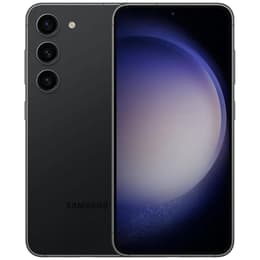
Galaxy S23
Galaxy S23
Starting at

Refurbished price:240.00

Versus €959.00 new

See options
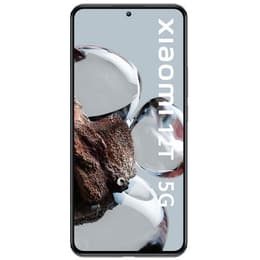
Xiaomi 12T
Xiaomi 12T
Starting at

Refurbished price:135.00

Versus €649.00 new

See options

Ratings

The Samsung Galaxy S23, released in February 2023, and the Xiaomi 12T, launched in October 2022, are both Android smartphones that offer distinct user experiences. While the Galaxy S23 focuses on a compact design with a premium build and extended software support, the Xiaomi 12T emphasizes a larger display, rapid charging capabilities, and a high-resolution main camera. Both devices run on the Android operating system, but their approaches to hardware and software longevity differ.

Scores

Durability

The practical lifespan of a smartphone is significantly influenced by its release date and the manufacturer's commitment to software updates. The Samsung Galaxy S23, released in February 2023, benefits from a longer support window compared to the Xiaomi 12T, which launched in October 2022.

  • Software Longevity: The Galaxy S23 was promised four years of major Android operating system updates, extending its support up to Android 17, and five years of security updates, with support expected to continue until 2028. In contrast, the Xiaomi 12T was slated to receive three major Android OS updates (up to Android 15) and four years of security patches. However, as of March 2026, the Xiaomi 12 series has officially reached its end-of-life for software support, meaning it will no longer receive HyperOS updates or security patches, which is a critical consideration for long-term usability and security.
  • Physical Durability: The Galaxy S23 features Gorilla Glass Victus 2 on both its front and back, along with an IP68 rating for dust and water resistance, offering robust protection against environmental elements. The Xiaomi 12T uses Gorilla Glass 5 for its display and has an IP53 rating, providing basic splash and dust resistance.
  • Repairability: Samsung has made efforts to improve the repairability of the Galaxy S23 series, including the use of pull tabs for easier battery replacement, contributing to a generally good repairability score. The Xiaomi 12T Pro, a closely related model, also received a good repairability score, indicating that components like the screen and battery are reasonably accessible for repair.

Year of Release

2023

2022

Compatible with latest Update

Yes

Yes

OS

Android

Android

Foldable

No

No

Performance

Both smartphones deliver capable performance for daily tasks and more demanding applications, though they achieve this with different internal components. The real-world experience of app loading, multitasking, and gaming varies between the two devices.

  • System Responsiveness: The Galaxy S23 is equipped with a current-generation processor specifically optimized for its ecosystem, allowing for smooth navigation, quick app launches, and efficient handling of intensive tasks and games without significant slowdowns. Users report a fluid experience even after extended use. The Xiaomi 12T, powered by a capable processor, also offers snappy performance and a smooth user interface, handling most applications and games effectively.
  • Multitasking and Storage: Both devices typically come with 8GB of RAM, which is sufficient for managing multiple applications simultaneously. The Galaxy S23 offers storage options of 128GB and 256GB, with the 256GB and higher variants utilizing a faster storage technology (UFS 4.0) compared to the 128GB model (UFS 3.1). The Xiaomi 12T also provides 128GB or 256GB storage options, generally using UFS 3.1 technology.
  • Battery Behavior: The Galaxy S23 features a 3900mAh battery, which users generally find provides good endurance for a full day of moderate use, showing improvements over its predecessor. The Xiaomi 12T houses a larger 5000mAh battery, and users frequently report excellent battery life, often lasting more than a full day even with heavy usage.

Memory (GB)

8 GB

8 GB

Screen quality

The display is a primary interaction point for any smartphone, and both the Galaxy S23 and Xiaomi 12T offer vibrant viewing experiences with distinct characteristics.

  • Display Technology and Clarity: The Galaxy S23 features a 6.1-inch Dynamic AMOLED 2X display, known for its deep blacks, vibrant colors, and excellent contrast. It has a resolution of 2340x1080 pixels (FHD+). The Xiaomi 12T comes with a larger 6.67-inch AMOLED display, offering a higher resolution of 1220x2712 pixels, often referred to as 1.5K, which results in a slightly higher pixel density.
  • Brightness and Refresh Rate: For outdoor visibility, the Galaxy S23 can reach a peak brightness of 1750 nits, making it highly legible even in direct sunlight. It also boasts an adaptive refresh rate of up to 120Hz, which can scale down to 48Hz to conserve battery life while providing smooth scrolling and animations. The Xiaomi 12T also offers a 120Hz refresh rate for a fluid visual experience and a peak brightness of 900 nits, which is sufficient for most outdoor conditions.
  • Screen Size and Viewing Experience: The Galaxy S23's 6.1-inch screen provides a compact form factor, making it comfortable for one-handed use. The Xiaomi 12T's larger 6.67-inch display offers more screen real estate, which can enhance the experience for media consumption and gaming.

Resolution

1080 x 2340

1220 x 2712

Screen type

Dynamic AMOLED 2X

AMOLED

Audiovisual

Both smartphones are equipped with versatile camera systems designed to capture a range of photos and videos, catering to different photographic preferences.

  • Rear Camera Systems: The Galaxy S23 features a triple-camera setup on the rear, including a 50-megapixel main sensor with optical image stabilization (OIS), a 12-megapixel ultrawide lens, and a 10-megapixel telephoto lens capable of 3x optical zoom. This configuration provides flexibility for various shooting scenarios, from wide landscapes to zoomed-in subjects. The Xiaomi 12T also has a triple-camera array, highlighted by a 108-megapixel main sensor with OIS, an 8-megapixel ultrawide lens with a 120-degree field of view, and a 2-megapixel macro camera.
  • Photography Performance: The Galaxy S23 is praised for its vibrant colors, good detail, and strong low-light performance, with users often finding its night mode effective. Its video recording capabilities extend to 8K resolution. The Xiaomi 12T's 108-megapixel main camera captures detailed and vibrant photos, performing well in various conditions, including decent low-light shots. However, its 2-megapixel macro lens is often considered less practical by users, and the ultrawide camera may not be as sharp as the main sensor.
  • Front Camera and Audio: For selfies, the Galaxy S23 includes a 12-megapixel front camera. Some users have noted that it can sometimes lighten skin tones. The Xiaomi 12T offers a 20-megapixel front camera. Both devices provide good microphone quality for calls and recording, and both feature dual stereo speakers, with the Xiaomi 12T supporting Dolby Atmos for an enhanced audio experience.

Main camera

50 megapixels

108 megapixels

Front camera

12 megapixels

20 megapixels

Miscellaneous

Beyond core performance and display, several other features contribute to the overall user experience and daily practicality of these smartphones.

  • Connectivity and Ports: Both the Galaxy S23 and Xiaomi 12T support 5G connectivity, ensuring access to fast mobile data networks. They also include modern Wi-Fi standards and Bluetooth for wireless connections. The Galaxy S23 uses a USB-C port for charging and data transfer. The Xiaomi 12T also features a USB-C port and notably includes an IR blaster, which allows it to function as a universal remote control for various home appliances.
  • Biometrics and Sensors: Both devices incorporate an under-display fingerprint sensor for secure and convenient unlocking. The Galaxy S23 also offers facial recognition, though some users have reported occasional inconsistencies.
  • Design and Handling: The Galaxy S23 is a more compact device, weighing around 168 grams and featuring a smaller 6.1-inch display, which contributes to comfortable one-handed use. Its build materials include Gorilla Glass Victus 2 on the front and back, giving it a premium feel. The Xiaomi 12T is larger and heavier at 202 grams with its 6.67-inch display, featuring a Gorilla Glass 5 front and a glass back with a plastic frame.

Weight

167 g

220 g

Screen size (in)

6.1

6.67

Network

5G

5G

SIM card

Physical SIM + eSIM

Dual Physical SIM

Carrier compatibility

Unlocked

Unlocked

The Samsung Galaxy S23 and Xiaomi 12T cater to different user priorities, each excelling in specific areas. Users often praise the Galaxy S23 for its compact size, robust build quality, and consistent camera performance, particularly its telephoto capabilities and vibrant display. Its extended software support is also a significant advantage for those who keep their devices for several years. Some common criticisms include its slower wired charging compared to some competitors and occasional inconsistencies with facial recognition.

The Xiaomi 12T is frequently lauded for its impressive battery life and exceptionally fast wired charging, which can fully replenish the battery in a short amount of time. Its large, high-resolution AMOLED display and powerful main camera are also strong points. However, a notable concern for the Xiaomi 12T is its shorter software support lifespan, with the series having reached its end-of-life for updates as of March 2026, which impacts long-term security and access to new features. Its macro camera is also often considered less useful by users.

Users prioritizing a compact, premium device with a long software support window and a versatile camera system, including a dedicated telephoto lens, may find the Samsung Galaxy S23 well-suited to their needs. Conversely, users who value a larger display, exceptional battery endurance, and ultra-fast charging, and are less concerned with the latest software updates or a telephoto camera, might lean towards the Xiaomi 12T. Both devices are available as quality-assured refurbished options, providing an eco-friendly alternative for consumers looking to make informed and sustainable choices.


See all articles

Our recent comparisons