

Galaxy Z Flip5 Vs Google Pixel 9

Galaxy Z Flip5
Galaxy Z Flip5
Starting at

Refurbished price:357.00

Versus €1,340.00 new

See options
Google Pixel 9
Google Pixel 9
Starting at

Refurbished price:386.00

Versus €1,066.71 new

See options

Ratings

The Samsung Galaxy Z Flip5, released in 2023, and the Google Pixel 9, launched in 2024, offer distinct approaches to the modern smartphone experience. While the Z Flip5 stands out with its innovative foldable design, the Pixel 9 focuses on a traditional slab form factor, emphasizing advanced computational photography and a streamlined software experience. Both devices operate on the Android platform, but their core philosophies lead to different user interactions and priorities.

Scores

Durability

When considering the long-term usability of these devices, their release timelines and software support policies are key factors.

  • Software Longevity: The Google Pixel 9 offers an extended software commitment, providing seven years of OS and security updates from its August 2024 release. The Galaxy Z Flip5, released in July 2023, receives four major Android OS updates and five years of security updates. This means the Pixel 9 is designed to receive software support for a significantly longer period.
  • Physical Durability: The Galaxy Z Flip5 features an Armor Aluminum frame and Gorilla Glass Victus 2 on its cover screen, along with IPX8 water resistance, designed to withstand splashes and submersion. The Pixel 9 incorporates Gorilla Glass Victus 2 on both its front and back, coupled with an IP68 rating for dust and water resistance, indicating robust protection against environmental elements.
  • Expected Lifespan: Both devices are built with materials intended for daily use. The Pixel 9's longer software support suggests a longer practical lifespan for users who prioritize up-to-date features and security. The Z Flip5's foldable nature introduces a unique hinge mechanism, which is designed for durability over many folds.

Year of Release

2023

2024

Compatible with latest Update

Yes

Yes

OS

Android

Android

Foldable

Yes

No

Performance

The performance of both smartphones is tailored to their respective designs and user experiences, impacting how they handle daily tasks and demanding applications.

  • Processing Power: The Galaxy Z Flip5 is equipped with a processor that handles demanding applications and multitasking smoothly, contributing to a responsive user experience. The Google Pixel 9 features a current-generation processor optimized for on-device artificial intelligence tasks, such as image generation and transcription, ensuring efficient handling of complex operations.
  • Multitasking and Storage: The Pixel 9 typically comes with 12GB of RAM, facilitating fluid transitions between multiple applications and intensive tasks. The Galaxy Z Flip5 offers 8GB of RAM, which is sufficient for most everyday usage and multitasking. Both devices are available with various storage options, including 128GB, 256GB, and 512GB, allowing users to choose based on their storage needs.
  • Battery Behavior: The Galaxy Z Flip5, with its 3700mAh battery, generally provides around a full day of moderate use, with some users reporting approximately 9-10 hours of screen-on time. The Pixel 9, featuring a 4700mAh battery, is noted for its impressive battery life, often lasting over 24 hours with typical usage and supporting fast charging.

Memory (GB)

8 GB

12 GB

Screen quality

The display technologies and sizes on these devices present distinct visual experiences, catering to different preferences for interaction and media consumption.

  • Display Technology and Clarity: The Galaxy Z Flip5 features a 6.7-inch Foldable Dynamic AMOLED 2X main display, offering vibrant colors and deep blacks, complemented by a 3.4-inch Super AMOLED cover screen for quick interactions. The Pixel 9 utilizes a 6.3-inch Actua OLED display, known for its color accuracy and sharp visuals, with a resolution of 1080 x 2424 pixels.
  • Brightness and Refresh Rate: Both phones offer a smooth viewing experience with a 120Hz refresh rate on their main displays. The Pixel 9's display can reach up to 1800 nits for HDR content and a peak brightness of 2700 nits, providing excellent visibility in bright outdoor conditions. The Z Flip5's main screen also offers high brightness, reaching up to 1750 nits.
  • Viewing Experience: The Z Flip5's foldable design allows for a compact form factor when closed, while unfolding reveals a large, immersive screen. The Pixel 9 provides a traditional, flat screen experience that is comfortable for one-handed use while still offering ample space for media consumption.

Resolution

1080 x 2640

1080 x 2424

Screen type

Foldable Dynamic AMOLED 2X

OLED

Audiovisual

Both devices offer capable camera systems, but they approach photography with different strengths, influencing the final image output and user experience.

  • Rear Camera System: The Galaxy Z Flip5 features a dual 12MP camera setup on the rear, consisting of a wide and an ultrawide lens. It delivers good exposure and dynamic range in regular photos, though low-light performance can show noise and it lacks a dedicated telephoto lens. The Pixel 9 comes with a 50MP main camera and a 48MP ultrawide camera, known for its computational photography capabilities that produce detailed and color-accurate images across various lighting conditions.
  • Front Camera and Video: The Z Flip5 has a 10MP front camera, and its foldable design allows users to utilize the higher-quality rear cameras for selfies via the cover screen. Video recording on the Z Flip5 is respectable with good stabilization. The Pixel 9 features a 10.5MP front camera with autofocus, performing well in bright environments. Its video quality is generally good, though some reviews note it may not be as strong as its still photography.
  • Audio Experience: The Pixel 9's speakers are noted to be functional but may not reach very high volume levels. Information regarding the Z Flip5's speaker output suggests a standard audio experience for media consumption.

Main camera

12 megapixels

50 megapixels

Front camera

10 megapixels

10.5 megapixels

Miscellaneous

Beyond the core features, several practical elements differentiate these devices in terms of connectivity, physical design, and user interaction.

  • Connectivity and Ports: Both the Galaxy Z Flip5 and the Google Pixel 9 support 5G networks, Wi-Fi, and Bluetooth 5.3, ensuring modern wireless connectivity. Both devices utilize a USB-C port for charging and data transfer, aligning with current industry standards. Neither phone includes a traditional 3.5mm headphone jack.
  • Biometric Security: The Pixel 9 features an ultrasonic in-display fingerprint sensor and face recognition for secure unlocking. The Galaxy Z Flip5 incorporates a side-mounted fingerprint sensor for authentication.
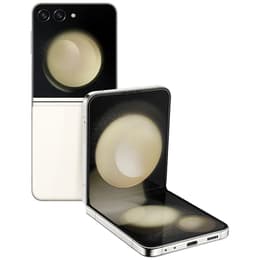
  • Design and Handling: The Galaxy Z Flip5's defining characteristic is its foldable clamshell design, allowing it to become significantly more compact when closed (71.9 x 85.1 x 15.1mm folded) and weighing 187g. This makes it highly portable. The Google Pixel 9, with its traditional slab design, measures 152.8 x 72.0 x 8.5 mm and weighs 198g, offering a comfortable and familiar feel in hand.

Weight

187 g

198 g

Screen size (in)

6.7 /3.4

6.3

Network

5G

5G

SIM card

Physical SIM + eSIM

Physical SIM + eSIM

Carrier compatibility

Unlocked

Unlocked

The Samsung Galaxy Z Flip5 and the Google Pixel 9 cater to different user priorities, each excelling in distinct areas. Users often praise the Z Flip5 for its unique foldable form factor, which offers a blend of compact portability and a large screen experience when unfolded. Its larger cover screen is frequently highlighted as a significant improvement for quick interactions. Some criticisms have pointed to its camera performance not always matching other flagship devices, particularly in low light, and its battery life, while improved, may require careful management for heavy users.

The Google Pixel 9 is frequently lauded for its exceptional camera capabilities, particularly its computational photography, which consistently produces high-quality images. Its extended software support and robust durability are also common points of praise among users. Some feedback suggests that while its processor is efficient for AI tasks, it might not always lead in raw benchmark performance compared to some competitors, and its speakers could be louder.

Users prioritizing a compact, stylish device with a unique folding mechanism and a large interactive cover screen may find the Galaxy Z Flip5 well-suited to their needs. Those who value a traditional smartphone experience with a strong emphasis on camera performance, long-term software support, and a streamlined Android interface will likely lean towards the Google Pixel 9. Both devices represent compelling choices in the smartphone market, and considering a quality-assured refurbished option for either model can be an eco-friendly alternative for making an informed decision.


See all articles

Our recent comparisons