
Compare models
Galaxy S26 Ultra Vs iPhone 15
- 1-year minimum warranty
- Free delivery on all orders
- Free 30-day returns
Differences at a glance
The Samsung Galaxy S26 Ultra (2026) and the Apple iPhone 15 (2023) represent two distinct approaches to high-end smartphone design, different operating systems, and varying release timelines. While the Galaxy S26 Ultra functions as a feature-rich, expansive powerhouse running Android, the iPhone 15 provides a streamlined iOS experience housed in a more compact form factor. Choosing between them involves weighing device size, ecosystem preference, and hardware capabilities.
Available Models
Colour
Storage (GB)
Scores
Durability
When evaluating hardware longevity and software support, both devices offer robust build qualities, though their release years and update roadmaps differ significantly.
- Release timeline and support: The Galaxy S26 Ultra arrives as a 2026 release with multi-year software commitments, whereas the iPhone 15 debuted in 2023, giving the Samsung model a longer expected window of active operating system upgrades.
- Repairability and durability: Both models utilize durable glass and metal structures with high water-resistance ratings, though professional repair networks and parts availability differ across Android and iOS ecosystems.
- Practical lifespan: Users can expect many years of reliable daily service from either option, making quality-assured refurbished options from Back Market a sustainable choice for acquiring either model.
Year of Release
2026
2023
Compatible with latest Update
Yes
Yes
OS
Android
iOS
Foldable
No
No
Performance
Performance capacities differ due to hardware generation gaps and software optimization between the Android and iOS platforms.
- Multitasking and memory: The Galaxy S26 Ultra features ample RAM to handle heavy background tasks smoothly, while the iPhone 15 relies on tight integration between its operating system and processor to manage everyday apps efficiently.
- Battery behavior: The larger physical footprint of the Galaxy S26 Ultra accommodates a higher-capacity battery designed to sustain extended heavy use, whereas the iPhone 15 offers enough charge for typical daily routines but requires more frequent refilling for intensive tasks.
- System responsiveness: Both devices load applications swiftly and navigate menus fluidly, handling demanding mobile games and web browsing without noticeable stutter.
Screen quality
Display characteristics vary substantially in physical dimensions, peak luminance, and motion smoothness.
- Display technology: Both models employ vibrant OLED panels that deliver deep contrast levels and rich color reproduction, though the Galaxy S26 Ultra provides a much larger viewing canvas.
- Refresh rate and motion: The Galaxy S26 Ultra incorporates a high refresh rate configuration for smoother scrolling animations, while the iPhone 15 utilizes a standard refresh rate.
- Outdoor visibility: High peak brightness capabilities on both screens ensure content remains legible under direct sunlight or bright outdoor environments.
Resolution
1440 x 3120
1179 x 2556
Audiovisual
Optics and media playback capabilities cater to different styles of content creation and consumption.
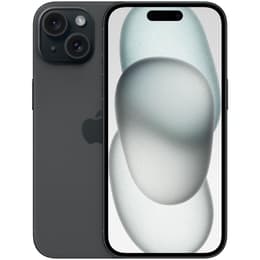
- Camera systems: The Galaxy S26 Ultra utilizes a versatile multi-lens array featuring advanced telephoto zoom capabilities, whereas the iPhone 15 relies on a dual-camera setup centered around a high-resolution main sensor.
- Video and low-light performance: Both units capture detailed video footage with digital stabilization and produce clear low-light photographs, though the Samsung hardware reaches further distant subjects via optical zoom.
- Audio output: Built-in stereo speakers on both smartphones deliver clear voice calls and adequate media playback for casual listening without external accessories.
Front camera
12.0
12 megapixels
Miscellaneous
Physical handling, connectivity standards, and daily utility features set these two devices apart in hand.
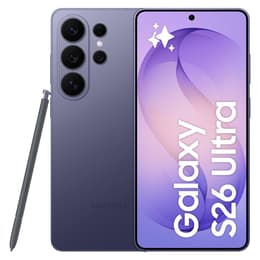
- Build and ergonomics: The Galaxy S26 Ultra features a substantial footprint and integrated stylus support suited for productivity, while the iPhone 15 is lighter and more comfortable for single-handed pocket use.
- Connectivity and ports: Both models adopt modern USB-C charging ports and support rapid cellular data connections alongside contemporary wireless protocols.
- Biometrics: Samsung offers secure facial recognition alongside an in-display fingerprint sensor, whereas Apple utilizes dedicated face-scanning technology for security.
Weight
214 g
171 g
Screen size (in)
6.9
6.1
Network
5G
5G
SIM card
Physical SIM + eSIM
Physical SIM + eSIM
Carrier compatibility
Unlocked
Unlocked
Connector
USB-C
USB-C (USB 2)
What the community thinks
User feedback for the Galaxy S26 Ultra frequently highlights its expansive display, versatile zoom cameras, and productivity features, though some users note its large physical size can feel heavy. Conversely, the iPhone 15 receives praise for its approachable size, reliable daily performance, and intuitive operating system, though critics point out the absence of high refresh rate support and long-range optical zoom.
Users prioritizing screen space, advanced camera zoom, and stylus functionality will find the Galaxy S26 Ultra well-suited to their needs. Meanwhile, users prioritizing a lighter device, straightforward software, and a compact form factor may lean toward the iPhone 15. For shoppers exploring sustainable technology acquisition, choosing a quality-assured refurbished option provides an eco-friendly alternative to purchasing newly manufactured hardware. Ultimately, alignment with either Android or iOS ecosystems remains the primary deciding factor for most prospective owners.