
Galaxy Z Flip5 Vs iPhone 15

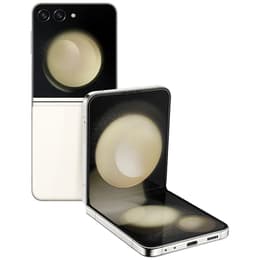
Galaxy Z Flip5
Galaxy Z Flip5
Starting at

Refurbished price:357.00

Versus €1,340.00 new

See options
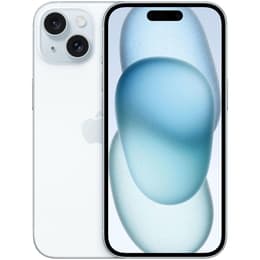
iPhone 15
iPhone 15
Starting at

Refurbished price:397.00

Versus €879.00 new

See options

Ratings

The Samsung Galaxy Z Flip5, released in August 2023, and the Apple iPhone 15, launched in September 2023, represent distinct approaches to modern smartphone design and functionality. While the iPhone 15 offers a traditional smartphone experience with a focus on a robust ecosystem, the Galaxy Z Flip5 distinguishes itself with a unique foldable form factor and a versatile cover screen. Both devices operate on their respective proprietary operating systems, Android for the Z Flip5 and iOS for the iPhone 15, offering different user interfaces and app ecosystems.

Scores

Durability

The longevity of a smartphone is influenced by its release timeline, software support, and physical resilience.

  • Release Timeline: The Galaxy Z Flip5 was released in August 2023, while the iPhone 15 followed shortly after in September 2023. This means both devices are relatively current, offering similar starting points for their expected lifespans.
  • Software Support: Samsung typically provides 4 years of OS updates and 5 years of security updates for its flagship devices, including the Z Flip5. Apple is known for extended software support, with the iPhone 15 expected to receive iOS updates for approximately 5-6 years from its release. This suggests the iPhone 15 may offer a slightly longer period of receiving the latest software features and security patches.
  • Physical Durability: The Galaxy Z Flip5 features Gorilla Glass Victus 2 on its back and cover screen, and an IPX8 water resistance rating, meaning it can withstand submersion in up to 1.5 meters of fresh water for 30 minutes. The iPhone 15 incorporates a Ceramic Shield front and a color-infused glass back, along with an IP68 rating for dust and water resistance, allowing for submersion up to 6 meters for 30 minutes. The foldable design of the Z Flip5 introduces a hinge mechanism, which is a point of mechanical movement not present in the rigid design of the iPhone 15.

Year of Release

2023

2023

Compatible with latest Update

Yes

Yes

OS

Android

iOS

Foldable

Yes

No

Performance

Both devices are equipped with powerful internal components designed to handle a wide range of tasks efficiently.

  • Processing Capabilities: The Galaxy Z Flip5 is powered by a current-generation processor, enabling smooth operation for demanding applications and multitasking. The iPhone 15 utilizes a previous-generation flagship processor, which still delivers robust performance for everyday use, gaming, and creative tasks.
  • Multitasking and Responsiveness: The Galaxy Z Flip5 comes with 8GB of RAM, supporting fluid transitions between multiple open applications. The iPhone 15 features 6GB of RAM, which, combined with its optimized operating system, provides a responsive user experience.
  • Battery Behavior: The Galaxy Z Flip5 has a 3700 mAh battery, with user reports indicating it can last through a full day of moderate use, though heavy users might find themselves needing to charge it before the day ends. The iPhone 15 is equipped with a 3349 mAh battery, and users generally report it provides sufficient power for a full day of typical usage.

Memory (GB)

8 GB

6 GB

Screen quality

The visual experience on both smartphones is a key differentiator, particularly due to their distinct display technologies and form factors.

  • Display Technology and Size: The Galaxy Z Flip5 features a 6.7-inch foldable Dynamic AMOLED 2X main display, offering vibrant colors and deep blacks. It also includes a larger 3.4-inch Super AMOLED cover screen, which is highly functional for quick interactions. The iPhone 15 has a 6.1-inch Super Retina XDR OLED display, known for its color accuracy and contrast.
  • Resolution and Clarity: The Z Flip5's main display has a resolution of 1080x2640 pixels, resulting in sharp visuals. The iPhone 15 offers a resolution of 2556x1179 pixels, providing a pixel density of approximately 460 PPI for clear and detailed images.
  • Refresh Rate and Brightness: The Galaxy Z Flip5's main display supports an adaptive refresh rate up to 120Hz, contributing to smoother scrolling and animations. Its peak brightness can reach up to 1750 nits. The iPhone 15 has a fixed 60Hz refresh rate. It offers a peak outdoor brightness of up to 2000 nits, ensuring good visibility in bright conditions.

Resolution

1080 x 2640

1179 x 2556

Screen type

Foldable Dynamic AMOLED 2X

Super Retina XDR OLED

Audiovisual

Both devices offer capable camera systems, though with different configurations and strengths.

  • Rear Camera System: The Galaxy Z Flip5 features a dual-camera setup on the rear, consisting of a 12MP wide-angle camera and a 12MP ultrawide camera. Users generally find its camera performance to be good in well-lit conditions, producing vibrant photos. The iPhone 15 boasts a more advanced dual-camera system with a 48MP main camera and a 12MP ultrawide camera, offering improved detail and low-light performance.
  • Photography Features: The Z Flip5's foldable design allows for unique shooting angles and hands-free photography using its Flex Mode. It supports 4K video recording at 60fps. The iPhone 15's 48MP main sensor enables 2x telephoto zoom capabilities and enhanced low-light photography. It also supports 4K video recording at up to 60fps, with features like Cinematic mode.
  • Selfie Camera: The Galaxy Z Flip5 has a 10MP front-facing camera. The iPhone 15 features a 12MP front camera with autofocus.

Main camera

12 megapixels

48 megapixels

Front camera

10 megapixels

12 megapixels

Miscellaneous

Beyond core features, several practical elements contribute to the overall user experience of these smartphones.

  • Connectivity and Ports: Both the Galaxy Z Flip5 and iPhone 15 support 5G, Wi-Fi 6, and Bluetooth 5.3 for modern wireless connectivity. The iPhone 15 has transitioned to a USB-C port for charging and data transfer, aligning with broader industry standards. The Galaxy Z Flip5 also uses a USB-C port.
  • Biometrics and Sensors: The Galaxy Z Flip5 incorporates a side-mounted fingerprint sensor for secure unlocking. The iPhone 15 relies on Face ID for biometric authentication, utilizing a sophisticated facial recognition system. Both devices include standard sensors like accelerometers, gyroscopes, and proximity sensors.
  • Design and Handling: The Galaxy Z Flip5's clamshell design allows it to fold into a compact form factor (85.1 x 71.9 x 15.1 mm when folded), making it highly portable. When unfolded, it measures 165.1 x 71.9 x 6.9 mm and weighs 187 grams. The iPhone 15 has a traditional slab design, measuring 147.6 x 71.6 x 7.8 mm and weighing 171 grams.

Weight

187 g

171 g

Screen size (in)

6.7 /3.4

6.1

Network

5G

5G

SIM card

Physical SIM + eSIM

Physical SIM + eSIM

Carrier compatibility

Unlocked

Unlocked

User feedback for the Galaxy Z Flip5 often praises its innovative foldable design and the utility of its larger cover screen for quick tasks and selfies. Many appreciate its compact nature when folded, making it easy to carry. Common criticisms sometimes point to its battery life, which, while improved, may not always satisfy heavy users, and some note that its camera system, while capable, does not always match the performance of non-foldable flagships in all scenarios.

The iPhone 15 receives commendation for its reliable performance, consistent camera quality, and the seamless integration within the Apple ecosystem. Users frequently highlight its robust software support and overall user-friendly experience. Some common observations include its 60Hz display refresh rate, which is not as smooth as higher refresh rate screens found on some competitors, and its charging speeds.

Users prioritizing a compact, unique form factor with a highly functional external display for quick interactions and creative photography angles may find the Galaxy Z Flip5 well-suited to their needs. Those who prefer a traditional smartphone experience with a strong emphasis on consistent performance, a highly capable camera system, and long-term software support will likely lean toward the iPhone 15. Both devices offer quality-assured refurbished options, providing an eco-friendly alternative for consumers.

See all articles

Our recent comparisons