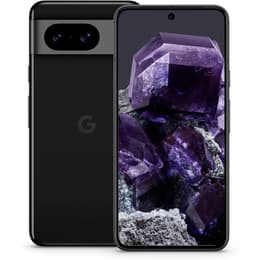

Google Pixel 8 Vs Google Pixel 9

Google Pixel 8
Google Pixel 8
Starting at

Refurbished price:260.00

Versus €819.97 new

See options
Google Pixel 9
Google Pixel 9
Starting at

Refurbished price:449.00

Versus €1,066.71 new

See options

Ratings

The Google Pixel 8, released in October 2023, and the Google Pixel 9, launched in August 2024, represent consecutive generations of Google's flagship smartphone series. Both devices operate on the Android platform, offering a consistent software experience deeply integrated with Google's ecosystem. While sharing a core design philosophy, the Pixel 9 introduces advancements in processing power, display technology, and camera capabilities, building upon the foundation laid by its predecessor.

Scores

Durability

When considering the long-term usability of a smartphone, factors like software support, physical durability, and repairability are key. Both the Pixel 8 and Pixel 9 offer substantial longevity through Google's commitment to extended software updates.

  • Software Support: Both the Pixel 8 and Pixel 9 are guaranteed to receive seven years of Android OS upgrades, security updates, and regular Feature Drops from their respective release dates. This means the Pixel 8 will be supported until at least October 2030, and the Pixel 9 until at least August 2031, ensuring a prolonged period of up-to-date features and security.
  • Physical Durability: The Pixel 8 features Gorilla Glass Victus for screen protection and an IP68 rating for dust and water resistance. The Pixel 9 enhances this with Gorilla Glass Victus 2 for its display, maintaining the same IP68 rating. This upgrade in glass technology on the Pixel 9 may offer improved resistance against drops and scratches.
  • Repairability: Google has also committed to making hardware parts available for seven years for the Pixel 8 series and later models, aligning with their software support. This commitment suggests that both devices should have accessible components for repairs throughout their extended lifespan.

Year of Release

2023

2024

Compatible with latest Update

Yes

Yes

OS

Android

Android

Foldable

No

No

Performance

The performance of a smartphone is largely dictated by its internal components, influencing everything from app responsiveness to multitasking efficiency and battery endurance. The Pixel 8 and Pixel 9 showcase generational improvements in these areas.

  • Processing Power: The Pixel 8 is powered by the Google Tensor G3, while the Pixel 9 features the newer Google Tensor G4. This generational upgrade in the Pixel 9's processor translates to smoother handling of demanding applications, faster processing for AI-driven features, and generally more responsive system navigation.
  • Multitasking and Storage: The Pixel 8 typically comes with 8GB of RAM, whereas the Pixel 9 increases this to 12GB. This additional RAM in the Pixel 9 allows for more applications to run simultaneously in the background without needing to refresh, providing a more fluid multitasking experience. Both models offer storage options of 128GB and 256GB.
  • Battery Behavior: The Pixel 8 houses a 4575 mAh battery, while the Pixel 9 features a slightly larger 4700 mAh battery. User reports for the Pixel 9 indicate good battery life, often lasting a full day with typical usage, and some users note improvements over previous Pixel models. The Pixel 9 also supports faster wired charging at 45W, compared to the Pixel 8's 27W.

Memory (GB)

8 GB

12 GB

Screen quality

The display is a primary interface for smartphone interaction, and both Pixel models offer high-quality viewing experiences with notable distinctions in their specifications.

  • Display Technology and Size: Both the Pixel 8 and Pixel 9 utilize OLED display technology, known for its deep blacks and vibrant colors. The Pixel 8 features a 6.2-inch display, while the Pixel 9 has a slightly larger 6.3-inch display.
  • Resolution and Clarity: The Pixel 8 offers a 2400 x 1080 pixel resolution (FHD+) at 428 pixels per inch (ppi). The Pixel 9 maintains a similar FHD+ resolution at 2424 x 1080 pixels, resulting in approximately 422 ppi. Both provide clear and sharp visuals for everyday content consumption.
  • Brightness and Refresh Rate: The Pixel 9's display offers significantly higher brightness, with typical output around 1769 nits, HDR brightness up to 1800 nits, and a peak brightness of 2700 nits. The Pixel 8, in comparison, has a typical output of 1349 nits, HDR brightness up to 1400 nits, and a peak of 2000 nits. Both devices feature a variable refresh rate of 60-120Hz, ensuring smooth scrolling and animations. The Pixel 9 also introduces Adaptive Touch technology, which adjusts touch sensitivity based on environmental factors like wet fingers or screen protectors.

Resolution

1080 x 2400

1080 x 2424

Screen type

OLED

OLED

Audiovisual

Google Pixel phones are recognized for their camera capabilities, and both the Pixel 8 and Pixel 9 continue this tradition, offering advanced computational photography features.

  • Rear Camera System: Both the Pixel 8 and Pixel 9 feature a dual-camera setup with a 50MP main sensor. The Pixel 8 includes a 12MP ultrawide camera, while the Pixel 9 upgrades to a 48MP ultrawide camera with autofocus. This improvement in the ultrawide lens on the Pixel 9 allows for more detailed wide-angle shots and potentially better macro photography. Both support up to 8x Super Res Zoom.
  • Photography Performance: Both phones excel in low-light conditions and produce images with good detail and pleasing color reproduction, often described as vivid yet natural. Google's computational photography ensures consistent quality across various lighting scenarios. User reviews suggest that while the hardware is similar for the main sensor, the Pixel 9's ultrawide offers a noticeable improvement.
  • Video Recording and Front Camera: Both devices are capable of 4K video recording at up to 60 frames per second. The front camera on both models is a 10.5MP sensor, providing detailed selfies. The Pixel 8's video recording is noted for good stabilization and dynamic range.
  • Audio Experience: Both phones feature stereo speakers for media consumption. The microphone quality on Pixel phones is generally good for calls and video recording, with features like Magic Audio Eraser on the Pixel 8 to reduce background noise in videos.

Main camera

50 megapixels

50 megapixels

Front camera

10.5 megapixels

10.5 megapixels

Miscellaneous

Beyond core performance and display, several practical features contribute to the overall user experience and daily convenience of these smartphones.

  • Connectivity and Ports: Both the Pixel 8 and Pixel 9 support 5G connectivity, Wi-Fi 802.11ax (Wi-Fi 6E), and Bluetooth. They both utilize a USB Type-C port for charging and data transfer.
  • Biometric Security: Both devices incorporate an in-display fingerprint sensor and support secure facial recognition for unlocking. While the Pixel 8's fingerprint reader has received mixed feedback from users, the Pixel 9 aims for improvements, though some users still report occasional struggles.
  • Design and Handling: The Pixel 8 measures 150.5 x 70.8 x 8.9mm and weighs 187 grams. The Pixel 9 is slightly larger and heavier at 152.8 x 72 x 8.5mm and 198 grams. The Pixel 9 features a redesigned appearance with more rounded edges and a reduced camera bump, which some users find more comfortable to hold.
  • Build Materials: Both phones feature a glass body with an aluminum frame. The Pixel 9 uses 100% recycled aluminum as part of Google's sustainability practices.

Weight

187 g

198 g

Screen size (in)

6.2

6.3

Network

5G

5G

SIM card

Physical SIM + eSIM

Physical SIM + eSIM

Carrier compatibility

Unlocked

Unlocked

The Google Pixel 8 and Pixel 9 both offer a robust Android experience with a strong emphasis on camera performance and software longevity. User feedback for the Pixel 8 often praises its impressive camera system, clean Android interface, and compact design. However, some users have noted concerns regarding battery life with heavy usage, charging speeds, and occasional issues with the fingerprint reader or software bugs.

The Pixel 9, as the newer model, generally receives positive remarks for its improved battery life, enhanced display brightness, and overall snappy performance. Users appreciate the refined software experience and the powerful camera, with the upgraded ultrawide lens being a particular highlight. Some users still report minor inconsistencies with the fingerprint reader and certain AI camera features, and its slightly increased size and weight are sometimes mentioned.

Users prioritizing a more compact device with a proven camera system and a slightly lower entry point may find the Pixel 8 well-suited to their needs. It remains a capable device for everyday tasks and photography. Conversely, users who value the latest advancements in processing power, a brighter and slightly larger display, improved battery endurance, faster charging, and a more capable ultrawide camera will likely lean towards the Pixel 9. Its additional RAM also benefits heavy multitaskers. Both devices offer an industry-leading seven years of software support, making them excellent choices for long-term use. For those seeking a sustainable choice, both models are available as quality-assured refurbished options, extending their lifecycle and reducing electronic waste.


See all articles

Our recent comparisons