

Compare models

Galaxy A14 5G Vs Xiaomi Redmi Note 13 4G

  • 1-year minimum warranty
  • Free delivery on all orders
  • Free 30-day returns
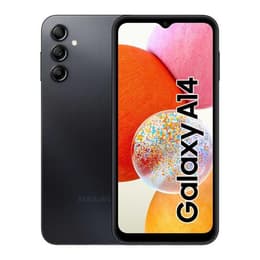
Galaxy A14 5G
Starting at

Refurbished price:157.00

Versus €193.50 new

See options
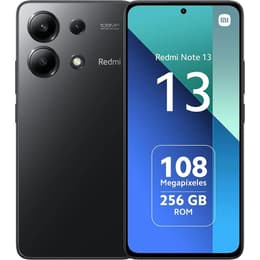
Xiaomi Redmi Note 13 4G
Starting at

Refurbished price:207.00

Versus €340.00 new

See options

Differences at a glance

The Samsung Galaxy A14 5G (2023) and the Xiaomi Redmi Note 13 4G (2024) represent accessible options in the mid-range smartphone market. While both devices cater to everyday users seeking reliable mobile connectivity and core functionality, they differ in release timelines, network support, and display technology. Operating on Android-based software ecosystems, these smartphones offer distinct user experiences tailored to practical, daily communication and media consumption needs.

Available Models

Colour

Storage (GB)

Scores

Durability

When evaluating structural longevity and software support, both devices provide steady reliability for standard daily routines, though their update cycles and release years introduce subtle differences in expected active lifespans.

  • Software support timelines: The Samsung Galaxy A14 5G benefits from a multi-year security update commitment typical of its manufacturer, while the Xiaomi Redmi Note 13 4G offers extended system interface updates aligned with its newer release year, ensuring both models remain secure for standard daily use.
  • Repairability and build endurance: Both smartphones utilize durable plastic composite backs designed to withstand everyday handling, and professional repair networks maintain steady availability of replacement components like screens and batteries for both models.
  • Practical lifespan expectancy: Users can anticipate several years of stable performance for standard messaging, web browsing, and media streaming, making quality-assured refurbished options of either model a sustainable choice for long-term daily use.

Year of Release

2023

2024

Compatible with latest Update

Yes

Yes

OS

Android

Android

Foldable

No

No

Performance

Performance capabilities vary noticeably between the two models, particularly regarding network generation support, internal configuration capacities, and thermal handling during sustained multitasking.

  • Everyday responsiveness and multitasking: Both devices handle routine tasks like web browsing, social media scrolling, and messaging smoothly, though switching rapidly between demanding applications reveals different levels of processing overhead and memory management.
  • Storage and memory configurations: The Xiaomi Redmi Note 13 4G frequently provides higher baseline storage and generous random access memory options, whereas the Galaxy A14 5G focuses on efficient core task handling and expandable storage via dedicated card slots.
  • Battery behavior and endurance: Both models house substantial battery capacities capable of sustaining a full day of mixed usage, though differences in processor efficiency and screen refresh rates influence how quickly power depletes under heavy media consumption.

Screen quality

Display characteristics form a major point of divergence, influencing outdoor visibility, media immersion, and the overall tactile smoothness of navigating through the user interface.

  • Display panel technology: The Samsung Galaxy A14 5G utilizes a standard high-definition liquid crystal display, whereas the Xiaomi Redmi Note 13 4G incorporates an organic light-emitting diode panel that delivers deeper contrast levels and more saturated color reproduction.
  • Outdoor legibility and brightness: Peak brightness outputs vary between the two screens, with the organic panel on the Xiaomi model generally maintaining clearer text visibility under direct sunlight compared to the standard liquid crystal display on the Samsung device.
  • Visual smoothness: Higher refresh rate support on the Xiaomi Redmi Note 13 4G provides smoother scrolling through long web pages and user interface menus, while the Galaxy A14 5G maintains a standard refresh rate suited for basic visual tasks.

Resolution

1080 x 2408

1080 x 2400

Screen type

PLS LCD

AMOLED

Audiovisual

Imaging capabilities cater to casual photography and video recording, offering versatile lens configurations that perform reliably across well-lit environments.

  • Main and supporting camera systems: The Xiaomi Redmi Note 13 4G features a higher-resolution primary sensor that captures fine details effectively in daylight, complemented by an ultra-wide lens, while the Galaxy A14 5G relies on a simpler multi-lens setup focused on macro and depth sensing alongside its main shooter.
  • Low-light and night photography: Both devices implement software-based processing modes to brighten dim scenes, though images captured in dark environments may show varying levels of digital noise and reduced clarity depending on ambient light availability.
  • Video recording and audio capture: Standard-definition video stabilization handles casual hand movements adequately on both smartphones, and integrated microphones isolate voice audio clearly during video calls and voice note recordings.

Main camera

50 megapixels

108 megapixels

Front camera

13 megapixels

16 megapixels

Miscellaneous

Physical design choices, biometric security features, and connectivity standards shape the everyday ergonomics and integration of each device.

  • Network connectivity standards: The Samsung model includes next-generation cellular network compatibility as indicated by its name, whereas the Xiaomi model is restricted to previous-generation cellular speeds while offering robust local wireless connectivity options.
  • Physical dimensions and handling: Both smartphones feature large form factors designed around their expansive screens, with balanced weight distribution ensuring comfortable one-handed grip during calls and messaging.
  • Security sensors and ports: Side-mounted fingerprint scanners integrated into the power buttons provide fast unlocking alongside traditional facial recognition, and both models retain physical audio jacks alongside modern universal charging ports.

Weight

201 g

175 g

Screen size (in)

6.6

6.67

Network

5G

4G

SIM card

Physical SIM

Dual Physical SIM

Carrier compatibility

Unlocked

Unlocked

Connector

USB-C + Jack 3.5mm

USB-C

What the community thinks

User feedback gathered from public forums highlights distinct preferences for each device based on everyday requirements. Owners of the Samsung Galaxy A14 5G frequently praise its dependable build, straightforward software interface, and inclusion of rapid network connectivity at an accessible level. Conversely, users of the Xiaomi Redmi Note 13 4G often emphasize satisfaction with its vibrant display quality, smooth scrolling rates, and generous baseline storage capacities. Common criticisms across both models involve occasional stuttering during intensive multitasking and modest low-light photography results.

Users prioritizing high-refresh visual fluidity, vibrant contrast for media streaming, and larger storage capacities may prefer the Xiaomi Redmi Note 13 4G. Meanwhile, users focusing on straightforward daily communication and next-generation network compatibility will find the Samsung Galaxy A14 5G well-suited to their needs. Exploring quality-assured refurbished options for either smartphone provides an eco-friendly alternative that supports sustainable consumption without compromising on certified device functionality.