

Galaxy Z Flip4 Vs Huawei P30 Pro

Galaxy Z Flip4
Galaxy Z Flip4
Starting at

Refurbished price:264.00

Versus €1,159.00 new

See options
Huawei P30 Pro
Huawei P30 Pro
Starting at

Refurbished price:186.00

Versus €849.00 new

See options

Ratings

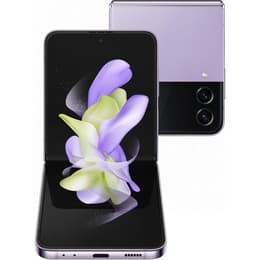
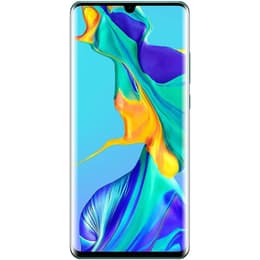
The Samsung Galaxy Z Flip4, released in August 2022, and the Huawei P30 Pro, launched in March 2019, represent distinct approaches to smartphone design and functionality. While the Z Flip4 offers a modern foldable form factor with updated internal components, the P30 Pro is a traditional slab-style device known for its advanced camera system at the time of its release. Both devices operate on the Android platform, though their software experiences differ significantly due to their respective release timelines and manufacturer ecosystems.

Scores

Durability

The practical lifespan of a smartphone is influenced by its physical resilience and the duration of software support it receives.

  • Release Timeline: The Galaxy Z Flip4 is a considerably newer device, having been released in August 2022, compared to the Huawei P30 Pro's March 2019 launch. This age difference impacts their respective positions in the software update cycle.
  • Software Longevity: The Galaxy Z Flip4 is promised four major Android OS updates and five years of security updates from its release, extending its support until approximately 2027. The Huawei P30 Pro, while initially running Android 9.0 Pie with EMUI 9.1 and receiving updates to Android 10, has a more limited future for official software and security updates due to its age and the manufacturer's software policies.
  • Physical Durability: The Z Flip4 features an Armor Aluminum frame and Gorilla Glass Victus+ on its cover screen, along with an IPX8 water resistance rating, meaning it can withstand submersion in water but lacks official dust resistance. Its foldable display, made of Ultra-Thin Glass with a protective plastic layer, is designed to endure up to 200,000 folds, equating to about five years of typical use, though the crease may become more noticeable over time. The P30 Pro offers an IP68 rating for both dust and water resistance, featuring a traditional glass front and back with an aluminum frame, which generally provides robust protection against environmental elements.

Year of Release

2022

2019

Compatible with latest Update

Yes

No

OS

Android

Android

Foldable

Yes

No

Performance

Performance in daily use is largely determined by the processing power, memory, and battery efficiency of a device.

  • Processing Capabilities: The Galaxy Z Flip4 is equipped with a more recent-generation processor, which translates to smoother operation for demanding applications, faster app loading times, and more efficient multitasking. The Huawei P30 Pro, powered by an older processor, handles everyday tasks competently but may show signs of slower performance with very intensive applications or extensive multitasking compared to newer devices.
  • Multitasking and Storage: Both devices offer multiple storage configurations, including options up to 512 GB, but neither supports expandable storage via microSD cards. The Z Flip4 typically comes with 8 GB of RAM, facilitating fluid transitions between multiple open applications. The P30 Pro was available with either 6 GB or 8 GB of RAM, which was ample for its time, but the overall system responsiveness may be less immediate than the Z Flip4.
  • Battery Behavior: The Galaxy Z Flip4 houses a 3700 mAh battery, which, combined with its efficient processor, aims to provide sufficient power for a full day of moderate use. The Huawei P30 Pro features a larger 4200 mAh battery and was noted for its excellent battery life, often capable of lasting through more than a day of use, even with its older, less power-efficient processor.

Memory (GB)

8 GB

8 GB

Screen quality

The display is a primary interface for user interaction, with technology, resolution, and refresh rate significantly impacting the visual experience.

  • Display Technology and Clarity: The Galaxy Z Flip4 features a 6.7-inch Foldable Dynamic AMOLED 2X main display with a resolution of 2640 x 1080 pixels, offering vibrant colors and deep blacks. It also includes a 1.9-inch Super AMOLED cover screen for quick notifications and interactions when folded. The Huawei P30 Pro has a 6.47-inch OLED display with a resolution of 1080 x 2340 pixels, also providing rich colors and good contrast.
  • Smoothness and Brightness: The Z Flip4's main display boasts a 120 Hz refresh rate, resulting in noticeably smoother scrolling and more fluid animations compared to the P30 Pro's standard 60 Hz refresh rate. Both displays offer good brightness levels for outdoor visibility, with the Z Flip4's Dynamic AMOLED 2X panel generally providing higher peak brightness.
  • Viewing Experience: The Z Flip4's foldable design offers a unique compact form factor when closed, expanding to a full-sized screen for media consumption and productivity. The P30 Pro provides a consistent, expansive viewing area in a traditional smartphone design.

Resolution

1080 x 2640

1080 x 2340

Screen type

Foldable Dynamic AMOLED 2X

OLED

Audiovisual

Camera capabilities are a key differentiator, with both devices offering distinct strengths in photography and videography.

  • Rear Camera Systems: The Galaxy Z Flip4 features a dual-camera setup on the rear, consisting of a 12 MP wide-angle lens and a 12 MP ultra-wide-angle lens. It offers improved low-light performance compared to its predecessor. The Huawei P30 Pro is renowned for its quad-camera system, which includes a 40 MP wide lens, a 20 MP ultra-wide lens, an 8 MP periscope telephoto lens with 5x optical zoom, and a Time-of-Flight (ToF) sensor.
  • Photography Performance: The P30 Pro was celebrated for its exceptional low-light photography and impressive optical zoom capabilities, allowing for detailed shots from a distance. The Z Flip4 delivers good image quality in various conditions, with its main camera performing well in low light, though it lacks a dedicated telephoto lens for optical zoom.
  • Front Camera and Video: For selfies, the Z Flip4 has a 10 MP front camera, while the P30 Pro features a higher-resolution 32 MP front camera. Both devices are capable of recording 4K video, with the Z Flip4 supporting 4K at 60 frames per second.

Main camera

12 megapixels

40 megapixels

Front camera

10 megapixels

32 megapixels

Miscellaneous

Beyond core features, several practical elements contribute to the overall user experience and device utility.

  • Connectivity and Ports: The Galaxy Z Flip4 supports 5G connectivity, Wi-Fi 6, and Bluetooth 5.2, offering modern wireless communication standards. It uses a USB-C 2.0 port for charging and data transfer. The Huawei P30 Pro supports 4G LTE, Wi-Fi 5, and Bluetooth 5.0, and also features a USB-C port. It does not support 5G. Neither device includes a traditional 3.5mm headphone jack.
  • Biometric Security: The Z Flip4 integrates a fingerprint sensor into its side power button for convenient unlocking. The P30 Pro features an in-display fingerprint sensor and also offers face recognition for security.
  • Design and Handling: The Z Flip4's defining characteristic is its foldable design, allowing it to become significantly more compact when closed, enhancing portability. Its unfolded dimensions are 165.2 x 71.9 x 6.9 mm and it weighs 187 g. The P30 Pro is a larger, traditional slab phone with dimensions of 158 x 73.4 x 8.4 mm and a weight of 192 g, offering a solid in-hand feel.

Weight

183 g

192 g

Screen size (in)

6.7

6.47

Network

5G

4G

SIM card

Physical SIM + eSIM

Dual Physical SIM

Carrier compatibility

Unlocked

Unlocked

The Samsung Galaxy Z Flip4 and the Huawei P30 Pro cater to different user preferences, largely shaped by their release dates and design philosophies. The Z Flip4 stands out with its innovative foldable form factor, offering a compact device that unfolds into a full-sized smartphone. Users prioritizing the latest Android features, longer software support, and a unique, portable design will find the Z Flip4 well-suited to their needs. Its modern processor ensures smooth performance for current applications, and its improved low-light camera capabilities make it a competent choice for everyday photography.

Conversely, the Huawei P30 Pro, while an older model, remains notable for its exceptional camera system, particularly its optical zoom and strong low-light performance, which were groundbreaking at its release. Users who prioritize advanced photographic capabilities, especially zoom and night photography, and appreciate a traditional, robust smartphone build with excellent battery life, may still find value in the P30 Pro. However, potential users should consider its limited ongoing software support and the absence of 5G connectivity.

Common praise for the Z Flip4 often centers on its distinctive design, the convenience of its compact size when folded, and its vibrant, high-refresh-rate display. Some users have noted that while its camera is good, it may not match the specialized zoom capabilities of some other flagships. For the P30 Pro, its camera performance, particularly its zoom and low-light prowess, and its long-lasting battery were frequently highlighted as major strengths. Criticisms sometimes included its older software experience and the eventual lack of Google Mobile Services on subsequent Huawei devices, though the P30 Pro was one of the last to retain them. Users have also reported occasional software sluggishness or display issues with the P30 Pro as it ages.

Ultimately, the choice between these two devices depends on individual priorities. Users seeking a modern, compact, and feature-rich device with extended software longevity will likely lean towards the Galaxy Z Flip4. Those who value a highly capable camera, especially for zoom and low-light scenarios, and a proven battery performer, might consider the Huawei P30 Pro, understanding the trade-offs associated with an older device. For those looking for an eco-friendly alternative, both models are available as quality-assured refurbished options, offering a sustainable choice for extending the life of these devices.


See all articles

Our recent comparisons






