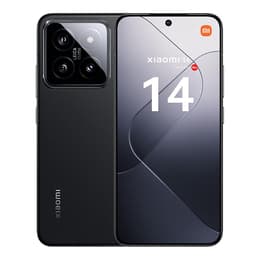


Google Pixel 7A Vs Xiaomi 14

Google Pixel 7A
Google Pixel 7A
Starting at

Refurbished price:177.00

Versus €649.99 new

See options
Xiaomi 14
Xiaomi 14
Starting at

Refurbished price:386.00

Versus €1,099.00 new

See options

Ratings

The Google Pixel 7A (released May 2023) and the Xiaomi 14 (globally released February 2024) are both Android smartphones offering distinct experiences within their respective ecosystems. While the Pixel 7A focuses on a streamlined Android interface and computational photography, the Xiaomi 14 emphasizes high-end performance, advanced camera hardware, and a premium display. Both devices run on the Android operating system, with Xiaomi's HyperOS layered on top of Android for the Xiaomi 14.

Scores

Durability

When considering the long-term usability of a smartphone, factors like software support and physical resilience are key. The Pixel 7A and Xiaomi 14 offer different levels of durability and software longevity.

  • Software Support: The Google Pixel 7A, launched in May 2023, is expected to receive approximately five years of major Android operating system upgrades and security updates, with current versions supporting up to Android 16 and beta versions for Android 17. The Xiaomi 14, with its global release in February 2024, promises four generations of Android OS upgrades and five years of security patches, launching with Android 14-based HyperOS and already updated to HyperOS 2 based on Android 15. This suggests the Xiaomi 14 may offer a slightly longer period of receiving the latest Android features due to its later global launch.
  • Physical Durability: The Pixel 7A features an IP67 rating for dust and water resistance, meaning it can withstand submersion in up to 1 meter of water for 30 minutes, and its display is protected by Corning Gorilla Glass 3. The Xiaomi 14 boasts a higher IP68 rating, offering protection against continuous immersion in water under specified conditions, and its screen is safeguarded by Gorilla Glass Victus. The Xiaomi 14's higher IP rating and more advanced screen protection indicate a greater degree of physical resilience against environmental factors.
  • Build Materials: The Pixel 7A utilizes a plastic back, contributing to its overall construction. In contrast, the Xiaomi 14 features a glass back and an aluminum frame, providing a more robust and premium feel.

Year of Release

2023

2023

Compatible with latest Update

Yes

Yes

OS

Android

Android

Foldable

No

No

Performance

Performance is a critical aspect for daily smartphone use, influencing everything from app responsiveness to gaming. Both devices offer capable performance, though with different underlying architectures and resulting user experiences.

  • Processing Power: The Google Pixel 7A is equipped with a processor designed by Google, which provides a smooth experience for everyday tasks and leverages advanced computational photography. For general navigation, social media, and light gaming, users can expect consistent responsiveness. The Xiaomi 14, on the other hand, incorporates a newer, high-performance processor that handles demanding applications and intensive multitasking with ease. This results in a particularly fluid experience for graphic-intensive games and complex productivity tasks.
  • Battery Life and Charging: The Pixel 7A houses a 4385 mAh battery, supporting 18W wired fast charging and 7.5W wireless charging. Users report that its battery life is generally sufficient for a full day of casual use, though heavy usage may require more frequent charging. The Xiaomi 14 comes with a 4610 mAh battery, offering significantly faster 90W wired charging and 50W wireless charging. Its efficient processor contributes to generally good battery endurance, and its rapid charging capabilities allow for quick power top-ups.
  • Memory and Storage: The Pixel 7A typically comes with 8GB of RAM and 128GB of internal storage, which is not expandable. The Xiaomi 14 offers more flexibility with options for 8GB, 12GB, or 16GB of RAM and storage configurations ranging from 256GB to 1TB, also without expandable storage. This provides the Xiaomi 14 with greater capacity for multitasking and storing large files or numerous applications.

Memory (GB)

8 GB

16 GB

Screen quality

The display is the primary interface for smartphone interaction, and both the Pixel 7A and Xiaomi 14 offer vibrant viewing experiences with notable differences in technology and specifications.

  • Display Technology and Size: The Google Pixel 7A features a 6.1-inch OLED display, providing deep blacks and good contrast. The Xiaomi 14 sports a slightly larger 6.36-inch LTPO AMOLED display, which offers enhanced power efficiency and dynamic refresh rate capabilities.
  • Resolution and Clarity: The Pixel 7A has a resolution of 1080 x 2400 pixels, resulting in a pixel density of approximately 431 pixels per inch (ppi). The Xiaomi 14 offers a higher resolution of 1200 x 2670 pixels, translating to a sharper image with around 460 ppi. This higher pixel density on the Xiaomi 14 contributes to finer detail and clearer text.
  • Brightness and Refresh Rate: The Pixel 7A's OLED display supports HDR and has a refresh rate of 90Hz, providing smooth scrolling and responsive visuals. The Xiaomi 14 significantly surpasses this with a peak brightness of 3000 nits and a High Brightness Mode (HBM) of 1000 nits, making it exceptionally visible even in bright outdoor conditions. Its adaptive LTPO display also offers a dynamic refresh rate ranging from 1Hz to 120Hz, which not only provides a smoother visual experience but also conserves battery life by adjusting the refresh rate based on content.

Resolution

1080 x 2400

1200 x 2670

Screen type

OLED

LTPO OLED

Audiovisual

Both smartphones offer capable camera systems, but they approach photography with different hardware and software philosophies, leading to distinct results.

  • Rear Camera System: The Google Pixel 7A features a dual-camera setup on the rear, consisting of a 64MP main sensor with optical image stabilization (OIS) and a 13MP ultrawide lens. It relies heavily on Google's computational photography for image processing. The Xiaomi 14 boasts a more versatile triple-camera system, co-engineered with Leica, featuring a 50MP main sensor with OIS and a large Light Fusion 900 image sensor, a 50MP ultrawide lens, and a 50MP telephoto lens with OIS and a floating element for close-up shots.
  • Photography Performance: The Pixel 7A is known for its consistent image quality in various conditions, producing crisp and well-exposed photos with good dynamic range, particularly benefiting from its software processing. The Xiaomi 14, with its larger main sensor, Leica optics, and wider apertures, is designed to excel in capturing more light, resulting in detailed images with natural colors and strong low-light performance. The dedicated telephoto lens on the Xiaomi 14 also provides optical zoom capabilities not present on the Pixel 7A.
  • Video Recording and Front Camera: The Pixel 7A is capable of recording 4K video at 30 or 60 frames per second (fps). Its front-facing camera is a 13MP sensor. The Xiaomi 14 offers higher-resolution video recording, supporting up to 8K at 24fps, in addition to 4K at various frame rates. It features a 32MP front camera, offering higher resolution for selfies and video calls. Both devices include stereo speakers for media consumption.

Main camera

64 megapixels

50 megapixels

Front camera

13 megapixels

32 megapixels

Miscellaneous

Beyond core performance and camera, several practical features contribute to the overall user experience and daily convenience of a smartphone.

  • Connectivity and Ports: The Google Pixel 7A supports 5G cellular networks, Wi-Fi 6E, and Bluetooth 5.3. It features a USB-C 3.2 port for charging and data transfer. The Xiaomi 14 offers more advanced connectivity with 5G, Wi-Fi 7, and Bluetooth 5.4, providing potentially faster and more stable wireless connections. It also includes a USB-C 3.2 port and an infrared (IR) blaster, which allows the device to function as a universal remote control.
  • Biometric Security and Sensors: Both devices incorporate modern biometric security features, including an under-display fingerprint sensor and face recognition for convenient unlocking.
  • Physical Design and Handling: The Pixel 7A measures approximately 152 mm in height, 72.9 mm in width, and 9 mm in depth, weighing around 193.5 grams. This makes it a relatively compact device. The Xiaomi 14 is slightly taller at 152.8 mm, narrower at 71.5 mm, and thinner at 8.2 mm, with a similar weight of 193 grams (for the glass back version). Its slightly narrower and thinner profile may contribute to a more comfortable grip for some users.

Weight

193 g

188 g

Screen size (in)

6.1

6.36

Network

5G

5G

SIM card

Physical SIM + eSIM

Dual Physical SIM

Carrier compatibility

Unlocked

Unlocked

The Google Pixel 7A and Xiaomi 14 cater to users with differing priorities, each excelling in specific areas. The Pixel 7A is often praised for its consistent camera performance driven by computational photography, its clean and intuitive Android experience, and its compact form factor. Users generally find its battery life adequate for typical daily use. Some criticisms occasionally point to its battery performance for heavy users.

The Xiaomi 14 receives acclaim for its powerful processing capabilities, its vibrant and bright LTPO AMOLED display with an adaptive refresh rate, and its versatile Leica-engineered camera system with multiple high-resolution lenses. Its fast charging speeds are also a significant advantage. Potential considerations might include the software experience of HyperOS compared to stock Android for some users.

Users prioritizing a compact device with a focus on reliable point-and-shoot photography and a straightforward Android interface may find the Google Pixel 7A well-suited to their needs. Conversely, users who value top-tier performance for demanding applications, a superior and brighter display, advanced and versatile camera hardware, and rapid charging will likely lean towards the Xiaomi 14. Both devices represent solid choices within the Android ecosystem, and considering refurbished options for either model can provide an eco-friendly alternative for informed purchasing decisions.

See all articles

Our recent comparisons







