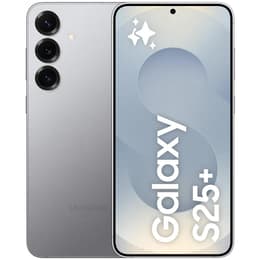
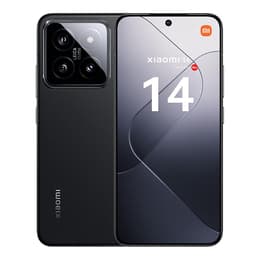


Galaxy S25+ Vs Xiaomi 14

Galaxy S25+
Galaxy S25+
Starting at

Refurbished price:624.00

Versus €1,401.57 new

See options
Xiaomi 14
Xiaomi 14
Starting at

Refurbished price:386.00

Versus €1,099.00 new

See options

Ratings

The Samsung Galaxy S25 Plus and the Xiaomi 14 are both high-end Android smartphones, offering premium experiences in different packages. The Galaxy S25 Plus, released in early 2025, represents Samsung's larger-screen flagship, while the Xiaomi 14, launched globally in early 2024, focuses on a more compact design with a strong emphasis on camera capabilities. Both devices run on the Android operating system, but they feature distinct software interfaces and update policies that cater to varying user preferences.

Scores

Durability

The longevity of a smartphone is a significant factor for many users, encompassing both physical durability and software support. These two devices offer different timelines for their expected practical lifespan.

  • Software Support: The Samsung Galaxy S25 Plus stands out with an extensive commitment to software longevity, promising seven years of operating system upgrades and seven years of security updates. This means the device is expected to receive updates until 2032, offering a prolonged period of current features and security. In contrast, the Xiaomi 14 is slated to receive four generations of Android OS upgrades and five years of security patches, providing a solid but shorter support window.
  • Build Materials: Both smartphones incorporate robust materials designed for daily use. The Galaxy S25 Plus features Gorilla Glass Victus 2 on both its front and back, complemented by flat metal edges, contributing to its sturdy feel. The Xiaomi 14 also utilizes Gorilla Glass Victus for screen protection and boasts an IP68 rating for dust and water resistance, similar to the Galaxy S25 Plus.
  • Practical Lifespan: Given its more recent release and significantly longer software support, the Galaxy S25 Plus is positioned to offer a longer practical lifespan in terms of receiving the latest Android features and security enhancements. However, the Xiaomi 14's build quality and respectable update policy still ensure several years of reliable use.

Year of Release

2025

2023

Compatible with latest Update

Yes

Yes

OS

Android

Android

Foldable

No

No

Performance

Performance is a core aspect of any flagship smartphone, influencing everything from app responsiveness to demanding tasks like gaming. Both the Galaxy S25 Plus and Xiaomi 14 deliver high-level performance, though they are powered by different generations of advanced mobile processors.

  • Processing Power: The Samsung Galaxy S25 Plus is equipped with a more recent generation processor, designed to handle intensive applications and multitasking with efficiency. This newer chip provides enhanced speeds for both general computing and graphics-intensive tasks. The Xiaomi 14, released earlier, features a powerful processor that was a leading component at its launch, capable of smoothly running demanding apps and delivering a fluid user experience.
  • Multitasking and Responsiveness: Both devices offer ample RAM, with the Galaxy S25 Plus typically featuring 12 GB and the Xiaomi 14 available with options up to 16 GB. This generous memory allocation ensures efficient multitasking, allowing users to switch between numerous applications without noticeable slowdowns. User experiences with both phones generally report smooth system responsiveness, with apps loading quickly and transitions feeling fluid.
  • Storage Options: The Galaxy S25 Plus offers storage configurations starting from 256 GB, with a 512 GB option also available. The Xiaomi 14 provides a wider range of choices, including 256 GB, 512 GB, and a 1 TB option, utilizing fast UFS 4.0 storage for quick data access.

Memory (GB)

12 GB

16 GB

Screen quality

The display is a primary interface for smartphone interaction, and both the Galaxy S25 Plus and Xiaomi 14 offer vibrant and responsive screens designed for an immersive viewing experience.

  • Display Technology and Clarity: The Samsung Galaxy S25 Plus features a 6.7-inch Dynamic AMOLED 2x display, known for its deep blacks, high contrast, and vivid color reproduction. It offers a sharp 1440x3120 pixel resolution (QHD+), resulting in excellent clarity for text and images. The Xiaomi 14 comes with a slightly more compact 6.36-inch LTPO AMOLED display, which also delivers rich colors and strong contrast, with a resolution of 2670x1200 pixels (1.5K).
  • Brightness and Refresh Rate: Both phones feature high refresh rates for smooth scrolling and animations. The Galaxy S25 Plus has a 120Hz adaptive refresh rate and can reach a peak brightness of 2600 nits, ensuring good visibility even in bright outdoor conditions. The Xiaomi 14 also offers an adaptive 1-120Hz refresh rate and boasts an even higher peak brightness of 3000 nits, which can be beneficial for outdoor use and HDR content.
  • Viewing Experience: The larger screen of the Galaxy S25 Plus provides a more expansive canvas for media consumption and productivity. The Xiaomi 14, with its slightly smaller display, offers a more compact form factor that some users may find easier for one-handed use. Both displays support HDR10+ and Dolby Vision, enhancing the visual quality of compatible content.

Resolution

1440 x 3120 pixels

1200 x 2670

Audiovisual

Camera capabilities are a significant consideration for many smartphone users, and both the Galaxy S25 Plus and Xiaomi 14 offer advanced systems for capturing photos and videos.

  • Rear Camera Systems: The Samsung Galaxy S25 Plus is equipped with a versatile triple-camera setup, including a 50 MP wide-angle primary sensor, a 12 MP ultra-wide-angle lens, and a 10 MP telephoto lens with 3x optical zoom. This configuration allows for a range of photographic styles, from expansive landscapes to detailed zoomed-in shots. The Xiaomi 14 also features a triple 50 MP camera system, co-engineered with Leica, comprising a 50 MP wide-angle main lens, a 50 MP ultra-wide lens, and a 50 MP telephoto lens with 3.2x optical zoom.
  • Photography Performance: The Galaxy S25 Plus is known for producing vibrant photos with good dynamic range, and its low-light performance is generally strong, retaining detail with minimal noise. The Xiaomi 14, with its Leica tuning, is highly praised by users for its exceptional image quality, particularly in terms of color science and detail, often described as producing images with a distinct, professional look. Both devices offer optical image stabilization (OIS) on key lenses for sharper images and smoother video.
  • Video Recording and Front Camera: Both smartphones are capable of recording video at up to 8K resolution, providing high-quality footage. For selfies and video calls, the Galaxy S25 Plus features a 12 MP front-facing camera, while the Xiaomi 14 offers a higher-resolution 32 MP front camera.

Front camera

12MP

32 megapixels

Miscellaneous

Beyond core performance and display, several other features contribute to the overall user experience and practical utility of these smartphones.

  • Connectivity and Ports: Both devices support 5G connectivity for fast mobile data. The Galaxy S25 Plus includes Wi-Fi and Bluetooth, with specific versions typically being the latest available at its release. The Xiaomi 14 supports Wi-Fi 7 and Bluetooth 5.4, offering advanced wireless capabilities. Both phones utilize a USB Type-C port for charging and data transfer.
  • Biometrics and Design: For secure unlocking, the Galaxy S25 Plus employs an ultrasonic in-screen fingerprint sensor. The Xiaomi 14 also features an under-display optical fingerprint sensor. In terms of physical design, the Galaxy S25 Plus measures 158.4 mm in height, 75.7 mm in width, and 7.3 mm in depth, weighing 190 grams. The Xiaomi 14 is slightly more compact at 152.8 mm in height, 71.5 mm in width, and 8.2 mm in depth, with a weight of 193 grams.
  • Battery and Charging: The Galaxy S25 Plus houses a 4900 mAh battery and supports 45W fast wired charging. The Xiaomi 14 has a 4610 mAh battery but offers significantly faster 90W wired charging and 50W fast wireless charging, allowing for quicker power replenishment.

Weight

190 g

188 g

Screen size (in)

6.7

6.36

Network

5G

5G

SIM card

Physical SIM + eSIM

Dual Physical SIM

Carrier compatibility

Unlocked

Unlocked

Choosing between the Samsung Galaxy S25 Plus and the Xiaomi 14 involves weighing their distinct strengths and user-centric designs. The Galaxy S25 Plus is frequently praised by users for its excellent overall performance, vibrant display, and particularly for Samsung's industry-leading commitment to software updates, offering seven years of support. Some users, however, note that its camera hardware has seen minimal changes across generations, with improvements largely driven by software. The Xiaomi 14 garners significant acclaim for its Leica-tuned camera system, often cited as delivering exceptional photographic results with a unique aesthetic. Its rapid charging capabilities are also a frequent highlight, though some users have reported occasional software jitters within HyperOS.

Users prioritizing long-term software support and a consistently refined user experience with a larger display may find the Samsung Galaxy S25 Plus well-suited to their needs. Its extended update policy ensures the device remains current and secure for many years. Conversely, individuals who place a premium on advanced camera performance, especially with a distinct photographic style, and appreciate very fast charging in a slightly more compact form factor, might lean towards the Xiaomi 14. Both devices represent strong contenders in the premium smartphone segment, and considering a quality-assured refurbished option for either model can be a sustainable choice for consumers.


See all articles

Our recent comparisons






