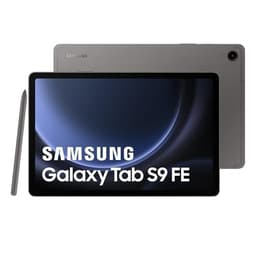
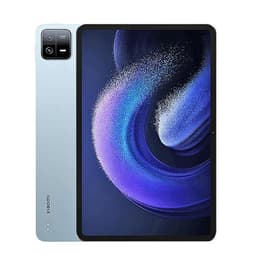


Galaxy Tab S9 FE (10.9", 2023) Vs Xiaomi Pad 6 (11.0", 2023)

Galaxy Tab S9 FE (10.9", 2023)
Starting at

Refurbished price:390.00

Versus €499.00 new

See options
Xiaomi Pad 6 (11.0", 2023)
Starting at

Refurbished price:235.39

Versus €699.00 new

See options

Ratings

The Samsung Galaxy Tab S9 FE (released in October 2023) and the Xiaomi Pad 6 (released in April 2023) are both Android-based tablets designed for a range of everyday uses. While both offer a modern tablet experience, the Galaxy Tab S9 FE distinguishes itself with an included stylus and a clear software update commitment, whereas the Xiaomi Pad 6 focuses on a smoother display and a more capable processor for demanding tasks. Both devices run on the Android operating system, with Samsung's One UI overlay and Xiaomi's MIUI for Pad offering distinct user interfaces.

Scores

Durability

When considering the long-term usability of these tablets, their release timelines and software support policies are key factors.

  • Software Longevity: The Samsung Galaxy Tab S9 FE launched with Android 13 and One UI 5.1, and Samsung has committed to providing four major Android OS updates and five years of security patches, extending its software support until Android 17. [6, 20, 30] The Xiaomi Pad 6 also launched with Android 13 and MIUI for Pad 14, with an upgrade path to Android 14-based Xiaomi HyperOS, but its long-term software update policy is less explicitly defined. [1, 19]
  • Physical Durability: The Xiaomi Pad 6 features an aluminum back and frame with Corning Gorilla Glass 3 protecting its display, and it carries an IP53 rating for dust and splash resistance. [10, 12, 23] The Galaxy Tab S9 FE also features an aluminum back and frame, and while it offers some water resistance, a specific IP rating is not consistently cited across sources for this model. [5, 33]
  • Practical Lifespan: Both tablets, being relatively recent releases, are expected to offer several years of practical use. The Galaxy Tab S9 FE's explicit update policy provides a clearer expectation for software support duration, which can contribute to a longer perceived lifespan for users who prioritize the latest software features and security.

Year of Release

2023

2023

Compatible with latest Update

Yes

No

OS

Android

Android

Performance

The performance of a tablet impacts how smoothly applications run, how quickly tasks are completed, and the overall responsiveness of the device.

  • Processing Power: The Xiaomi Pad 6 is equipped with a processor that handles daily tasks with ease and is capable of running mainstream games effectively. [2, 10, 12, 35] The Galaxy Tab S9 FE features a mid-range processor that performs well for everyday use, multitasking, and casual gaming, though it may encounter limitations with more graphically intensive applications or demanding games. [13, 16, 31]
  • Multitasking and Responsiveness: Both tablets offer configurations with ample RAM (up to 8GB for the S9 FE and up to 8GB for the Pad 6) to support smooth multitasking. [2, 8, 11, 18] The Xiaomi Pad 6's processor, combined with its higher refresh rate display, contributes to a very fluid and responsive user experience, even when switching between multiple applications. [10, 12, 36]
  • Storage Options: Both devices offer internal storage options typically ranging from 128GB to 256GB. The Galaxy Tab S9 FE provides expandable storage via a microSD card, offering flexibility for users who need additional space for media and files. [14, 22]

Memory (GB)

6 GB

6 GB

Processor

Exynos 1380

Qualcomm SM8250-AC Snapdragon 870 5G

Screen quality

The display is a primary interaction point for tablets, influencing media consumption, productivity, and overall user experience.

  • Display Technology and Resolution: Both tablets feature IPS LCD panels. The Xiaomi Pad 6 offers an 11-inch display with a resolution of 2880x1800 pixels, resulting in a pixel density of 309 ppi. [1, 10, 18] The Galaxy Tab S9 FE has a 10.9-inch display with a resolution of 2304x1440 pixels. [8, 9, 11, 27]
  • Refresh Rate and Smoothness: The Xiaomi Pad 6 boasts a higher refresh rate of up to 144Hz, which contributes to noticeably smoother scrolling and more fluid animations. [10, 18, 26, 29] The Galaxy Tab S9 FE features a 90Hz refresh rate display, which is an improvement over standard 60Hz panels and provides a good level of smoothness for general use. [8, 9, 11, 27]
  • Brightness and Clarity: The Galaxy Tab S9 FE offers a maximum brightness of 600 nits, with an outdoor brightness of 720 nits when Vision Booster is active, enhancing visibility in bright environments. [41] The Xiaomi Pad 6 has a typical brightness of 550 nits. [18] Both displays are designed to offer clear visuals and vibrant colors for an engaging viewing experience. [40, 41]

Resolution

1440 x 2304

1800 x 2880

Screen type

IPS LCD

IPS LCD

Pixel density

250ppp

310ppp

Audiovisual

While tablets are not typically primary photography devices, their cameras are useful for video calls, document scanning, and casual captures.

  • Rear Camera Capabilities: The Xiaomi Pad 6 is equipped with a 13MP rear camera that can record video at 4K resolution at 30 frames per second. [18, 23] The Galaxy Tab S9 FE features an 8MP rear camera, capable of recording video at Full HD resolution at 30 frames per second. [8, 11, 22] User reviews suggest the rear cameras on both are acceptable for basic tasks like scanning documents. [16, 28, 37]
  • Front Camera for Communication: For video calls and selfies, the Galaxy Tab S9 FE includes a 12MP front camera that can record in UHD at 30 frames per second. [8, 11, 22] The Xiaomi Pad 6 has an 8MP front camera, which is suitable for video conferencing. [10, 18, 26]
  • Audio Experience: The Xiaomi Pad 6 features quad speakers with Dolby Atmos support, providing a rich audio experience for media consumption. [12, 18, 23, 36] The Galaxy Tab S9 FE also offers stereo speakers, enhancing the audio for videos and calls. [11, 24]

Miscellaneous

Beyond core specifications, several practical features contribute to the overall utility and user experience of a tablet.

  • Connectivity Standards: Both tablets support Wi-Fi 6 for fast wireless internet connections. [5, 11, 12, 18, 24] The Galaxy Tab S9 FE uses Bluetooth 5.3, while the Xiaomi Pad 6 uses Bluetooth 5.2 for connecting to accessories. [5, 11, 18, 23, 24]
  • Ports and Biometrics: Both devices feature a USB Type-C port for charging and data transfer. The Xiaomi Pad 6's USB-C port supports USB 3.2 Gen1 speeds, offering faster data transfer compared to the Galaxy Tab S9 FE's USB 2.0 speeds. [14, 18] The Galaxy Tab S9 FE includes a fingerprint sensor integrated into the power button for secure unlocking. [8, 11, 22, 28] The Xiaomi Pad 6 relies on less secure 2D face recognition for biometric unlocking and does not have a fingerprint sensor. [10, 17]
  • Design and Accessories: The Galaxy Tab S9 FE comes with an S Pen included, offering a natural writing and drawing experience. [28] The Xiaomi Pad 6 supports a stylus and keyboard accessories, which are sold separately. [19, 23] In terms of physical attributes, the Xiaomi Pad 6 is slightly lighter at 490g compared to the Galaxy Tab S9 FE's 523g. [1, 5, 11, 19, 23]

Weight

524 g

490 g

Screen size (in)

10.9

11.0

Network

Wi-Fi

Wi-Fi

Carrier compatibility

Unlocked

Without SIM Port

Connector

USB Type-C

USB Type-C

User feedback for the Samsung Galaxy Tab S9 FE often highlights its solid build quality, the convenience of the included S Pen, and its bright display as strong points. Some users note that its performance, while adequate for most tasks, can be a limiting factor for very demanding applications or games. The Xiaomi Pad 6 is frequently praised for its smooth 144Hz display, capable processor for its segment, and robust audio experience. Common criticisms sometimes point to the absence of a fingerprint sensor and less clear long-term software support compared to some competitors.

Users prioritizing a tablet with an integrated stylus for note-taking or creative tasks, coupled with a guaranteed long-term software update policy, may find the Galaxy Tab S9 FE to be a suitable option. Its performance is well-suited for general productivity, media consumption, and casual gaming. Conversely, individuals seeking a tablet with a higher refresh rate display for a smoother visual experience, a more powerful processor for demanding apps and gaming, and faster wired data transfer speeds might lean towards the Xiaomi Pad 6. Both tablets offer a compelling Android experience, and considering a quality-assured refurbished option for either model can be an eco-friendly alternative to purchasing new.


See all articles

Our recent comparisons






