

Galaxy Tab S9 FE (10.9", 2023) Vs iPad Air 5 (2022, M1 series)

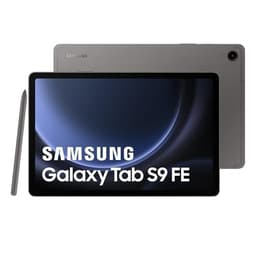
Galaxy Tab S9 FE (10.9", 2023)
Starting at

Refurbished price:390.00

Versus €499.00 new

See options
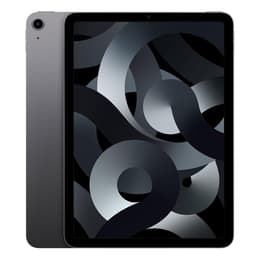
iPad Air 5 (2022, M1 series)
Starting at

Refurbished price:310.00

Versus €799.00 new

See options

Ratings

The Samsung Galaxy Tab S9 FE, released in October 2023, and the Apple iPad Air (5th generation), launched in March 2022, represent two distinct approaches to the tablet experience. While both offer a 10.9-inch display and aim to provide a versatile computing experience, they differ significantly in their operating systems and core hardware. The Galaxy Tab S9 FE runs on Android with Samsung's One UI, offering a customizable interface, whereas the iPad Air operates on Apple's iPadOS, known for its streamlined ecosystem. This comparison will explore their practical differences to help users make an informed decision.

Scores

Durability

When considering the longevity of a tablet, factors such as release date, software support, and physical durability play a significant role. The iPad Air (5th generation) was released in March 2022 and was discontinued in May 2024, while the Galaxy Tab S9 FE launched more recently in October 2023. [2, 7, 13, 15]

  • Software Support: Apple typically provides software updates for its devices for an extended period, often exceeding five years from the release date. The iPad Air (5th generation) launched with iPadOS 15.4 and currently runs iPadOS 26.4, indicating ongoing support. [2, 3] Samsung's Android tablets also receive multiple years of software updates, with the Galaxy Tab S9 FE launching with Android 13. [5, 8, 10] Users prioritizing the longest possible software update cycle might find a slight advantage with the newer Galaxy Tab S9 FE.
  • Physical Durability: Both tablets feature an aluminum build. The Galaxy Tab S9 FE distinguishes itself with an IP68 rating for water and dust resistance, offering enhanced protection against environmental elements. [11, 18, 20, 23, 25, 26] The iPad Air does not carry an official IP rating.
  • Expected Lifespan: Both devices are built to last, with their aluminum chassis contributing to overall robustness. The inclusion of an IP68 rating on the Galaxy Tab S9 FE may offer additional peace of mind for users in varied environments. [11, 18, 20, 23]

Year of Release

2023

2022

Compatible with latest Update

Yes

Yes

OS

Android

iPadOS

Performance

The performance of a tablet is largely determined by its internal processing capabilities, impacting everything from app responsiveness to multitasking efficiency. These two tablets offer different performance profiles tailored to various user needs.

  • Processing Power: The iPad Air (5th generation) is equipped with a powerful processor that enables smooth operation for demanding applications, complex video editing, and graphic-intensive games. [1, 2, 4, 27] Users report that it handles heavy workloads with ease, maintaining responsiveness even during intensive multitasking. [27] The Galaxy Tab S9 FE features an octa-core processor designed for mid-range devices, providing capable performance for everyday tasks, entertainment consumption, and light gaming. [7, 12, 19, 26]
  • Multitasking and Responsiveness: The iPad Air's architecture allows for efficient handling of multiple applications simultaneously, making it well-suited for professional workflows and creative tasks. [1, 2, 4] The Galaxy Tab S9 FE also offers smooth multitasking for typical productivity apps and media consumption, with available RAM configurations of 6GB or 8GB. [5, 6, 7, 10, 19] The iPad Air comes with 8GB of RAM as standard. [1, 2, 4, 30]
  • Storage and Battery Behavior: Both tablets offer various internal storage options, with the Galaxy Tab S9 FE providing expandable storage via a microSD card, a feature not present on the iPad Air. [5, 6, 7, 10, 12, 19, 22, 26] The Galaxy Tab S9 FE has an 8,000 mAh battery, while the iPad Air has a 28.6 Wh battery (approximately 7,587 mAh). [5, 8, 10, 12, 14, 17, 19, 21, 22, 29, 30, 35] Both are designed to provide a full day of typical use, though intensive tasks will naturally consume power more quickly. [4, 14, 21]

Memory (GB)

6 GB

8 GB

Screen quality

The display is a primary interface for any tablet, and both the Galaxy Tab S9 FE and iPad Air offer vibrant viewing experiences with some key distinctions in their underlying technology and features.

  • Display Technology and Clarity: The Galaxy Tab S9 FE features a 10.9-inch IPS LCD with a resolution of 2304 x 1440 pixels. [5, 8, 19, 22, 26] The iPad Air (5th generation) also has a 10.9-inch Liquid Retina IPS LCD display with a slightly higher resolution of 2360 x 1640 pixels, resulting in a similar pixel density. [2, 3, 4, 17, 27, 28, 32] Both provide clear and detailed visuals for reading, browsing, and media consumption.
  • Refresh Rate and Smoothness: A notable difference lies in the refresh rate. The Galaxy Tab S9 FE offers an adaptive refresh rate of up to 90Hz, which can result in smoother scrolling and a more fluid visual experience, particularly in supported applications and games. [7, 14, 19, 21, 22, 26, 33, 34] The iPad Air maintains a standard 60Hz refresh rate. [31]
  • Brightness and Viewing Experience: The iPad Air features 500 nits of brightness, along with P3 wide color support and True Tone technology for adaptive white balance. [2, 4, 28, 32] The Galaxy Tab S9 FE offers a maximum brightness of 600 nits, with a 'Vision Booster' feature that enhances visibility in bright outdoor conditions by optimizing color and contrast. [12, 14, 19, 21]

Resolution

1440 x 2304

2360 x 1640

Screen type

IPS LCD

Liquid Retina display

Pixel density

250ppp

264ppp

Audiovisual

Tablet cameras are often used for video calls, document scanning, and casual photography. Both devices are equipped with capable camera systems for these purposes, with some differences in their front-facing capabilities.

  • Rear Camera Performance: The iPad Air (5th generation) features a 12MP wide rear camera with an f/1.8 aperture, capable of recording 4K video. [1, 2, 4, 16, 27, 31] The Galaxy Tab S9 FE has an 8MP rear camera with an f/1.9 aperture, also supporting 4K video recording. [5, 6, 8, 10, 19, 22, 26] Both perform well in good lighting conditions for general photography and scanning.
  • Front Camera and Video Calls: For video conferencing and selfies, both tablets include a 12MP front-facing camera. [1, 2, 3, 4, 8, 10, 16, 19, 22, 27, 31] The iPad Air's front camera is an ultrawide lens that supports 'Center Stage,' a feature that automatically keeps the user in frame during video calls. [2, 4, 16, 27] The Galaxy Tab S9 FE's front camera is also ultrawide. [5, 6, 8, 10, 19, 22]
  • Audio Experience: Both tablets are equipped with stereo speakers. The Galaxy Tab S9 FE includes Dolby Atmos support for an enhanced audio experience, which can be beneficial for media consumption. [6, 10] The iPad Air also provides clear stereo sound. [4]

Miscellaneous

Beyond core specifications, several practical features contribute to the overall user experience, including connectivity, port types, and biometric security.

  • Connectivity and Ports: Both tablets support modern wireless standards, including Wi-Fi 6. [1, 4, 10, 19, 28] The Galaxy Tab S9 FE also supports Bluetooth 5.3, while the iPad Air uses Bluetooth 5.0. [8, 10, 19, 22, 28] Both devices feature a USB-C port for charging and data transfer. The iPad Air's USB-C port offers faster data transfer speeds (up to 10 Gbps) compared to the Galaxy Tab S9 FE. [4, 15, 28]
  • Stylus and Biometrics: The Galaxy Tab S9 FE comes with an S Pen included in the box, which is also IP68 water and dust resistant. [11, 14, 19, 25] The iPad Air supports the Apple Pencil 2nd generation, which is sold separately. [4, 13, 27] For security, both tablets utilize a fingerprint sensor: the Galaxy Tab S9 FE integrates it into the power button, as does the iPad Air. [4, 10, 26, 27]
  • Design and Handling: Both tablets feature an aluminum chassis, contributing to a premium feel. The Galaxy Tab S9 FE weighs 524g, while the Wi-Fi model of the iPad Air weighs 461g, making the iPad Air slightly lighter. [5, 8, 12, 13, 17, 22, 25, 26]

Weight

524 g

461 g

Screen size (in)

10.9

10.9

Network

Wi-Fi

Wi-Fi

Carrier compatibility

Unlocked

Without SIM Port

The Samsung Galaxy Tab S9 FE and the Apple iPad Air (5th generation) cater to different user preferences, primarily influenced by their operating systems and performance capabilities. Users often praise the iPad Air for its robust performance, particularly for demanding creative tasks and gaming, thanks to its powerful processor. [27] Its integration within the Apple ecosystem is also a frequent highlight for those already invested in Apple products. Some users, however, note its 60Hz display as a point of comparison to tablets with higher refresh rates. [31]

The Galaxy Tab S9 FE is often commended for its vibrant display with a smoother 90Hz refresh rate and the inclusion of the S Pen, making it a compelling option for note-taking and digital art without an additional purchase. [6, 14, 19, 25] Its IP68 water and dust resistance is also a significant advantage for users seeking a more durable device. [11, 18, 20, 23] Criticisms sometimes point to its processor not matching the raw power of higher-end tablets, though it remains capable for its intended use. [7]

Users prioritizing a tablet for intensive creative work, high-end gaming, and seamless integration with other Apple devices may find the iPad Air (5th generation) well-suited to their needs. Conversely, users who value a smoother display experience, an included stylus, expandable storage, and enhanced durability for a wider range of environments, all within the Android ecosystem, may lean towards the Galaxy Tab S9 FE. Both tablets offer a quality-assured refurbished option, providing an eco-friendly alternative for consumers looking to make a sustainable choice.


See all articles

Our recent comparisons