Samsung Tab

Compare models
Differences at a glance
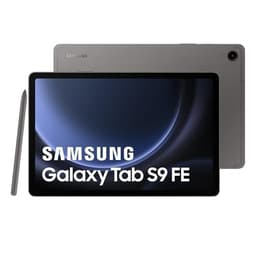
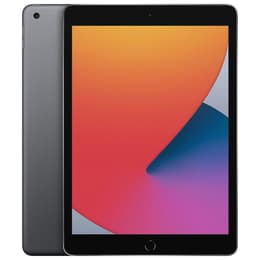
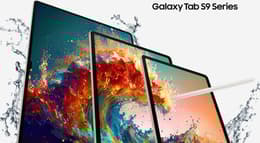
The Samsung Galaxy Tab S9 FE, released in October 2023, and the Apple iPad (8th generation), released in September 2020, offer distinct tablet experiences. While both devices provide platforms for productivity and entertainment, they differ significantly in their operating systems, display technology, and overall ecosystem integration. The Galaxy Tab S9 FE runs on Android, offering a more open software environment, while the iPad operates on Apple's iPadOS, known for its streamlined interface.
Colour
Storage
The longevity of a tablet is influenced by its release date and the manufacturer's software support policy. The Galaxy Tab S9 FE, being a 2023 release, benefits from a more recent launch, suggesting a longer period of official software updates compared to the iPad (8th generation) from 2020. This difference in release year directly impacts the expected duration of security patches and new feature rollouts.
Year of Release
Compatible with latest Update
OS
The performance of these tablets is shaped by their respective internal components, influencing how smoothly they handle applications and multitasking. The Galaxy Tab S9 FE, with its more recent processor, generally offers a responsive experience for everyday tasks and moderate gaming. The iPad (8th generation), powered by a capable chip from its release year, still handles many common applications efficiently, though it may show its age with more demanding software or intensive multitasking.
The visual experience on a tablet is largely defined by its display technology, resolution, and refresh rate. The Galaxy Tab S9 FE features an IPS LCD panel with a higher refresh rate, offering smoother scrolling and a more fluid visual experience. The iPad (8th generation) uses an IPS LCD Retina display, known for its accurate colors and good viewing angles, but with a standard refresh rate.
Resolution
Screen type
Pixel density
While tablets are not typically primary photography devices, their cameras are useful for video calls, document scanning, and casual photos. The Galaxy Tab S9 FE offers a more versatile camera setup, particularly with its front-facing ultrawide lens, enhancing video call experiences. The iPad (8th generation) provides a functional camera system suitable for basic tasks and video conferencing.
Beyond core performance, various practical features contribute to the overall user experience and daily utility of a tablet. The Galaxy Tab S9 FE integrates an S Pen stylus directly into its ecosystem, offering a distinct advantage for note-taking and drawing. The iPad (8th generation) supports the Apple Pencil (1st Gen) as an optional accessory. Connectivity and biometric security also present differences between the two models.
Weight
Width
Height
Depth
Screen size (in)
Network
Carrier compatibility
User feedback often highlights the distinct strengths of each tablet, catering to different preferences and workflows. The Galaxy Tab S9 FE is frequently praised for its vibrant display with a smoother 90Hz refresh rate, the inclusion of the S Pen, and its robust build quality with IP68 water resistance. Users appreciate the flexibility of the Android ecosystem and the expandable storage. Some common criticisms revolve around the performance for very demanding tasks compared to higher-end tablets, though for its intended use, it generally meets expectations. The iPad (8th generation) is often lauded for its reliable performance for everyday tasks, the vast app ecosystem optimized for iPadOS, and its consistent user experience. Criticisms sometimes point to its aging design, the standard 60Hz display, and the limited base storage without expansion.
Users prioritizing a modern Android experience with an included stylus, a smoother display, and water resistance may find the Galaxy Tab S9 FE well-suited to their needs. Its expandable storage and USB-C port also offer practical advantages for certain users. Conversely, users who are already invested in the Apple ecosystem, prefer the streamlined iPadOS, or require access to specific iPad-optimized applications may lean toward the iPad (8th generation). While it is an older model, it still provides a dependable tablet experience for general use. Both devices, whether new or as a quality-assured refurbished option, offer compelling features for different user profiles, making the choice dependent on individual priorities regarding operating system, accessories, and specific usage requirements.