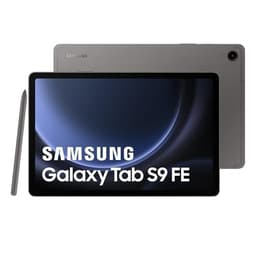
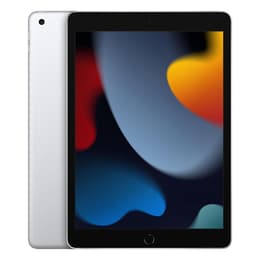

Galaxy Tab S9 FE (10.9", 2023) Vs iPad 9 (2021, A13 series)

Galaxy Tab S9 FE (10.9", 2023)
Starting at

Refurbished price:390.00

Versus €499.00 new

See options
iPad 9 (2021, A13 series)
Starting at

Refurbished price:178.00

Versus €429.00 new

See options

Ratings

The Samsung Galaxy Tab S9 FE, released in October 2023, and the Apple iPad (9th Generation), launched in September 2021, are both popular tablet options designed for everyday use. While the Galaxy Tab S9 FE operates on Android with Samsung's One UI, the iPad 9th Gen runs on Apple's iPadOS, offering distinct software experiences. Key differences lie in their display technology, accessory integration, and overall ecosystem.

Scores

Durability

When considering the long-term usability of these tablets, their release timelines and software support are important factors.

  • Release Timeline: The Galaxy Tab S9 FE is a newer device, released in October 2023, making it approximately two years newer than the iPad 9th Gen, which was released in September 2021. This difference in release date typically translates to a longer period of future software updates for the Samsung tablet.
  • Software Longevity: Apple generally provides software updates for its devices for about five to seven years from their release. The iPad 9th Gen is expected to receive major iPadOS updates until around 2026-2027, with security updates potentially extending to 2028-2029. Samsung is known for offering long software support for its devices, and the Galaxy Tab S9 FE, being newer, is anticipated to receive updates for several years beyond the iPad 9th Gen's projected end-of-life for major OS updates.
  • Durability Features: The Galaxy Tab S9 FE features an IP68 rating for water and dust resistance, a notable advantage for users who might expose their device to various environments. The iPad 9th Gen does not carry an official IP rating. Both devices feature glass fronts and aluminum backs and frames, contributing to their overall build quality.

Year of Release

2023

2021

Compatible with latest Update

Yes

Yes

OS

Android

iPadOS

Performance

The performance of a tablet is crucial for handling daily tasks, from browsing to more demanding applications.

  • Everyday Responsiveness: The Galaxy Tab S9 FE is powered by an octa-core processor, which provides smooth performance for general use, media consumption, and light productivity tasks. Users report it handles multiple apps without significant issues, though it is considered a mid-range performer. The iPad 9th Gen features a hexa-core processor that delivers strong performance for its category, easily managing multitasking and everyday applications with fluidity.
  • Multitasking and Gaming: For demanding applications or intensive multitasking, the iPad 9th Gen's processor offers robust capabilities, ensuring a responsive experience even with several apps open simultaneously. While the Galaxy Tab S9 FE can handle light gaming and multitasking, some users note that it may experience hiccups or heat up during very heavy tasks or graphically intensive games.
  • Storage and RAM: The Galaxy Tab S9 FE is available with 6GB or 8GB of RAM and 128GB or 256GB of internal storage, which can be expanded via a microSD card up to 1TB. The iPad 9th Gen comes with 3GB of RAM and storage options of 64GB or 256GB, but it does not offer expandable storage.

Memory (GB)

6 GB

3 GB

Screen quality

The display is a primary interface for tablets, influencing everything from media consumption to productivity.

  • Display Technology and Size: The Galaxy Tab S9 FE features a 10.9-inch IPS LCD display with a resolution of 1440 x 2304 pixels. The iPad 9th Gen has a slightly smaller 10.2-inch Retina IPS LCD display with a resolution of 1620 x 2160 pixels. Both offer clear visuals, but the Samsung tablet provides a larger viewing area.
  • Refresh Rate and Brightness: The Galaxy Tab S9 FE boasts an adaptive refresh rate of up to 90Hz, contributing to smoother scrolling and a more fluid visual experience. It also includes Vision Booster technology to enhance visibility in bright outdoor conditions. The iPad 9th Gen features a standard 60Hz refresh rate but offers True Tone technology, which adjusts the screen's color temperature to match ambient lighting, and a brightness of 500 nits for good outdoor visibility.
  • Viewing Experience: While the iPad's display is not fully laminated, which some users notice when writing with a stylus, it still provides a vibrant and clear viewing experience. The Galaxy Tab S9 FE's IPS LCD is praised by users for accurate colors and good viewing angles, with some noting it can appear comparable to an AMOLED display to an untrained eye.

Resolution

1440 x 2304

2160 x 1620

Screen type

IPS LCD

Retina display

Pixel density

250ppp

264ppp

Audiovisual

Tablet cameras are often used for video calls and casual photography, and their capabilities vary between these two models.

  • Rear Camera Performance: Both tablets are equipped with an 8-megapixel wide rear camera. The rear camera on the iPad 9th Gen is generally considered adequate for basic use but not exceptional, with some users describing it as "not very good" or "awful" for still photos, especially in low light. The Galaxy Tab S9 FE's rear camera is also described as acceptable for basic needs.
  • Front Camera and Video Calls: The Galaxy Tab S9 FE features a 12-megapixel ultrawide front camera, which is well-suited for online meetings and video calls. The iPad 9th Gen also has a 12-megapixel ultrawide front camera with Apple's Center Stage feature, which automatically keeps the subject centered during video calls, significantly enhancing the video conferencing experience.
  • Audio Experience: The Galaxy Tab S9 FE includes stereo speakers tuned by AKG, providing a rich audio experience for media consumption. The iPad 9th Gen also features stereo speakers, which are suitable for general media playback.

Miscellaneous

Beyond core features, several practical elements contribute to the overall user experience of these tablets.

  • Connectivity and Ports: The Galaxy Tab S9 FE supports Wi-Fi 6 and Bluetooth 5.3, offering more modern wireless connectivity standards. It features a USB Type-C port, though it operates at USB 2.0 speeds. The iPad 9th Gen uses Wi-Fi 5 (802.11ac) and Bluetooth 4.2. It retains the Lightning port, which also operates at USB 2.0 speeds, and includes a 3.5mm headphone jack.
  • Stylus and Accessories: The Galaxy Tab S9 FE comes with the S Pen included, offering a pen-on-paper writing experience and various productivity features. The iPad 9th Gen supports the first-generation Apple Pencil and the Smart Keyboard, which are sold separately.
  • Security and Design: The Galaxy Tab S9 FE incorporates a side-mounted fingerprint sensor for secure unlocking. The iPad 9th Gen uses Touch ID, an integrated fingerprint sensor in the home button. In terms of physical design, the Galaxy Tab S9 FE weighs approximately 523g, while the iPad 9th Gen is slightly lighter at around 487g for the Wi-Fi model.

Weight

524 g

487 g

Screen size (in)

10.9

10.2

Network

Wi-Fi

Wi-Fi

Carrier compatibility

Unlocked

Without SIM Port

Both the Samsung Galaxy Tab S9 FE and the Apple iPad 9th Gen offer compelling features for different user needs. Users often praise the Galaxy Tab S9 FE for its included S Pen, modern design, and IP68 water and dust resistance, making it a versatile tool for creative tasks and use in varied environments. Some users, however, note that its performance, while adequate for most tasks, might not satisfy those requiring high-end gaming or intensive multitasking. The battery life is generally considered good, though heavy users might find it needs more frequent charging.

The iPad 9th Gen is frequently lauded for its robust performance, long software support, and the extensive ecosystem of iPadOS apps. Its front-facing camera with Center Stage is a significant advantage for video calls. Criticisms often point to its older design, the continued use of the Lightning port, and the absence of an official IP rating. The rear camera is also not a strong point.

Users prioritizing a more modern design, an included stylus for note-taking and drawing, expandable storage, and water resistance may find the Galaxy Tab S9 FE to be a better fit. Its Android operating system also offers greater customization. Conversely, users who value a highly optimized software ecosystem, strong performance for a wide range of applications, and the Center Stage feature for video conferencing will likely lean towards the iPad 9th Gen. Both tablets are excellent choices, and considering a quality-assured refurbished option can be a sustainable way to acquire either device, extending its lifecycle and reducing electronic waste.


See all articles

Our recent comparisons