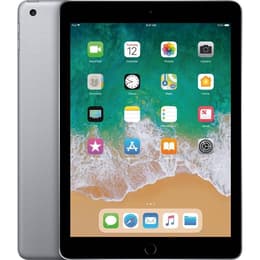


iPad 5 (2017, A9 series) Vs iPad 6 (2018, A10 series)

iPad 5 (2017, A9 series)
Starting at

Refurbished price:86.39

Versus €409.00 new

See options
iPad 6 (2018, A10 series)
Starting at

Refurbished price:82.00

Versus €359.00 new

See options

Ratings

The iPad 2017 (5th generation) and iPad 2018 (6th generation) are two consecutive tablet models from Apple, released in March 2017 and March 2018, respectively. While they share a similar design and the familiar iPadOS operating system, the newer iPad 2018 introduced an updated internal processor and added support for the Apple Pencil, marking a notable difference in their capabilities. Both devices run on Apple's iPadOS, offering a consistent user experience across their software environments.

Scores

Durability

When considering the longevity of these tablets, their release dates and subsequent software support are key factors. The iPad 2017, released in March 2017, has received major iPadOS updates up to iPadOS 16.7.15 as of March 2026. The iPad 2018, launched a year later in March 2018, is supported up to iPadOS 17, indicating a slightly longer expected period of official software updates.

  • Software Support: The iPad 2018 is expected to receive one additional year of major iPadOS updates compared to the iPad 2017, offering extended software longevity.
  • Repairability: Both models share a similar construction, suggesting comparable ease of repair. Their design, which includes a non-laminated display, can sometimes simplify screen replacements compared to models with fused displays.
  • Practical Lifespan: Users can expect both devices to remain functional for everyday tasks for several years, though the iPad 2018's newer processor and longer software support may provide a more fluid experience for a slightly extended period.

Year of Release

2017

2018

Compatible with latest Update

No

No

OS

iPadOS

iPadOS

Maximum Operating System supported

iPadOS 16

iPadOS 17

Performance

The performance difference between the iPad 2017 and iPad 2018 primarily stems from their internal processing units. The iPad 2017 features an A9 processor, while the iPad 2018 is equipped with a more advanced A10 Fusion processor.

  • Processing Capabilities: The iPad 2018's A10 Fusion processor offers a noticeable improvement in speed and efficiency, particularly when handling more demanding applications, complex multitasking, or augmented reality experiences. The iPad 2017's A9 processor capably handles general tasks like web browsing, email, and media consumption.
  • Multitasking and Responsiveness: Both devices come with 2GB of RAM, allowing for split-screen multitasking. However, the iPad 2018's more capable processor contributes to a smoother overall system responsiveness, especially when switching between multiple active applications.
  • Storage Options: Both models were available with 32GB or 128GB of internal storage, providing choices for users based on their content storage needs.

Memory (GB)

2 GB

2 GB

Processor

Apple A9

Apple A10 Fusion

Screen quality

Both the iPad 2017 and iPad 2018 feature identical display specifications, offering a consistent visual experience.

  • Display Technology: Both tablets are equipped with a 9.7-inch LED-backlit IPS Retina display, providing a resolution of 2048 x 1536 pixels at 264 pixels per inch. This results in clear and detailed visuals for reading, browsing, and media consumption.
  • Visual Experience: The displays offer good color reproduction and viewing angles typical of IPS technology. However, neither model features a fully laminated display or an anti-reflective coating, which can lead to more noticeable glare in bright environments and a slight gap between the glass and the LCD panel.
  • Brightness and Refresh Rate: Both screens operate at a standard 60Hz refresh rate, providing a smooth experience for most interactions. Brightness levels are suitable for indoor use, though the lack of anti-reflective coating might impact outdoor visibility.

Resolution

2048 x 1536

2048 x 1536

True Tone

No

No

Pro-Motion

No

No

Screen type

Retina display

Retina display

Pixel density

264ppp

264ppp

Brightness

500 nits brightness

500 nits brightness

Sound quality

Speakers

Stereo speakers

Stereo speakers

Audiovisual

The camera systems on the iPad 2017 and iPad 2018 are largely similar, offering comparable capabilities for photography and video recording.

  • Camera System: Both models feature an 8-megapixel rear camera capable of recording 1080p HD video at 30 frames per second. The front-facing camera on both is a 1.2-megapixel FaceTime HD camera, suitable for video calls and basic selfies, recording 720p video.
  • Photography Performance: In good lighting conditions, both cameras produce acceptable images for a tablet. However, they are not designed for advanced photography and may struggle in low-light environments, showing less detail and more noise.
  • Audio Experience: Both iPads include stereo speakers, providing a decent audio output for media consumption. The microphone quality is suitable for video calls and voice recordings.

Miscellaneous

Beyond core performance and display, several practical features differentiate these two iPad models, particularly in terms of accessory support and physical attributes.

  • Apple Pencil Support: A key distinction is the iPad 2018's support for the first-generation Apple Pencil, which the iPad 2017 does not offer. This feature makes the 2018 model more versatile for note-taking, drawing, and creative tasks.
  • Connectivity and Ports: Both devices offer Wi-Fi 802.11ac with dual-band support and Bluetooth 4.2. Cellular models were available for both, providing mobile data connectivity. They both retain the Lightning port for charging and data transfer, and a 3.5mm headphone jack.
  • Physical Design: The dimensions and weight of both iPads are nearly identical, making them equally portable and compatible with accessories designed for this form factor. Both include Touch ID for secure authentication.

Weight

469 g

469 g

Width

16.95 cm

16.95 cm

Height

24 cm

24 cm

Depth

0.75 cm

0.75 cm

Screen size (in)

9.7

9.7

Network

Wi-Fi

Wi-Fi

Carrier compatibility

Without SIM Port

Without SIM Port

Wi-Fi technology

Wi-Fi 6 802.11a/b/g/n/ac

Wi-Fi 6 802.11a/b/g/n/ac

Bluetooth Version

Bluetooth 4.2

Bluetooth 4.2

Face ID

No

No

Touch ID

Yes

Yes

Connector

Lightning connector

Lightning connector

The iPad 2017 and iPad 2018 offer similar foundational tablet experiences, but the incremental upgrades in the 2018 model cater to a slightly broader range of users. Users frequently praise the iPad 2018 for its introduction of Apple Pencil support, which was a significant addition for students and creative individuals. The improved processor in the 2018 model also received positive feedback for enhancing overall responsiveness and handling more demanding applications.

Conversely, common criticisms for both models often revolve around the display not being fully laminated, which can result in glare and a less premium feel compared to higher-end iPads. The cameras on both are generally considered adequate for basic use but not exceptional.

Users prioritizing a tablet for general media consumption, web browsing, and light productivity may find the iPad 2017 well-suited to their needs. Its capabilities remain solid for these tasks, and it represents a reliable option for those seeking a straightforward tablet experience. However, users who require stylus input for note-taking, drawing, or marking up documents, or those who anticipate using more processor-intensive applications, may lean toward the iPad 2018 due to its Apple Pencil compatibility and enhanced processing power. The slightly longer software support for the iPad 2018 also makes it a more future-proof choice. For those considering either model, exploring quality-assured refurbished options can provide an eco-friendly alternative to extend the life of these devices.

See all articles

Our recent comparisons