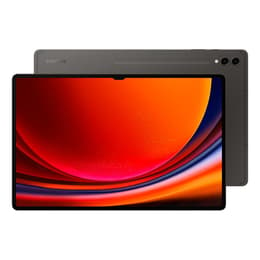
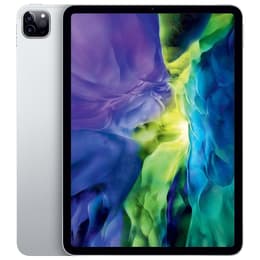


Galaxy Tab S9 (11.0", 2023) Vs iPad Pro (2020, A12 series)

Galaxy Tab S9 (11.0", 2023)
Starting at

Refurbished price:491.00

Versus €1,219.00 new

See options
iPad Pro (2020, A12 series)
Starting at

Refurbished price:400.00

Versus €1,019.00 new

See options

Ratings

The Samsung Galaxy Tab S9, released in August 2023, and the Apple iPad Pro 11-inch (2020), launched in March 2020, represent two distinct approaches to high-performance tablets. While both offer premium tablet experiences, they differ significantly in their operating systems, display technology, and accessory ecosystems. This comparison will explore their core features to help users understand which device aligns best with their needs.

Scores

Durability

When considering the long-term usability of a tablet, software support and physical resilience are key factors.

  • Release Timeline and OS Support: The Galaxy Tab S9, being a 2023 release, benefits from a more recent launch, offering four major Android OS updates (up to Android 17) and five years of security updates from its release date. The iPad Pro 2020, released in 2020, has received several iPadOS updates, but some users have reported performance changes with newer software versions. Apple typically provides software support for many years, though the exact duration can vary.
  • Physical Durability: The Galaxy Tab S9 features an Armor Aluminum build and boasts an IP68 rating for water and dust resistance, allowing it to withstand submersion. The iPad Pro 2020 has an aluminum body but lacks an official IP rating for water and dust resistance.
  • Repairability: The Galaxy Tab S9 has a moderate repairability score, with an accessible battery but a delicate screen removal process. The iPad Pro 2020 generally has a lower repairability score, making professional repairs more complex.

Year of Release

2023

2020

Compatible with latest Update

Yes

Yes

OS

Android

iPadOS

Performance

Both tablets deliver robust performance for a wide range of tasks, though their underlying architectures differ.

  • Processing Power: The Galaxy Tab S9 is equipped with a current-generation processor designed for demanding applications and multitasking, ensuring smooth operation for gaming, creative work, and productivity. The iPad Pro 2020 features a powerful chip that, at its release, offered substantial performance for professional tasks and intensive applications. While still capable, it is an older generation of silicon.
  • Multitasking and Responsiveness: Users of the Galaxy Tab S9 report a very fast and smooth experience, even with multiple apps open simultaneously. The iPad Pro 2020 also handles app multitasking efficiently, with its operating system optimized for fluid transitions and responsive interactions.
  • Storage and Memory: The Galaxy Tab S9 offers configurations with 8GB or 12GB of RAM and storage options of 128GB or 256GB, with the added flexibility of expandable storage via a microSD card up to 1TB. The iPad Pro 2020 comes with 6GB of RAM across all models and offers internal storage options ranging from 128GB up to 1TB, but without expandable storage.

Memory (GB)

8 GB

6 GB

Screen quality

The visual experience on both tablets is a highlight, though they employ different display technologies.

  • Display Technology: The Galaxy Tab S9 features an 11-inch Dynamic AMOLED 2X display, known for its deep blacks, high contrast, and vibrant colors. The iPad Pro 2020 utilizes an 11-inch Liquid Retina IPS LCD, which provides accurate colors and wide viewing angles.
  • Resolution and Clarity: The Tab S9 offers a resolution of 2560x1600 pixels, resulting in a sharp image with a pixel density of approximately 274 PPI. The iPad Pro 2020 has a resolution of 2388 x 1668 pixels, providing a clear viewing experience with a pixel density of 264 PPI.
  • Refresh Rate and Brightness: Both tablets feature a 120Hz refresh rate, contributing to smooth scrolling and fluid animations. The iPad Pro 2020 offers a typical brightness of 600 nits, while the Galaxy Tab S9's Dynamic AMOLED 2X display can achieve higher peak brightness, improving visibility in bright conditions.

Resolution

1600 x 2560

2388 x 1668

Screen type

Dynamic AMOLED 2X

Liquid Retina display

Pixel density

280ppp

264ppp

Audiovisual

While tablets are not typically primary photography devices, both offer capable camera systems for various uses.

  • Rear Camera System: The Galaxy Tab S9 includes a single 13MP main camera on the rear, suitable for document scanning and general photography. The iPad Pro 2020 features a dual-camera setup on the back, comprising a 12MP wide lens and a 10MP ultrawide lens, along with a LiDAR scanner for enhanced augmented reality experiences and depth sensing.
  • Front Camera and Video Calls: For video conferencing and selfies, the Galaxy Tab S9 has a 12MP ultrawide front camera that supports 4K video recording. The iPad Pro 2020 is equipped with a 7MP TrueDepth front camera, which is well-regarded for video calls and offers features like Portrait mode for selfies.
  • Audio Experience: Both devices provide a rich audio experience. The Galaxy Tab S9 features quad stereo speakers tuned by AKG with Dolby Atmos support, delivering clear and robust sound. The iPad Pro 2020 also has a quad-speaker system, offering impressive sound quality for media consumption.

Miscellaneous

Beyond core specifications, several practical elements contribute to the overall user experience.

  • Connectivity: The Galaxy Tab S9 supports Wi-Fi 6E and Bluetooth 5.3, with optional 5G connectivity for faster mobile data speeds. The iPad Pro 2020 includes Wi-Fi 6 and Bluetooth 5.0, with cellular models offering 4G LTE connectivity.
  • Ports and Biometrics: Both tablets feature a versatile USB-C port for charging and data transfer. The Galaxy Tab S9 incorporates an under-display fingerprint sensor for secure unlocking. The iPad Pro 2020 relies on Face ID for biometric authentication, using its infrared face recognition sensor.
  • Stylus Integration: The Galaxy Tab S9 comes with the S Pen included, offering a natural writing and drawing experience with magnetic attachment and charging. The Apple Pencil 2nd Gen, compatible with the iPad Pro 2020, is sold separately and also attaches magnetically for charging and pairing.
  • Design and Handling: The Galaxy Tab S9 measures 165.8 x 254.3 x 5.9mm and weighs around 498g (Wi-Fi model). The iPad Pro 2020 has dimensions of 247.6 x 178.5 x 5.9 mm and weighs approximately 471g (Wi-Fi model). Both offer a slim profile, but the Tab S9 is slightly wider and heavier.

Weight

129 g

471 g

Screen size (in)

11.0

11

Network

Wi-Fi

Wi-Fi

Carrier compatibility

Unlocked

Without SIM Port

User feedback for the Galaxy Tab S9 often highlights its vibrant AMOLED display, robust performance for gaming and productivity, and the included S Pen as significant advantages. Some users appreciate its strong software update commitment and IP68 rating. Criticisms sometimes point to battery life being good but not exceptional compared to some predecessors, especially with the power-hungry display.

For the iPad Pro 2020, users frequently praise its powerful performance, smooth iPadOS experience, and high-quality display, noting its suitability for creative tasks and media consumption. The camera system, particularly the front-facing camera for video calls, is also well-regarded. Some common concerns include its repairability and the fact that it was quickly succeeded by models with newer processors, leading some to suggest opting for an M-series iPad if possible.

Users prioritizing a vivid AMOLED display, expandable storage, and an included stylus for note-taking and drawing may find the Galaxy Tab S9 well-suited to their needs. Its strong water and dust resistance also makes it a durable choice for various environments. Conversely, individuals deeply integrated into the Apple ecosystem, or those who value the iPadOS experience and a comprehensive app selection optimized for tablets, might lean towards the iPad Pro 2020. Both devices offer excellent performance for their respective ecosystems. For those seeking a more sustainable choice, considering a quality-assured refurbished option for either model can provide a reliable device while supporting environmental responsibility.


See all articles

Our recent comparisons






