

Lenovo Tab M10 Gen 3 (10.1", 2022) Vs Xiaomi Pad 6 (11.0", 2023)

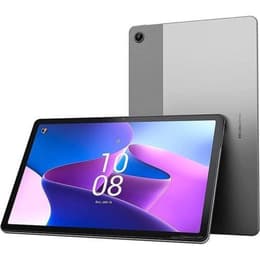
Lenovo Tab M10 Gen 3 (10.1", 2022)
Starting at

Refurbished price:141.48

Versus €299.99 new

See options
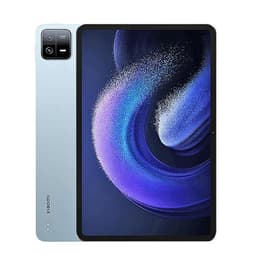
Xiaomi Pad 6 (11.0", 2023)
Starting at

Refurbished price:235.39

Versus €699.00 new

See options

Ratings

The Lenovo Tab M10 Gen 3, released in 2022, and the Xiaomi Pad 6, launched in 2023, are Android tablets designed for different user needs. While both offer a portable computing experience, the Xiaomi Pad 6 generally provides a more advanced display and greater processing power, whereas the Lenovo Tab M10 Gen 3 focuses on essential tablet functionalities. Both devices operate on the Android platform, offering access to a wide ecosystem of applications.

Scores

Durability

When considering the longevity of these tablets, several factors come into play, including their release dates, expected software support, and physical build.

  • Release Timeline: The Xiaomi Pad 6, being a 2023 release, benefits from a more recent launch compared to the Lenovo Tab M10 Gen 3 from 2022. This typically translates to a longer period of manufacturer software support remaining for the Xiaomi device.
  • OS Support and Updates: The Lenovo Tab M10 Gen 3 launched with Android 11 and was expected to receive Android 12. The Xiaomi Pad 6 launched with Android 13 and was initially expected to receive at least one major Android update, with some reports indicating it might not receive Android 15, but will get HyperOS 2 based on Android 14. This suggests the Xiaomi Pad 6 may have a slightly longer or more robust update cycle for its core operating system, though specific long-term commitments can vary.
  • Expected Practical Lifespan: Both tablets are built to offer a reasonable lifespan for their intended use cases. The Xiaomi Pad 6 features Corning Gorilla Glass 3 for screen protection and an aluminum unibody design, contributing to its durability. The Lenovo Tab M10 Gen 3 also incorporates Gorilla Glass 3 for its display and a combination of plastic and metal in its chassis.

Year of Release

2022

2023

Compatible with latest Update

No

No

OS

Android

Android

Performance

The performance capabilities of these two tablets cater to different levels of user demand, primarily influenced by their internal components and available memory configurations.

  • Processor Capabilities: The Xiaomi Pad 6 is equipped with a more capable processor, allowing it to handle demanding applications, multitasking, and graphically intensive games with greater fluidity. The Lenovo Tab M10 Gen 3 features a processor suitable for everyday tasks such as web browsing, video streaming, and light productivity, but may show limitations with more intensive applications or heavy multitasking.
  • Multitasking and Responsiveness: With higher RAM options, the Xiaomi Pad 6 offers a smoother experience when switching between multiple applications and managing numerous browser tabs. The Lenovo Tab M10 Gen 3, with its standard RAM configurations, is well-suited for focused use with fewer applications running simultaneously.
  • Storage Options and Battery Behavior: The Xiaomi Pad 6 provides larger internal storage options and a substantial battery capacity of 8840 mAh, supporting extended usage and faster charging. The Lenovo Tab M10 Gen 3 offers expandable storage via microSD and a 5100 mAh battery, providing sufficient power for typical daily use. Users report the Xiaomi Pad 6 can last several days with moderate use, while heavy gaming might reduce this to around 4 hours.

Memory (GB)

3 GB

6 GB

Processor

Unisoc T610

Qualcomm SM8250-AC Snapdragon 870 5G

Screen quality

The visual experience on these tablets differs significantly, primarily due to variations in display technology, resolution, and refresh rates.

  • Display Technology and Resolution: Both tablets feature IPS LCD panels. The Xiaomi Pad 6 boasts an 11-inch display with a higher resolution of 2880 x 1800 pixels, resulting in a sharper and more detailed image. The Lenovo Tab M10 Gen 3 has a 10.1-inch display with a resolution of 1920 x 1200 pixels, which is suitable for general content consumption.
  • Brightness and Refresh Rate: The Xiaomi Pad 6 offers a brighter display with up to 550 nits of typical brightness and a high 144Hz refresh rate, contributing to smoother scrolling and a more responsive feel. This higher refresh rate is adaptive, adjusting based on content to balance smoothness and battery efficiency. The Lenovo Tab M10 Gen 3 provides a brightness of around 320 nits and a standard 60Hz refresh rate, which is adequate for indoor viewing.
  • Viewing Experience: The Xiaomi Pad 6's display supports HDR10 and Dolby Vision, enhancing contrast and color for compatible content, making it well-suited for media consumption. Both displays are TÜV Rheinland Low Blue Light certified, aiming to reduce eye strain during prolonged use.

Resolution

1200 x 1920

1800 x 2880

Screen type

IPS LCD

IPS LCD

Pixel density

230ppp

310ppp

Audiovisual

The camera systems on these tablets are designed for different levels of photographic capability, reflecting their primary use cases.

  • Camera System Capabilities: The Xiaomi Pad 6 features a 13MP rear camera and an 8MP front camera, offering more detail and versatility for photography and video calls. The Lenovo Tab M10 Gen 3 includes an 8MP rear camera and a 5MP front camera, which are functional for basic photo capture and video conferencing.
  • Photography Performance: The Xiaomi Pad 6's rear camera is capable of recording video at up to 4K resolution at 30 frames per second, and its front camera provides good quality for video calls, even in 1080p. The Lenovo Tab M10 Gen 3's cameras are generally considered suitable for casual snapshots and scanning documents, with acceptable image quality in good lighting conditions.
  • Audio Experience: The Xiaomi Pad 6 features a quad-speaker setup with Dolby Atmos support, delivering an immersive audio experience for media consumption. It also has four microphones for clear audio pickup during calls. The Lenovo Tab M10 Gen 3 comes with dual speakers and Dolby Atmos, providing a decent audio output for its class.

Miscellaneous

Beyond core performance and display, several practical elements differentiate these two tablets, impacting their usability in various scenarios.

  • Connectivity Options: The Xiaomi Pad 6 supports Wi-Fi 6 and Bluetooth 5.2, offering faster and more stable wireless connections. The Lenovo Tab M10 Gen 3 supports Wi-Fi 5 and Bluetooth 5.0, which are standard for reliable wireless connectivity. Both models offer optional LTE variants for mobile internet access.
  • Port Types and Sensors: The Xiaomi Pad 6 features a USB-C 3.2 port with DisplayPort support, allowing for external display connectivity. It lacks a headphone jack and a fingerprint sensor, relying on face unlock. The Lenovo Tab M10 Gen 3 includes a USB-C 2.0 port and retains a 3.5mm headphone jack, which can be convenient for wired audio. It also offers face unlock for security.
  • Physical Characteristics: The Xiaomi Pad 6 has a premium aluminum unibody design, measuring 6.51 mm thick and weighing 490g. The Lenovo Tab M10 Gen 3 has a plastic and metal chassis, with dimensions of 8.5 mm thickness and a weight of 460g.

Weight

460 g

490 g

Screen size (in)

10.1

11.0

Network

Wi-Fi

Wi-Fi

Carrier compatibility

Unlocked

Without SIM Port

Connector

USB Type-C

USB Type-C

User feedback for the Xiaomi Pad 6 frequently praises its vibrant 144Hz display and robust performance, making it a strong contender for media consumption and gaming. Users often highlight its smooth operation and premium build quality as significant advantages. However, some users note the absence of a fingerprint sensor and a headphone jack as minor inconveniences. The Lenovo Tab M10 Gen 3 is generally well-regarded for its solid build, decent display for its category, and long battery life, making it a practical choice for everyday use and e-learning. Criticisms sometimes point to its more modest processing power compared to higher-end tablets.

Users prioritizing a highly responsive display, strong performance for demanding applications, and a more premium build will find the Xiaomi Pad 6 well-suited to their needs. Its capabilities align with those seeking a tablet for entertainment, productivity, and light content creation. Conversely, individuals looking for a reliable device for basic tasks such as web browsing, video streaming, and casual use, who also value a headphone jack, may lean toward the Lenovo Tab M10 Gen 3. Both tablets offer a gateway to the Android ecosystem, and considering quality-assured refurbished options can provide an eco-friendly alternative for acquiring either device.


See all articles

Our recent comparisons