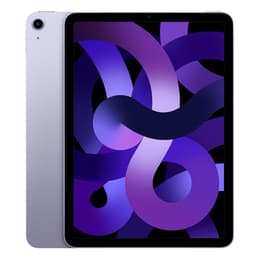


iPad 8 (2020, A12 series) Vs iPad Air 5 (2022, M1 series)

iPad 8 (2020, A12 series)
Starting at

Refurbished price:128.00

Versus €399.00 new

See options
iPad Air 5 (2022, M1 series)
Starting at

Refurbished price:310.00

Versus €799.00 new

See options

Ratings

The iPad 2020 (8th generation) and the iPad Air 2022 (5th generation) are two distinct tablet offerings from Apple, released in September 2020 and March 2022, respectively. While both devices operate on Apple's iPadOS, the iPad Air 2022 introduces a more advanced internal processor, a modernized design, and enhanced accessory compatibility, positioning it as a more capable device for demanding tasks compared to the more entry-level iPad 2020.

Scores

Durability

When considering the practical lifespan of these two tablets, their release timelines and internal components play a significant role in how long they will continue to receive software updates and perform optimally with new applications.

  • Release Timeline: The iPad 2020, released in September 2020, is an older model compared to the iPad Air 2022, which launched in March 2022. This difference in release date means the iPad Air 2022 will inherently receive major iPadOS updates for a longer period, extending its software longevity.
  • Software Longevity: The iPad Air 2022, equipped with a more powerful processor, is better positioned to handle future software advancements and more demanding applications for an extended duration. While the iPad 2020 continues to receive updates, its older processor may eventually limit its ability to run the latest software features as smoothly as the newer model.
  • Practical Lifespan: Both devices are built with durable materials, featuring aluminum backs and glass fronts. However, the iPad Air 2022's more modern internal architecture and design may offer a slightly longer practical lifespan for users who intend to keep their device for many years and utilize the latest software and applications.

Year of Release

2020

2022

Compatible with latest Update

Yes

Yes

OS

iPadOS

iPadOS

Maximum Operating System supported

iPadOS 18

iPadOS 18

Performance

The performance capabilities of the iPad 2020 and iPad Air 2022 represent a notable generational leap, primarily due to their differing internal processors, which impact everything from app responsiveness to multitasking efficiency.

  • Processor Capabilities: The iPad 2020 handles everyday tasks such as web browsing, email, streaming, and light gaming with smooth responsiveness. For more intensive applications, the iPad Air 2022 offers significantly greater processing power, enabling seamless video editing, graphic design, and advanced multitasking without noticeable slowdowns.
  • Multitasking and Responsiveness: Users engaging in heavy multitasking or running multiple demanding applications simultaneously will find the iPad Air 2022 to be more efficient and responsive. Its advanced processor allows for quicker app loading times and smoother transitions between tasks, providing a more fluid user experience.
  • Storage Options: Both models offer various storage configurations, allowing users to choose based on their needs for apps, media, and documents. The performance difference is primarily in how quickly the devices process data and execute tasks, rather than storage speed itself.

Memory (GB)

3 GB

8 GB

Processor

Apple A12 Bionic

Apple M1

Screen quality

The visual experience on these two iPads differs in several key aspects, from display technology to overall clarity and brightness, influencing how content appears and interacts with the user.

  • Display Technology and Size: The iPad 2020 features a 10.2-inch Retina IPS LCD display, while the iPad Air 2022 boasts a larger 10.9-inch Liquid Retina IPS LCD display. The iPad Air 2022's display is fully laminated and includes an anti-reflective coating, which reduces glare and makes the screen appear closer to the glass, enhancing the viewing experience.
  • Resolution and Clarity: Both tablets offer sharp resolutions suitable for reading and media consumption, with the iPad Air 2022 having a slightly higher pixel count to accommodate its larger screen size while maintaining similar pixel density. The iPad Air 2022 also supports Wide Color (P3) and True Tone technology, providing more accurate and vibrant colors that adapt to ambient lighting conditions.
  • Brightness and Viewing Experience: Both models offer a brightness of 500 nits, ensuring good visibility in most indoor environments. However, the iPad Air 2022's laminated display and anti-reflective coating contribute to a more premium and comfortable viewing experience, especially in varied lighting.

Resolution

2160 x 1620

2360 x 1640

True Tone

No

Yes

Pro-Motion

No

No

Screen type

Retina display

Liquid Retina display

Pixel density

264ppp

264ppp

Brightness

500 nits brightness

500 nits brightness

Sound quality

Speakers

Stereo speakers

Stereo speakers

Audiovisual

The camera systems on the iPad 2020 and iPad Air 2022 present a significant difference, particularly in front-facing capabilities and overall image processing, catering to different user needs for photography and video calls.

  • Rear Camera Performance: The iPad 2020 is equipped with an 8-megapixel rear camera, capable of capturing decent photos and 1080p video. The iPad Air 2022 features a more advanced 12-megapixel wide rear camera, which offers improved detail and better performance in various lighting conditions, along with 4K video recording capabilities.
  • Front Camera and Video Calls: A major distinction lies in the front cameras. The iPad 2020 has a 1.2-megapixel front camera, suitable for basic video calls. In contrast, the iPad Air 2022 includes a 12-megapixel Ultra Wide front camera with Center Stage, a feature that automatically keeps the user in frame during video calls, significantly enhancing the video conferencing experience.
  • Audio Quality: Both devices offer stereo speakers for media consumption. The iPad Air 2022's speakers may provide a slightly richer audio experience due to its more modern design, and its microphones are optimized for clearer audio capture during calls and recordings.

Miscellaneous

Beyond core performance and display, several practical elements differentiate the iPad 2020 and iPad Air 2022, impacting connectivity, accessory compatibility, and overall user interaction.

  • Connectivity and Port Type: The iPad 2020 uses a Lightning port for charging and data transfer and supports Wi-Fi 5 and Bluetooth 4.2. The iPad Air 2022 upgrades to a USB-C port, offering faster data transfer speeds and broader compatibility with external accessories. It also supports more modern wireless standards, including Wi-Fi 6 and Bluetooth 5.0, with optional 5G cellular connectivity for faster mobile data.
  • Accessory Compatibility: The iPad 2020 is compatible with the 1st generation Apple Pencil and the Smart Keyboard. The iPad Air 2022 supports the 2nd generation Apple Pencil, which attaches magnetically and charges wirelessly, and the Magic Keyboard, offering a more laptop-like typing experience with an integrated trackpad.
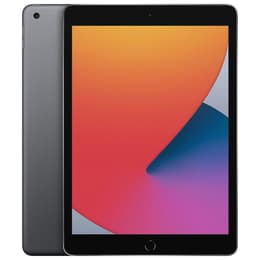
  • Design and Biometrics: The iPad 2020 retains a classic iPad design with a home button featuring Touch ID. The iPad Air 2022 adopts a more modern, all-screen design with thinner bezels, integrating Touch ID into the top power button. This design choice allows for a larger display in a similar physical footprint and a more contemporary aesthetic.

Weight

490 g

461 g

Width

17.41 cm

17.85 cm

Height

25.06 cm

24.76 cm

Depth

0.75 cm

0.61 cm

Screen size (in)

10.2

10.9

Network

Wi-Fi

Wi-Fi

Carrier compatibility

Without SIM Port

Without SIM Port

Wi-Fi technology

Wi-Fi 6 802.11a/b/g/n/ac

Wi-Fi 6 802.11ax

Bluetooth Version

Bluetooth 4.2

Bluetooth 5.0

Face ID

No

No

Touch ID

Yes

Yes

Connector

Lightning connector

USB Type-C

User sentiment often highlights the iPad 2020 as a reliable and accessible entry point into the Apple tablet ecosystem. It is frequently praised for its solid performance for everyday tasks and its enduring software support, making it a practical choice for general use and educational purposes. Criticisms often point to its dated design with larger bezels and the older Lightning port, as well as its less capable front camera for modern video conferencing needs.

Conversely, the iPad Air 2022 receives considerable acclaim for its powerful performance, driven by its advanced processor, which users find excellent for demanding applications and creative work. Its modern design, USB-C connectivity, and enhanced front camera with Center Stage are also frequently lauded. Some users note that while it offers significant upgrades, it sits in a middle ground between the base iPad and the more professional iPad Pro models.

Users prioritizing a cost-effective tablet for casual browsing, media consumption, and basic productivity may find the iPad 2020 well-suited to their needs. Those who require robust performance for creative tasks, advanced multitasking, or who value a modern design with superior accessory support and connectivity will likely lean toward the iPad Air 2022. For consumers looking for an eco-friendly alternative, both models are available as quality-assured refurbished options, providing a sustainable choice without compromising on functionality.


See all articles

Our recent comparisons